

How Much Does an Audi A1 Engine Swap Actually Cost
When Your Audi A1 Needs a New Engine: What It's Really Going to Cost You
Audi A1 engine replacement cost is one of those things that can genuinely catch you off guard — and the range is wide.
Here's a quick answer before we dive deeper:
Engine Type Engine Only Supplied & Fitted Used (e.g. CAXA 1.4 TFSI) ~£625–£1,000 ~£1,200–£1,600 Remanufactured (e.g. CAXA 1.4 TFSI) ~£1,000 ~£1,450 Remanufactured (e.g. CAYC 1.6 TDI) ~£894 ~£894–£1,200 Used (e.g. CXMA 1.6 TDI, warranted) ~£1,890 Add £400–£600 labour
These figures are starting points. The final bill depends heavily on your engine code, model year, transmission type, and what ancillary work is needed alongside the swap.
The signs are usually hard to ignore. A persistent knock under the bonnet, sudden power loss, or an engine that simply refuses to start can all point to a failure that goes beyond a simple repair. At that stage, most owners face a real decision: fix it, swap it, or move on entirely.
The good news is that replacement engines for the Audi A1 are widely available in the UK — from eBay listings and salvage suppliers to specialist remanufacturers offering supplied-and-fitted packages with warranties. The tricky part is knowing which option actually makes financial sense for your situation.
This guide breaks it all down clearly.
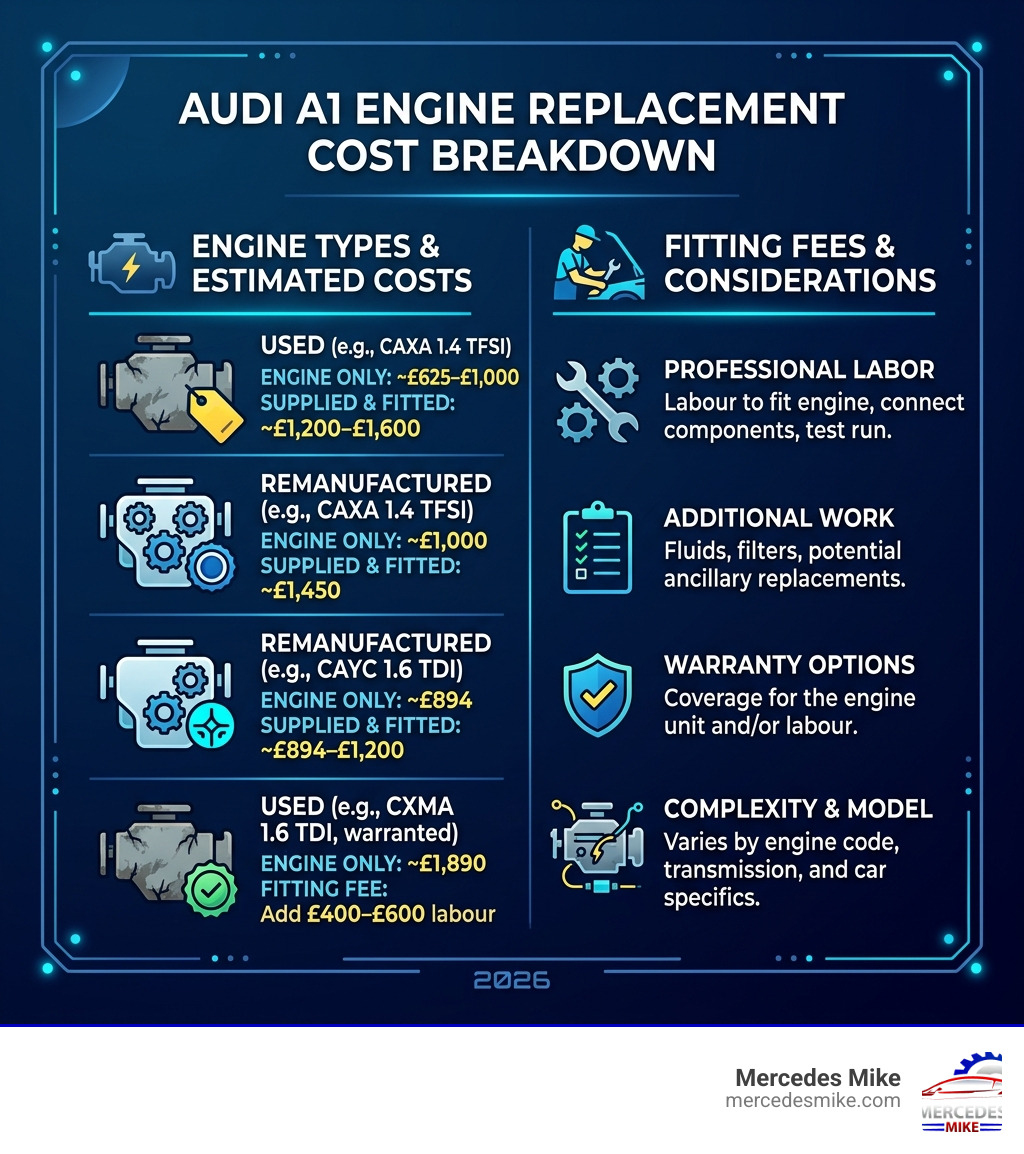
Breaking Down the Audi A1 Engine Replacement Cost
When we look at the total audi a1 engine replacement cost, we have to separate the "iron" (the engine block itself) from the "elbow grease" (the professional labor required to make it run). The market for Audi engines is diverse, ranging from budget-friendly high-mileage units to precision-engineered remanufactured blocks that are practically better than new.
Based on current 2026 market data, here is a more detailed comparison of what you can expect to pay for the unit alone versus a full "supply and fit" service:
Engine Code/Type Condition Unit Price (Est.) Total Supplied & Fitted CAXA (1.4 TFSI) Remanufactured £1,000 £1,450 CZCA (1.4 TFSI) Used (Low Mile) £1,200 £1,700 CXMA (1.6 TDI) Used (Warranted) £1,889 £2,350 CBZA (1.2 TFSI) Used (High Mile) £625 £1,100 CWZA (2.0 TFSI S1) Bare Engine (Used) £2,465 £3,000+
As you can see, the specific engine code makes a massive difference. A standard 1.2 petrol engine is significantly more affordable than the high-performance unit found in an Audi S1. For more general insights on how these costs scale across different vehicle types, you can check out this Engine Replacement Cost - AutoZone.com guide.
Factors Influencing Your Audi A1 Engine Replacement Cost
It would be nice if there were a single "menu price" for an engine swap, but in our experience at Mercedes Mike, several variables can push the price up or down.
Model Year and Generation: The first-generation A1 (8X) and the newer second-generation (GB) use different engine architectures. Newer engines with Euro 6 emissions standards often command a premium due to their complexity and lower availability in salvage yards.
Mileage: A used engine with 30,000 miles will naturally cost more than one with 90,000 miles. While the 90k unit is cheaper today, it may have a shorter lifespan.
Transmission Type: This is a crucial detail. Not all engines are interchangeable between manual and automatic (S Tronic) gearboxes. Engines destined for an automatic car may require different mounting points or crankshaft configurations, which can limit your options and increase the price.
Performance Level: If you are looking to do more than just a standard swap, you might consider The Top 5 Performance Upgrades for Your German Car while the engine is out, which can add to the initial investment but save on labor later.
Hidden Fees in the Audi A1 Engine Replacement Cost
One of the biggest mistakes owners make is budgeting only for the engine and the labor. When an engine is swapped, it is rarely a "plug and play" affair. There are several "while you're in there" costs that are practically mandatory for a reliable result.
Fluids and Filters: You’ll need fresh high-grade synthetic oil, coolant, and a new oil filter. Expect to add £100–£150 for quality consumables.
The Timing Kit (Cambelt/Chain): If you are installing a used engine, it is reckless not to replace the timing belt or chain and the water pump while the engine is on a stand. A timing chain replacement alone for an Audi A1 averages about £1,157.40, but doing it during a swap is much cheaper as the labor is already "paid for."
The Clutch: If your A1 is a manual, the gearbox has to come off anyway. If the clutch is 70% worn, replacing it now for the cost of the parts (average clutch replacement is £686.69) saves you from paying another £400 in labor six months down the line.
Ancillaries: Most replacement engines are sold "bare." This means you need to swap over your old alternator, turbocharger, and injectors. If your original engine failed because the turbo exploded, you'll need a new turbo too, which can cost up to £2,000.
As discussed in the Cost of new engine | Audi A1 Forum, failing to account for these extras can lead to a final bill that is 30% higher than the initial quote.
Remanufactured vs. Rebuilt vs. Used: Which is Best?
Choosing the "type" of engine is the most significant decision you’ll make. It’s a balance between your current bank balance and how much longer you plan to keep the car.

Used Engines: These are sourced from "donor" cars, usually insurance write-offs. They are the cheapest option but come with the most risk. You are essentially buying someone else's maintenance history.
Rebuilt Engines: A mechanic takes your old engine (or another core), fixes what was broken, replaces a few worn seals, and puts it back together. It’s a targeted repair.
Remanufactured Engines: This is the gold standard. The engine is stripped to the bare block, "blueprinted" (machined to exact factory specs), and reassembled with brand-new internal components (pistons, rings, bearings, gaskets).
For a deeper look at why some owners prefer the remanufactured route, read about Audi A1 Replacement Engines: A Smart and Economical Solution.
The Reliability of Remanufactured Units
At Mercedes Mike, we often recommend remanufactured units for owners who plan to keep their A1 for another 5+ years. Why? Because these engines often exceed the original factory standards.
During the remanufacturing process, the block undergoes rigorous pressure testing to ensure there are no hairline cracks. Rotating assemblies are balanced to reduce vibration, and every single wear-part is replaced with new components. Most importantly, they usually come with an unlimited mileage warranty (often 6 to 12 months), providing peace of mind that a used engine simply cannot offer. For more tips on maintaining these high-standard engines, see our Mercedes Blog Category (which covers general German engineering care).
Risks of Used and Reconditioned Engines
If you are browsing eBay or local salvage yards, you’ll see plenty of "tested and running" engines for £700. While tempting, these carry inherent risks:
Unknown History: Was the oil changed every 5,000 miles or every 25,000? You won't know until the engine is in your car.
Hidden Damage: A car that was in a front-end collision might have a hairline crack in the block or a damaged crank pulley that isn't visible until the engine reaches operating temperature.
Depreciation: A used engine doesn't add much value to your car's resale price, whereas a certified remanufactured engine with a warranty can be a selling point.
Common Audi A1 Engine Failures and Codes
Why do these engines need replacing in the first place? While Audi engineering is generally excellent, specific models have known "Achilles' heels." Understanding these can help you prevent a total failure or identify if a replacement is truly necessary.
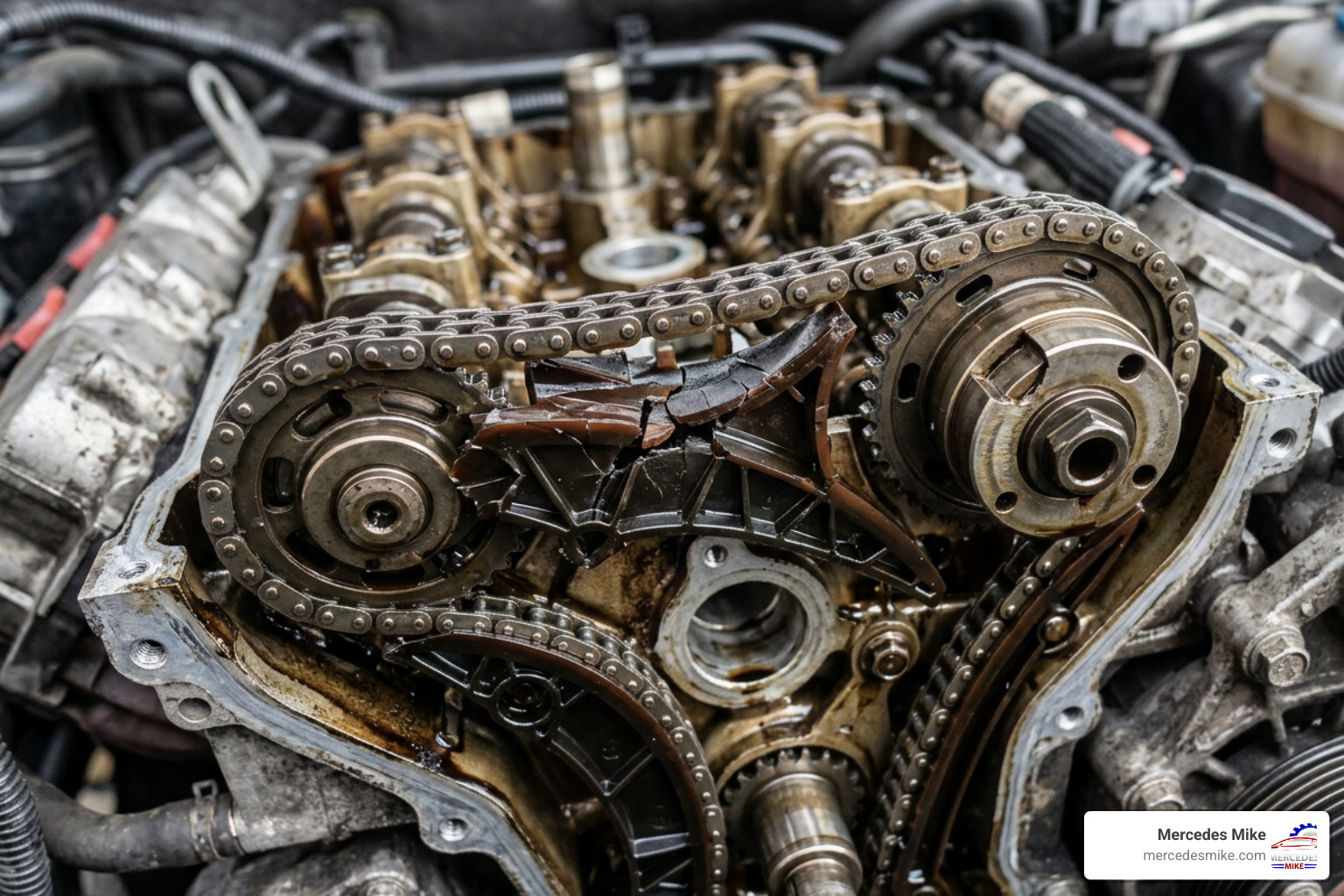
Timing Chain and Turbocharger Issues
The 1.4 TFSI (CAXA code) is a very popular engine in the A1, but it is notorious for timing chain stretch. If you hear a rattling noise on a cold start, that is your warning sign. If the chain jumps, the pistons hit the valves, and the engine is effectively "toast."
Turbochargers are another common failure point. A turbo repair for an Audi A1 averages £786.76, but if the turbo internals disintegrate and get sucked into the engine intake, it can cause catastrophic internal damage. Many owners find themselves in "limp mode" due to seized turbo actuators (common on 1.0 and 1.2 TFSI models), which, if ignored, can lead to overheating and head gasket failure. You can learn more about these patterns in our guide on The Most Common Problems with German Cars and How to Prevent Them.
Diesel Specific Problems: DPF and Injectors
For those driving the 1.6 TDI (CAYC or CXMA codes), the issues are often related to the fuel and exhaust systems.
DPF Clogging: If the car is only used for short city trips, the Diesel Particulate Filter (DPF) cannot regenerate. A DPF clean costs about £203.98, but a completely blocked DPF creates backpressure that can blow oil seals and destroy the turbo.
Injectors: Diesel injectors are under immense pressure. If they fail or "leak," they can wash the lubrication off the cylinder walls or even melt a piston. Replacing a full set of injectors can cost between £840 and £1,560, leading many to consider if a full engine swap with fresh injectors is a more viable long-term move.
Frequently Asked Questions about Audi A1 Engine Replacement Cost
How much does professional installation add to the total?
In the UK market, the "fitting" or labor part of the audi a1 engine replacement cost typically ranges from £400 to £600 at a specialist independent workshop.
This usually includes:
Removal of the old engine.
Transferring ancillaries (alternator, starter, AC compressor).
Installation of the replacement unit.
First start-up, diagnostic checks, and road testing.
Main dealerships will charge significantly more, often exceeding £100 per hour, which can easily double the labor cost.
Is it worth replacing the engine or buying a new car?
This is the "million-pound question." To decide, you need to look at the car's overall health.
Check the Gearbox: If you have an S Tronic (automatic) model, be aware that a mechatronic unit failure or a full gearbox replacement can cost up to £6,000. If your gearbox is already jerky, spending £2,000 on an engine might be throwing good money after bad.
Vehicle Value: A 2012 Audi A1 might only be worth £4,000–£5,000. If the total repair bill is £2,500, you are spending 50% of the car's value. However, if the rest of the car is mint (new tires, good suspension, clean interior), a new engine gives it a second life for a fraction of the cost of a new car.
Where can I find the engine code for my Audi A1?
You must have the correct engine code before ordering a replacement. You can find it in three places:
The Boot Floor: Lift the carpet in the boot; there is usually a white sticker near the spare wheel well containing the VIN and the 3 or 4-letter engine code (e.g., CAXA, CAYC).
V5 Logbook: Under section P.5 "Engine Code/Number."
Service Book: The same white sticker found in the boot is usually pasted on the inside cover of the original service schedule.
Conclusion
Replacing an engine is a major undertaking, but for a car as stylish and fun as the Audi A1, it’s often a smart investment to keep a beloved vehicle on the road. Whether you opt for a budget-friendly used unit or a high-performance remanufactured block, the key is to work with technicians who understand the nuances of German engineering.
At Mercedes Mike, we bring decades of experience to every repair. While our hearts are in Pompano Beach and the surrounding South Florida areas like Deerfield Beach, we know that German car owners everywhere value precision, transparency, and technical expertise. From timing chain diagnostics to full engine swaps, our team uses the latest tools to ensure your Audi performs exactly as the engineers intended.
If you're in South Florida and facing engine trouble, don't guess at the solution. Visit us at our Pompano Beach location or check out our full range of Audi repair services to see how we can help you get back on the road.