
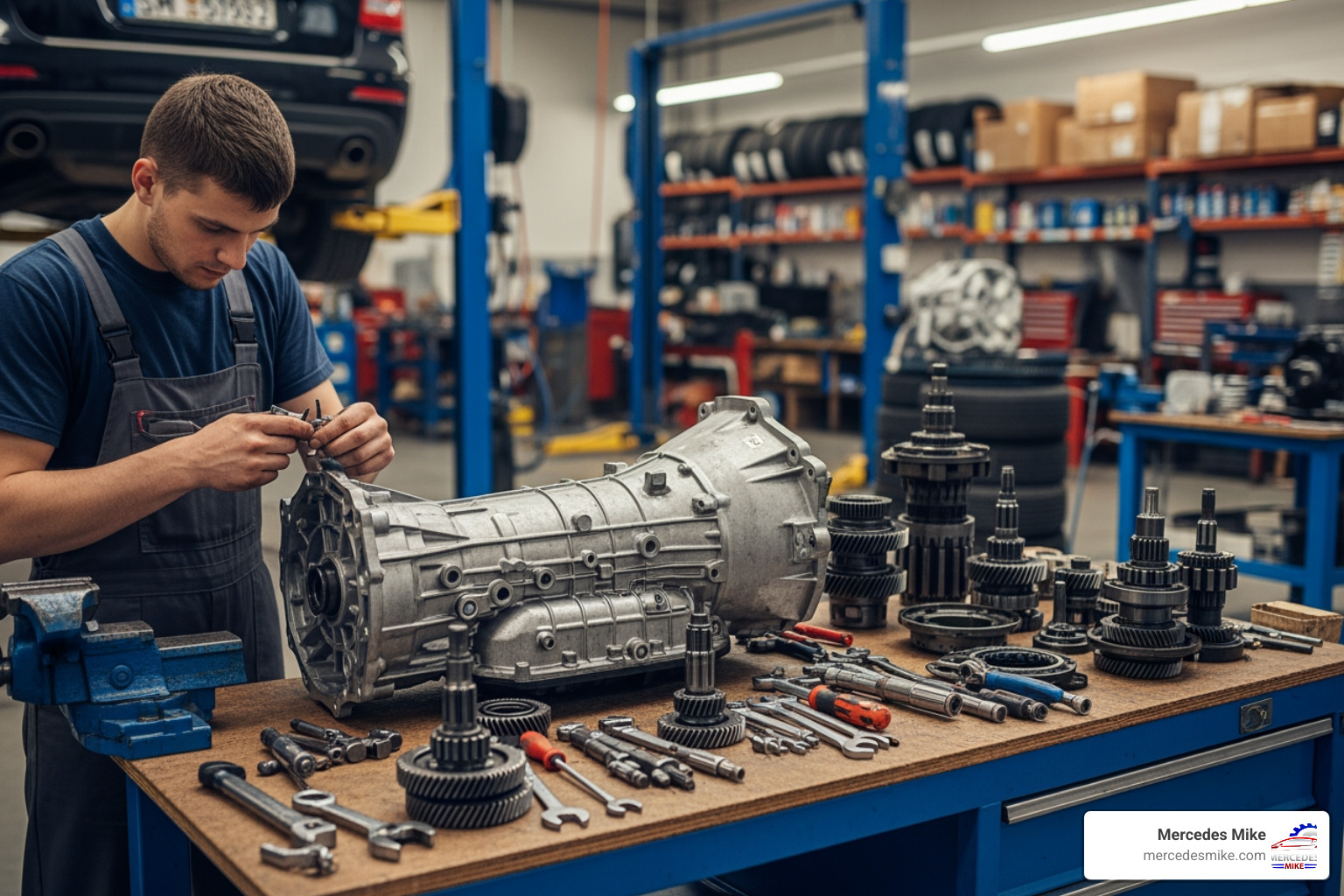
How to Find Reliable Transmission Repair Without Grinding Your Gears
When Your Transmission Talks, You Need to Listen
If you're looking for auto transmission repair near me, here's a quick breakdown of what to do first:
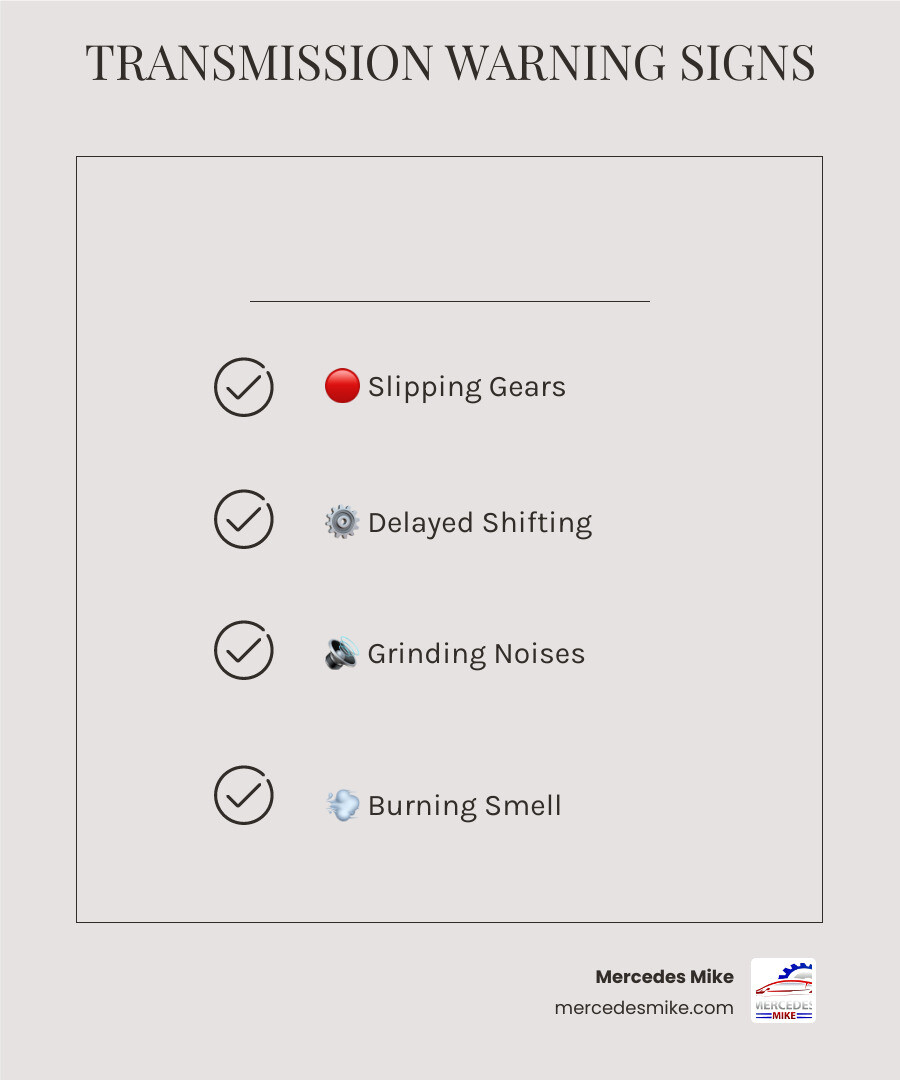
Check for warning signs — slipping gears, delayed shifting, grinding noises, or a burning smell
Don't keep driving — transmission damage gets worse fast if you ignore it
Find a certified specialist — look for ASE or ATRA-certified technicians with experience in your vehicle's make
Get a diagnostic first — a proper scan identifies the exact problem before any work begins
Ask about warranty — reputable shops back their work with at least an 18-month/18,000-mile guarantee
Your transmission is one of the most complex systems in your vehicle. It controls how power moves from your engine to your wheels. When it fails, everything stops.
For owners of German luxury vehicles like a Mercedes-Benz or BMW, this is especially stressful. These cars use sophisticated gearboxes — including dual-clutch and advanced automatic systems — that require more than a basic mechanic.
The stakes are high. Major transmission repairs can easily exceed $1,000, and the wrong shop can make things worse. Knowing how to find the right specialist quickly can save you time, money, and a lot of frustration.
This guide walks you through exactly what to look for.
Recognizing the Warning Signs of Transmission Failure
The first step in finding the right shop is knowing whether your transmission is actually asking for help. Some problems feel minor at first, but transmissions are notorious for turning a small issue into a large invoice if ignored.
Common warning signs include:
Slipping between gears
Delayed engagement when shifting into Drive or Reverse
Hard, rough, or jerky shifting
Grinding, whining, humming, or clunking noises
Shuddering during acceleration
Transmission fluid leaks
A burning smell
Dashboard warning lights or a check engine light
Failure to move at all
If you shift into Drive and the car pauses before moving, that is not your car being dramatic. That is a problem.
A few signs matter especially for modern German vehicles:
Solenoid problems can cause inconsistent shifting or limp mode
Valve body issues can create harsh shifts or gear hunting
Torque converter faults may feel like shuddering or slipping at speed
Electronic control faults can mimic mechanical failure, which is why diagnostics matter so much
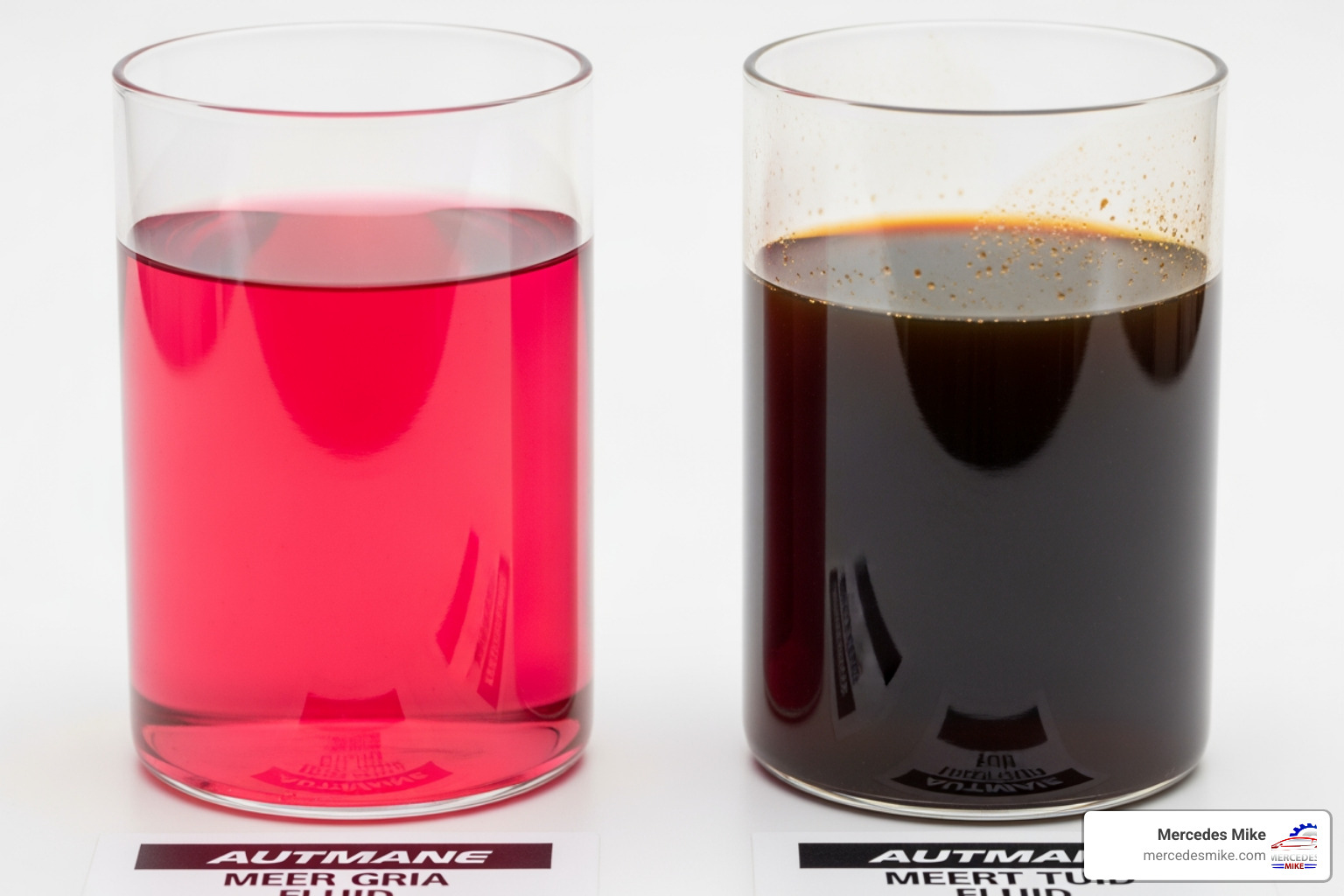
Fluid condition also tells a story. Healthy transmission fluid is typically bright red or pinkish and should not smell burnt. Dark, brown, or burnt-smelling fluid can point to overheating or internal wear.
Leaks are another big one. A small leak today can become a low-fluid condition tomorrow, and low fluid can quickly lead to overheating and internal damage. On luxury vehicles, that can get expensive fast.
If you notice any of these symptoms, the smart move is to stop guessing and schedule Expert Transmission Diagnostics and Repair. A proper diagnostic can separate a sensor issue from a major internal failure before anyone starts talking rebuilds.
Choosing the Best Auto Transmission Repair Near Me
Typing auto transmission repair near me into Google is easy. Choosing the right result is the hard part.
Not every shop that works on cars should work on transmissions. And not every transmission shop is the right fit for a Mercedes, BMW, Audi, or Porsche.
Here is what we recommend looking for:
ASE-certified technicians
ATRA-related transmission expertise or equivalent specialty experience
Strong experience with your specific make and transmission type
Advanced computer diagnostic capability
Clear written estimates
Good local reviews mentioning honesty, communication, and accuracy
Specialized tools and software for modern drivetrains
Real warranty coverage, not vague promises
ASE certification is one of the clearest signs that a technician has met recognized industry standards. In transmission work, additional specialist training matters because automatic, CVT, and dual-clutch systems all behave differently and require different test procedures.
Experience matters too. A shop may be excellent at brakes and oil changes but still not be the right place for a complex transmission fault. Research from specialist shops across the industry repeatedly points to the same theme: diagnosis first, not guesswork first.
That is especially true in South Florida, where stop-and-go traffic, heat, and humidity can be tough on drivetrains and transmission cooling systems.

When you call a shop, ask simple questions:
Do you work on my make regularly?
Do you perform computer diagnostics and road testing first?
Do you handle valve body, mechatronic, or control module issues?
Do you use manufacturer-spec fluids and quality parts?
What warranty do you provide?
Do you offer towing, financing, or shuttle options if needed?
A good shop will answer clearly. A bad shop will talk in circles and rush you toward the most expensive option.
Why Specialized Auto Transmission Repair Near Me Matters
Specialization matters because modern transmissions are not simple gearboxes anymore. They are a blend of hydraulics, electronics, software, and precision mechanical parts.
German vehicles raise the difficulty level even more.
Mercedes-Benz, BMW, Audi, and Porsche transmissions often require:
Factory-level scan tools or advanced aftermarket diagnostic equipment
Precise fluid specifications
Adaptation resets and calibration procedures
Knowledge of dual-clutch systems and electronically controlled automatics
Experience with integrated mechatronic components
A general repair shop may be able to spot obvious failure signs. But if the issue involves software adaptation, valve body pressure irregularities, or manufacturer-specific faults, you want someone who sees these systems regularly.
That is why we emphasize Precision Transmission Calibration for Luxury Vehicles. Proper calibration is just as important as replacing worn parts. Without it, even a correctly repaired transmission can still shift poorly.
Specialized shops also tend to know the difference between:
A maintenance issue
A repairable component fault
A rebuild situation
A full replacement situation
That difference can save you thousands.
Finding Trusted Auto Transmission Repair Near Me Through Reviews
Reviews are not perfect, but they are useful. They help you spot patterns.
When checking Google or Yelp, look beyond the star rating and focus on what customers repeatedly mention:
Was the diagnosis accurate?
Did the final bill match the estimate reasonably well?
Did the shop explain options clearly?
Were they honest about whether the problem was minor or major?
Did they communicate throughout the repair?
Did customers mention warranty support after the work?
Good reviews often mention transparency, professionalism, and not being pushed into unnecessary replacement. Those are green flags.
You can also check local search results like THE BEST 10 TRANSMISSION REPAIR IN DEERFIELD BEACH, FL and THE BEST 10 Transmission Repair in FORT LAUDERDALE, FL - Yelp to compare nearby options and see how shops present themselves in the local market.
What you do not want:
Lots of complaints about surprise charges
Reviews saying the problem came back right away
No mention of diagnostics
Generic responses to serious complaints
Pushy sales tactics
In short, reviews should support your decision, not make it for you.
What to Expect During the Transmission Repair Process
A professional transmission repair process should be structured, not mysterious.
In most cases, here is what happens:
Initial symptom review
Computer scan and fault-code check
Road test, if safe
Fluid level and fluid condition inspection
Pressure testing or deeper diagnostic steps, if needed
Estimate and explanation of options
Repair, rebuild, or replacement
Final road test and quality check
Many reputable shops now take a diagnostic-first approach because it can prevent unnecessary major work. A slipping complaint could be caused by low fluid, a solenoid, internal clutch wear, a control issue, or something else entirely. The right answer only comes after testing.
Here is a simple comparison:
Service type What it means Best for Typical downtime Repair Fixing a specific failed component without fully overhauling the unit Solenoids, sensors, leaks, valve body issues, minor faults Often same day to a couple of days Rebuild Removing and disassembling the transmission, replacing worn internal parts, and reassembling to spec Significant internal wear but salvageable core Often 1 to 3 days, sometimes longer Replacement Installing a remanufactured, used, or new transmission unit Severe failure, unavailable internal parts, or cost-effective swap Usually several days depending on parts availability
Some maintenance services can be quick. Industry examples show routine transmission service can sometimes take around 2 to 4 hours. Major rebuilds may take about a day and a half or longer, depending on damage and parts availability. In 2026, lead times can still vary based on make, model, and whether specialized components are in stock.
For German cars, parts sourcing can be a major factor. Some components are easy to get. Others are not. That is one reason we always recommend a detailed diagnosis before discussing timelines.
Understanding Costs and Financing for Major Repairs
Transmission pricing varies a lot. Anyone who gives you a firm quote before diagnosis is either guessing or auditioning for a magic show.
The cost depends on:
Vehicle make and model
Transmission type
Whether the issue is electrical, hydraulic, or mechanical
Parts availability
Labor time
Fluid requirements
Whether repair, rebuild, or replacement is needed
A minor repair such as a sensor, solenoid, seal, or fluid service may cost far less than a rebuild. Major repairs and replacements often exceed $1,000, and on luxury European vehicles they can climb much higher.
For a broader cost breakdown, see our guide to Automatic Transmission Replacement Cost.
When comparing estimates, ask:
What tests were performed?
Is this a repair, rebuild, or replacement quote?
Are parts OEM, OE-quality, remanufactured, or used?
Are fluids included?
Is programming or calibration included?
What warranty comes with the work?
Do not automatically choose the lowest price. A cheap transmission repair can become very expensive if the diagnosis was wrong or the shop cuts corners on parts or fluid.
Many shops also offer convenience options for big repairs, including:
Third-party financing
90-day same-as-cash programs at some facilities
Credit card payment options
Towing with major repairs
Shuttle service or drop-off support
Night drop-off at some locations
Some shops in the broader industry also advertise military, student, first responder, or senior discounts. Availability varies, so it is worth asking.
The key is this: a reputable shop explains your options without pressure and helps you balance budget, reliability, and long-term value.
Evaluating Warranties and Long-Term Protection
Warranty coverage is one of the clearest ways to judge a shop's confidence in its work.
Across the industry, we see common warranty ranges such as:
18 months/18,000 miles
2 years/24,000 miles
3 years/36,000 miles
Longer coverage in some situations
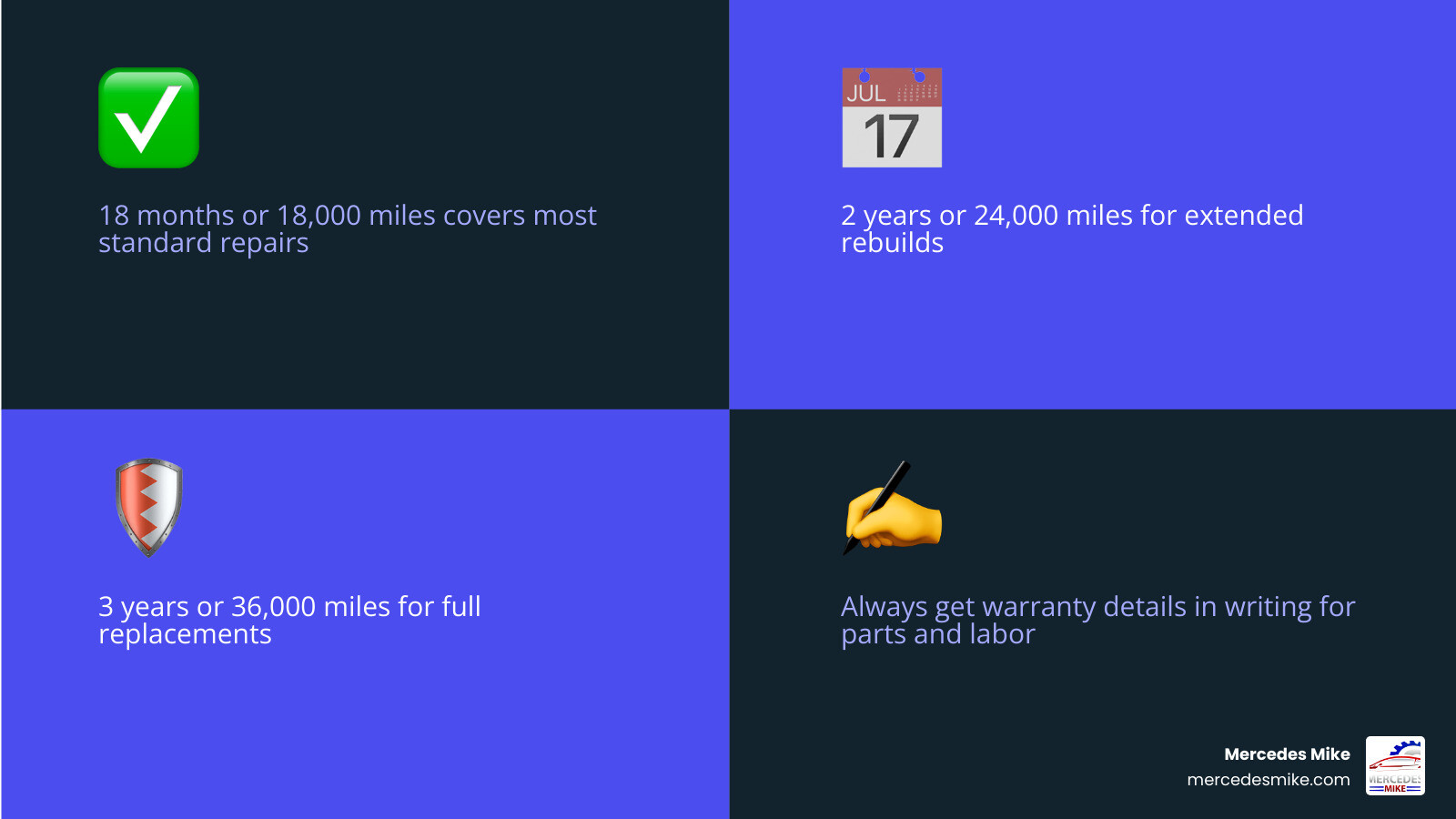
That does not mean every repair gets the same coverage, so always ask for details in writing.
Important warranty questions include:
What parts and labor are covered?
Is the warranty local or nationwide?
Are diagnostics for warranty-related concerns included?
Are there maintenance requirements to keep the warranty valid?
Does the warranty differ for repair vs. rebuild vs. replacement?
A stronger warranty is valuable, but only if the shop also uses proper parts, correct fluids, and sound procedures. A long warranty on a poor repair is still a poor repair.
For peace of mind, we recommend working with a provider that values Comprehensive Warranty Coverage for Peace of Mind and clear documentation.
Long-term protection also depends on maintenance, not just repair quality. Preventive care can dramatically reduce the chance of repeat failure.
That includes:
Routine transmission fluid service at the proper interval
Filter replacement where applicable
Cooling system maintenance
Prompt leak repair
Scanning warning lights early
Avoiding continued driving with slipping or overheating symptoms
In South Florida, heat matters. Transmission fluid breaks down faster when systems run hot, and cooling problems can shorten transmission life. For German vehicles in particular, using the correct manufacturer-spec fluid is not optional.
Frequently Asked Questions about Transmission Repair
How long does a typical transmission repair take?
It depends on the service.
Basic maintenance or fluid service can sometimes be completed in 2 to 4 hours
Minor repairs may be same day or next day
Major rebuilds often take around 1.5 days or more
Full replacements can take several days depending on diagnostics, parts lead time, and programming needs
For European vehicles, timeline often comes down to parts availability and whether the repair also requires software setup or adaptation.
Can I drive my car if the transmission is slipping?
Usually, no. At minimum, you should avoid unnecessary driving until it is inspected.
A slipping transmission can create:
Excess heat
Internal clutch damage
Metal contamination
Sudden loss of movement
Total failure
If the vehicle is barely moving, shuddering badly, refusing to engage, or showing warning lights, towing is the safer choice. Driving it farther can turn a repairable issue into a rebuild or replacement.
What is the difference between a transmission flush and a repair?
A flush or fluid exchange is preventive maintenance. It is designed to remove old fluid and replace it with fresh fluid. In some systems, a filter may also be replaced.
A repair fixes something that is already broken, such as:
A leaking seal
A bad solenoid
A faulty sensor
A damaged valve body
Worn internal components
In other words:
A flush helps protect a healthy or mildly worn transmission
A repair restores function when a component has failed
If a transmission already has severe slipping, burnt fluid, or internal damage, fluid service alone will not magically solve it. We wish it did. We would all sleep better.
Conclusion
Finding reliable auto transmission repair near me comes down to a few fundamentals: act early, choose a specialist, insist on accurate diagnostics, understand your options, and never ignore warranty details.
For drivers in Pompano Beach, Deerfield Beach, and across South Florida, transmission problems deserve careful diagnosis, especially on German vehicles with advanced automatic, dual-clutch, and electronically controlled systems.
At Mercedes Mike, we focus on Mercedes-Benz, BMW, Audi, and Porsche repair with experienced technicians and modern diagnostic tools. If your vehicle is slipping, hesitating, leaking, or shifting poorly, we are here to help you get answers before the problem gets bigger.
Schedule your professional transmission service today and let us help you protect your drivetrain the right way.