
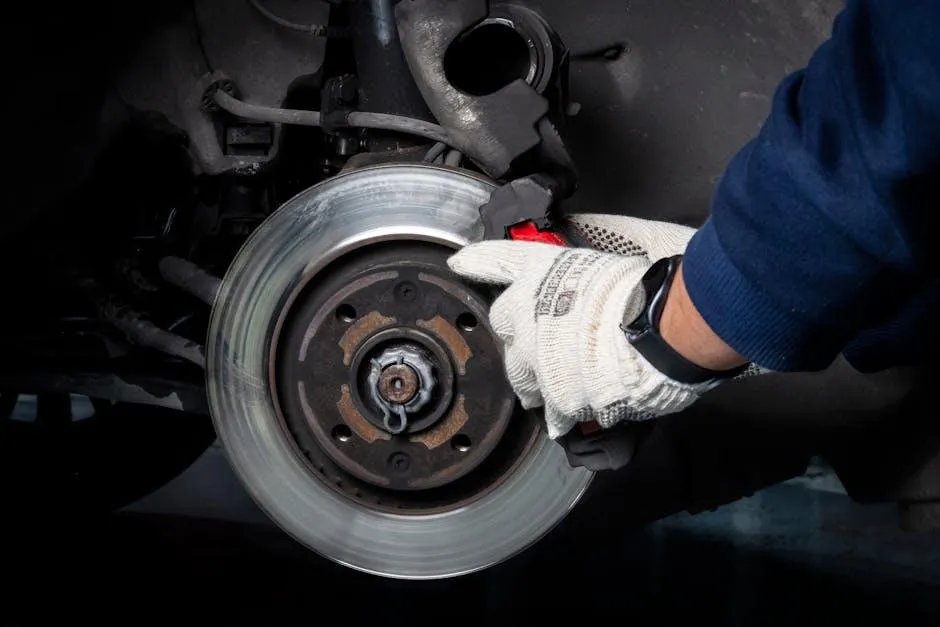
Stop the Leak: How to Repair Your Brake Master Cylinder
When Your Brakes Start Failing: What You Need to Know About Brake Master Cylinder Repair
Brake master cylinder repair is the process of rebuilding or replacing the internal seals and pistons inside your vehicle's master cylinder to restore proper hydraulic brake pressure.
Here's a quick overview of what's involved:
Diagnose the problem - Look for a sinking pedal, spongy feel, fluid leaks, or brake warning lights
Choose repair or replace - A rebuild kit costs around $50; a new OEM unit runs about $300
Gather tools - You'll need line wrenches, snap-ring pliers, a bench vise, and brake fluid
Rebuild the cylinder - Replace worn seals and pistons using a matched repair kit
Bench bleed - Remove air from the rebuilt unit before installing it back on the car
Bleed the full system - Work from the farthest wheel inward to purge all air
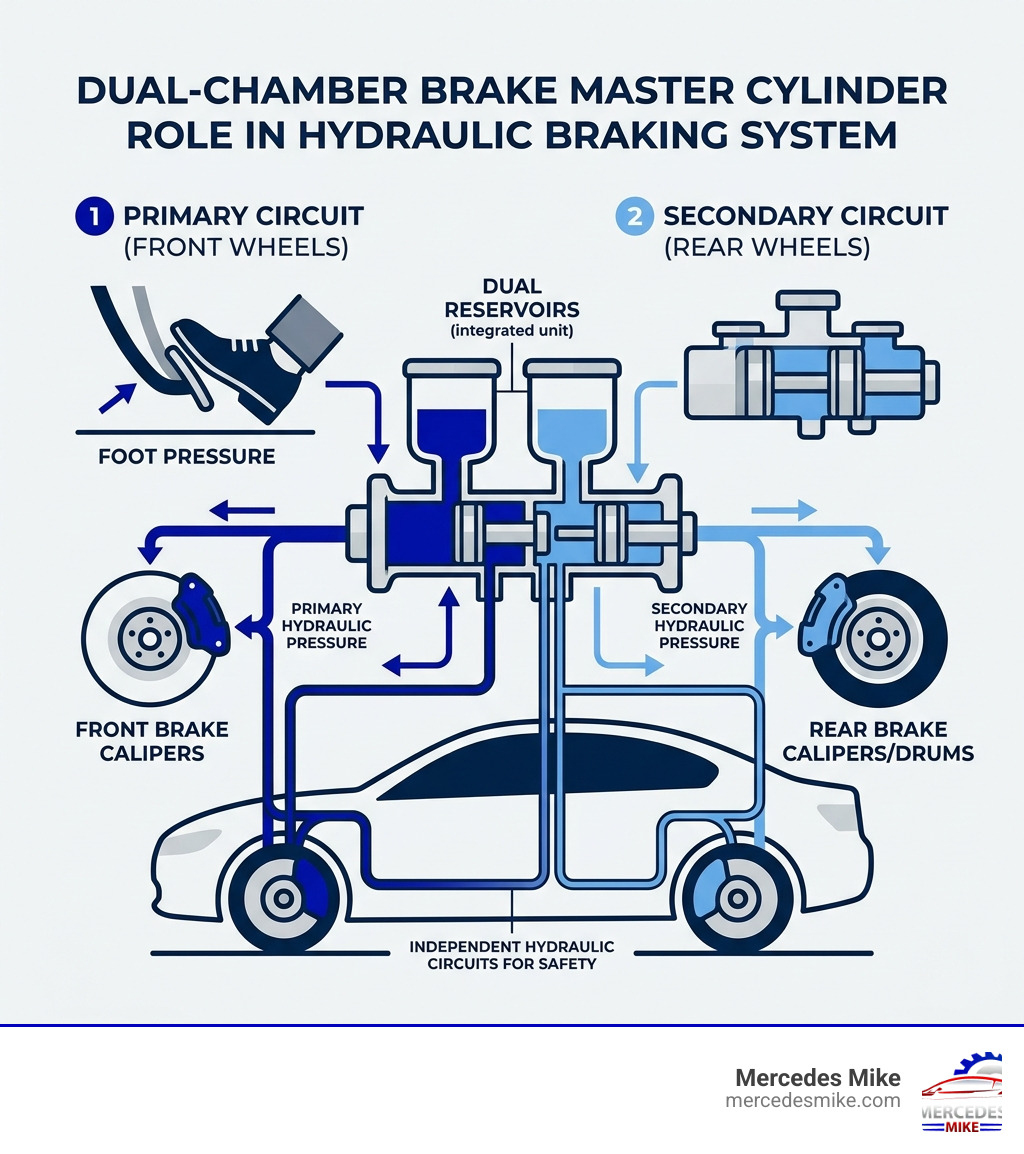
Think of the master cylinder as the heart of your brake system. Every time you press the brake pedal, it converts that foot pressure into hydraulic force and pushes it through your brake lines to stop the car. When it fails, everything downstream fails with it.
For Mercedes and BMW owners, this isn't just an inconvenience. It's a serious safety issue — and an expensive one if ignored. Professional replacement can run anywhere from $841 to $944 at a shop. A DIY rebuild with a repair kit? As little as $50 in parts.
The good news: if your cylinder bore is in decent shape, a rebuild is completely achievable. This guide walks you through exactly how to do it.
Identifying the Need for Brake Master Cylinder Repair
Recognizing the symptoms of a failing master cylinder early can save you from a terrifying "no-brakes" situation on the I-95. Because the master cylinder is responsible for distributing hydraulic pressure to both the front and rear circuits, any internal failure usually manifests right at your foot.
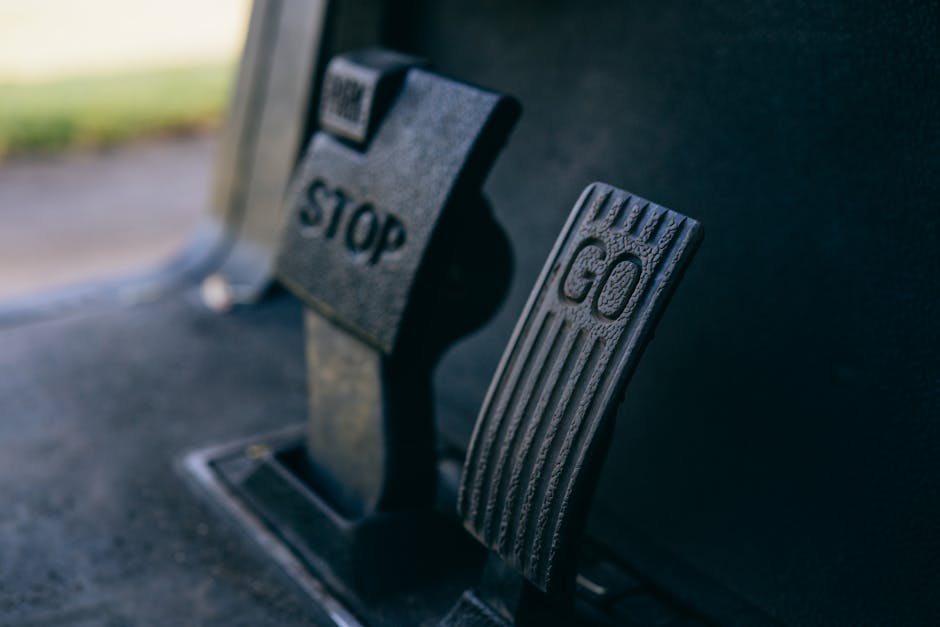
The most common signs we see at our Pompano Beach facility include:
The Sinking Pedal: You’re sitting at a red light with your foot on the brake, and you feel the pedal slowly creep toward the floor. This "pedal fade" usually indicates that fluid is bypassing the internal rubber seals.
Spongy or Mushy Feel: If the pedal feels like you’re stepping on a marshmallow, air has likely entered the system, or the internal seals are no longer maintaining a tight vacuum.
Visible Fluid Leaks: Check the area where the master cylinder bolts to the brake booster. If you see wetness or peeling paint (brake fluid is highly corrosive!), the rear seal has failed.
Contaminated Fluid: Brake fluid should be clear or slightly amber. If yours looks like dark coffee or has black flecks in it, those flecks are likely bits of your internal seals disintegrating.
Brake Warning Light: Modern German cars are smart. If the fluid level drops due to a leak or the pressure differential sensor detects a problem, your dashboard will light up.
According to How to Replace an Automotive Brake System Master Cylinder, it is vital to distinguish between a mechanical master cylinder failure and simple air in the lines.
Diagnostic Tests for Internal Seal Failure
Before you start your brake master cylinder repair, perform these quick tests:
Pressure Build Test: With the engine off, pump the brakes several times to bleed off the vacuum reserve. Hold the pedal down. If it continues to sink, the internal seals are bypassing fluid.
Reservoir Stream Test: Have a helper watch the fluid in the reservoir (with the cap off) while you gently tap the brake pedal. A small "squirt" or movement is normal, but a large geyser suggests the primary seal is failing to close the compensating port.
Hose Swell Check: If the pedal is spongy but the master cylinder seems fine, have someone pump the brakes while you watch the rubber brake hoses. If they "balloon" or swell, the hoses are the problem, not the cylinder.
Symptom Air in Lines Master Cylinder Failure Pedal Sinks at Light No Yes Spongy Pedal Yes Yes Pumping Restores Pressure Often Sometimes Fluid Leaks at Booster No Yes
When to Choose Repair Over Full Replacement
Deciding between a repair kit and a whole new unit comes down to the condition of the internal "bore" (the tunnel where the pistons slide). If the bore is pitted, rusted, or deeply scratched, a new seal won't help; it will just leak again.
However, for many vintage Mercedes or high-end Porsche models where a new OEM unit might be backordered or incredibly expensive, a rebuild is a great option. As noted in Acura: How to Replace Brake Master Cylinder, replacing the entire unit is often seen as more time-efficient, but a rebuild is the ultimate cost-saver if you have the patience.
Essential Tools and Materials for a Successful Rebuild
German engineering requires precision. You can't just go at a BMW master cylinder with a pair of pliers and hope for the best. You need the right kit to ensure the job is done safely.
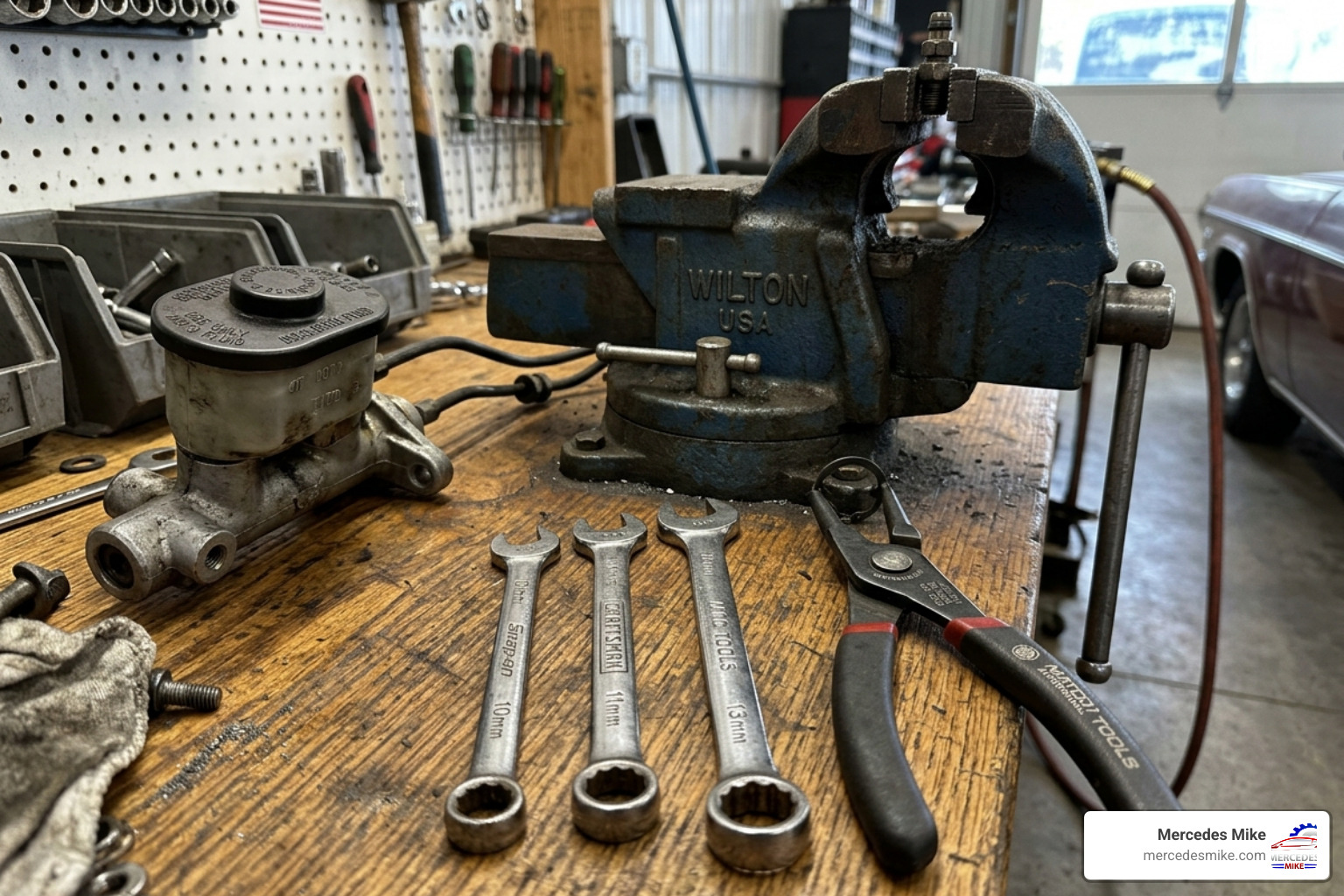
To perform a brake master cylinder repair, gather the following:
Line Wrenches (Flare Nut Wrenches): Do not use standard open-end wrenches. Brake line fittings are soft and will round off easily. You’ll likely need 10mm, 11mm, or 13mm sizes.
Snap-Ring Pliers: Essential for removing the retaining ring that holds the pistons inside the cylinder body.
Bench Vise: You need a way to hold the cylinder steady while you work on it.
Brake Cleaner: To ensure the bore is spotless before reassembly.
New Brake Fluid: Always use a fresh, sealed container of DOT 4 or DOT 5.1 (standard for most German cars).
EPDM Rubber Seals: These are the standard in the industry for durability against hydraulic fluid.
We often discuss these requirements when addressing The Most Common Problems with German Cars and How to Prevent Them. Using the wrong fluid or cheap tools can turn a simple afternoon project into a week-long headache.
Selecting the Correct Repair Kit
Repair kits are sold based on the "bore size" of your cylinder. Common sizes include 7/8 inch, 1 inch, 1-1/8 inch, and 1-1/4 inch. A typical kit will include:
Primary and secondary piston assemblies.
New springs.
Rubber cups and seals.
New reservoir grommets (the rubber "donuts" the plastic tank sits in).
Step-by-Step Process for Brake Master Cylinder Repair
Ready to get your hands dirty? Follow this process carefully. Remember: brakes are safety-critical. If you feel unsure at any point, give us a call in Pompano Beach.
Step 1: Fluid Evacuation
Before removing anything, use a turkey baster or a fluid syringe to suck as much old fluid out of the reservoir as possible. This prevents a massive mess in your engine bay. As How to Replace a Brake Master Cylinder - AutoZone suggests, wrapping a few rags under the unit is a smart move to protect your car's paint.
Step 2: Disconnection and Removal
Disconnect the electrical connector for the fluid level sensor.
Use your line wrenches to loosen the brake lines. Once loose, you can usually unscrew them by hand.
Remove the mounting nuts holding the cylinder to the brake booster.
Pull the cylinder straight forward off the booster studs.
Disassembly and Internal Component Replacement
Now that the unit is on your workbench and secured in a vise:
Remove the Snap Ring: Use your snap-ring pliers to remove the large ring at the back of the cylinder.
Extract the Pistons: The primary piston should slide out. You may need to gently tap the cylinder on a block of wood to get the secondary (inner) piston to move. If it's stuck, a tiny bit of compressed air (less than 15 PSI) through a brake line port can help pop it out.
Clean and Inspect: Clean the bore thoroughly with brake cleaner. Look for any scoring or rust. If the bore isn't perfectly smooth, you may need a brake hone to lightly polish the surface.
Lubricate and Reassemble: Dip your new seals and pistons in fresh brake fluid. Never install them dry! Slide the secondary piston in first, followed by the primary.
Reinstall the Snap Ring: Compress the pistons and snap the ring back into its groove.
Bench Bleeding the Rebuilt Unit
This is the most important step. If you skip bench bleeding, you will spend hours trying to get the air out of your lines later.
Secure the cylinder in the vise.
Install a bench bleeding kit (short plastic hoses that loop from the output ports back into the reservoir).
Fill the reservoir with fresh fluid.
Using a screwdriver or wooden dowel, slowly depress the piston about 3/4 of an inch.
Watch the bubbles in the clear hoses. Continue pumping until no air bubbles appear.
The piston travel should feel very firm—usually moving no more than 1/8-inch once the air is gone.
Vehicle-Specific Considerations for Brake Master Cylinder Repair
In South Florida, we see a lot of high-performance German vehicles. These cars often feature complex Anti-lock Braking Systems (ABS) and Electronic Stability Control (ESC) that change the brake master cylinder repair dynamic.
Dealing with ABS and Traction Control Systems
If your vehicle has ABS, the master cylinder is connected to an ABS actuator or pump.
Bore Differences: ABS master cylinders often have different piston lengths or stroke requirements compared to non-ABS models.
Bleeding Requirements: Some German systems require a scan tool to cycle the ABS valves during the final bleeding process. Without this, air can stay trapped inside the ABS module, leaving you with a soft pedal despite a perfect master cylinder rebuild.
Proportioning Valves: On older models, these might be integrated into the master cylinder. Ensure all O-rings in these valves are replaced during the rebuild.
For more specialized information, check out our Services page to see how we handle these high-tech systems.
Frequently Asked Questions about Master Cylinder Rebuilds
Can I drive with a failing master cylinder?
Absolutely not. A failing master cylinder is unpredictable. It might work fine for three stops and then completely fail on the fourth. If your pedal is sinking, the car is unsafe to drive.
How much does a master cylinder repair kit cost in 2026?
In April 2026, a high-quality rebuild kit for a German car typically costs around $50 to $75. Compared to a full OEM replacement which can reach $300 plus labor, it is a very economical choice for the savvy DIYer.
Is bench bleeding really necessary?
Yes! If you install a "dry" master cylinder on a car, you will push a massive amount of air into the ABS module and brake lines. It can be nearly impossible to remove that air through the calipers alone. Bench bleeding saves you hours of frustration.
Conclusion
At Mercedes Mike, we know that your vehicle's safety starts with its ability to stop. Brake master cylinder repair is a precision task that requires the right tools, a clean environment, and a bit of patience. Whether you are working on a classic 450SL or a modern BMW M3, maintaining the hydraulic integrity of your system is paramount.
If you’ve noticed a sinking pedal or a "brake" light on your dash, don't wait. While DIY rebuilds are possible for those with the right skills, our team in Pompano Beach is always here to provide professional diagnosis and repair using decades of German car expertise.
Don't gamble with your safety. Schedule your professional brake service with us today and ensure your car stops as perfectly as it goes.