
The 5 Best Brake Repair Services Compared
Why Getting the Right Brake Repair Matters for Your Safety and Your Car
Brake repair is one of the most safety-critical services your vehicle will ever need — and for German luxury cars like Mercedes-Benz and BMW, getting it right matters even more than it does for ordinary vehicles.
Quick answer: What you need to know about brake repair
Question Answer When to get brakes inspected Every 12,000 miles or once a year How long do brake pads last 30,000 to 70,000 miles depending on driving habits How often to exchange brake fluid Every 24 months or 24,000 miles Typical cost per axle Around $249 for standard service (varies by vehicle and parts) Top warning signs Squealing, grinding, spongy pedal, steering wheel shake, pulling to one side
Your brakes are your car's most important safety feature. When they start to feel different — softer, noisier, or slower to respond — that's your vehicle telling you something is wrong.
For owners of high-performance German vehicles, the stakes are even higher. These cars use precision-engineered braking systems with specialized sensors, electronic parking brakes, and tight tolerances that generic repair shops often aren't equipped to handle properly.
This guide compares the five best brake service levels so you can make a smart, informed decision — whether you're hearing a faint squeal or dealing with a full brake warning light.
Common Signs You Need Professional Brake Repair
It is May 2026, and modern vehicles are more advanced than ever, but the physics of stopping remains the same. Friction creates heat, and heat eventually wears down even the highest-quality components. Recognizing the symptoms of wear early can save you from a "metal-on-metal" situation that turns a simple pad replacement into an expensive rotor and caliper overhaul.

Squealing Noises: Most brake pads are equipped with a small metal shim called a wear indicator. When the friction material gets too thin, this shim touches the rotor, creating a high-pitched squeal. It’s essentially your car’s way of screaming for help.
Grinding Metal: If you hear a loud, crunchy grinding sound, the friction material is likely gone. You are now pressing metal against metal, which destroys your rotors instantly.
Steering Wheel Vibration: If your hands shake when you apply the brakes, your rotors may be "warped" or have uneven thickness. This is often caused by excessive heat or uneven torque.
Spongy Pedal: Does the pedal sink to the floor? This could indicate air in the lines or a moisture-contaminated hydraulic system. In German cars, this often requires a specialized pressure bleed.
ABS Warning Light: Modern Mercedes and BMW models have sophisticated sensors. If the ABS light or the brake wear light illuminates on your dash, the computer has detected a fault that needs immediate attention.
Pulling to One Side: If your car dives toward the left or right when braking, you might have a stuck caliper or a collapsed brake hose.
If you notice any of these signs, it's time to look into Brake Repair Services at Mercedes Mike to ensure your vehicle remains safe on the South Florida roads.
Comparing the 5 Best Brake Service Levels
Not all brake repair jobs are created equal. Depending on your vehicle's mileage and how you drive through the stop-and-go traffic of Pompano Beach and Deerfield Beach, you may need a different level of care.
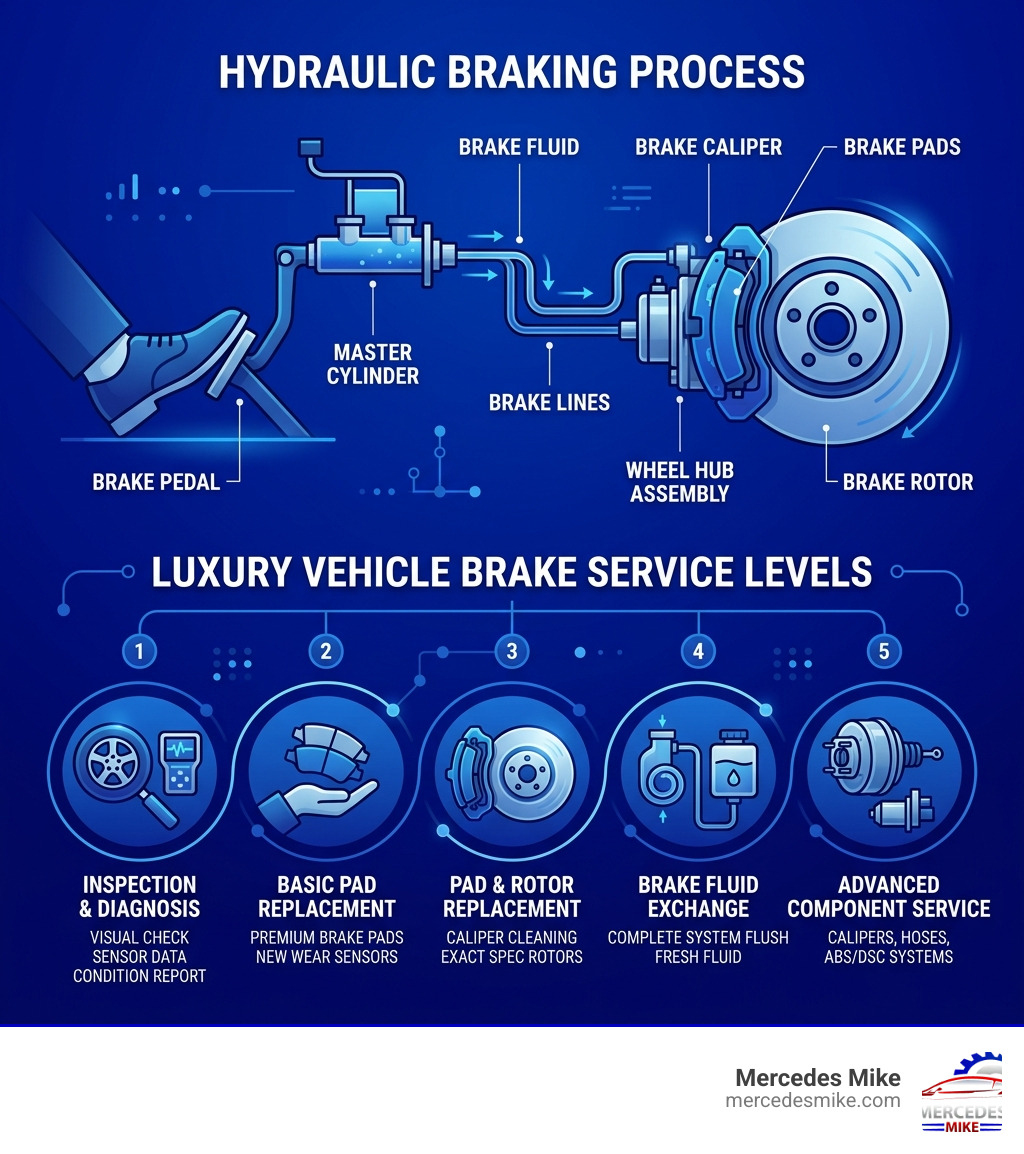
Service Level What's Included Best For Typical Warranty 1. Digital Inspection Visual check, fluid test, measurement of pads/rotors. Routine maintenance (every 12k miles). N/A 2. Standard Package New brake pads, hardware lubrication, and basic inspection. Daily drivers with healthy rotors. 12-Month / 12,000-Mile 3. Premium Package High-quality pads, rotor resurfacing, and hardware kit. Drivers noticing slight vibrations or noise. 24-Month / 24,000-Mile 4. Rotor-Focused Full replacement of pads and rotors with OEM-spec parts. Heavy vehicles or those with warped rotors. Lifetime (on select parts) 5. German-Engineered OEM parts, sensor replacement, fluid flush, and ABS reset. Mercedes, BMW, Audi, and Porsche owners. Varies by manufacturer
Understanding the Cost of Brake Repair
In 2026, the average cost for a standard brake service typically starts around $249 per axle. However, "standard" doesn't always mean "sufficient" for a luxury vehicle. Several factors influence the final price:
Vehicle Type: High-performance German cars often require larger, ventilated rotors and multi-piston calipers that take more time and specialized parts to service.
Parts Quality: While aftermarket pads are cheaper, they often produce more dust and noise. We always recommend OEM (Original Equipment Manufacturer) parts to maintain the "factory feel" of your braking.
Shop Supply Fees: Most shops charge an 8% to 10% fee (often capped around $40) to cover cleaners, lubricants, and hazardous waste disposal for old brake fluid.
Axle vs. Full Set: Most cars wear out front brakes faster than rear brakes. You’ll usually pay per axle, though doing both at once can sometimes save on labor.
Choosing the cheapest option can be a trap. Low-cost pads can overheat quickly, leading to "brake fade" where your car simply won't stop in an emergency. For a transparent estimate, you can Schedule Your Brake Inspection with our team.
Why Specialized Brake Repair Matters for German Cars
If you drive a Mercedes-Benz or a Porsche, you aren't just driving a car; you're driving a piece of precision engineering. Generic shops often struggle with European systems for a few reasons:
Electronic Parking Brakes (EPB): Many modern German cars require a diagnostic computer to "retract" the rear calipers before the pads can even be touched. Forcing them manually can cause thousands of dollars in damage.
Brake Wear Sensors: These vehicles use electronic sensors that "trip" when the pads are low. These must be replaced along with the pads to reset the dashboard warnings.
Specific Fluid Requirements: German manufacturers often specify low-viscosity DOT 4+ fluid. Using the wrong "generic" fluid can lead to poor ABS performance in the heat of South Florida.
At Mercedes Mike, we use factory-level diagnostics and decades of experience to ensure your car’s computer and hardware are perfectly synced.
Essential Maintenance: Pads, Rotors, and Fluid Exchange
To keep your car stopping on a dime, you need to understand the "Big Three" of brake maintenance:
1. Brake Pads (The Friction)
Brake pads typically last between 30,000 and 70,000 miles. If you are a "spirited" driver or spend your time in heavy traffic on N Dixie Hwy, expect to be on the lower end of that range. If you wait until you hear grinding, you’ve waited too long.
2. Rotors (The Foundation)
The rotors are the metal discs the pads squeeze. In the past, shops would "turn" or resurface rotors to make them smooth again. However, modern German rotors are often designed to be lightweight and have strict "discard thickness" limits. If they are too thin, they cannot dissipate heat, which leads to warping.
3. Brake Fluid Exchange (The Veins)
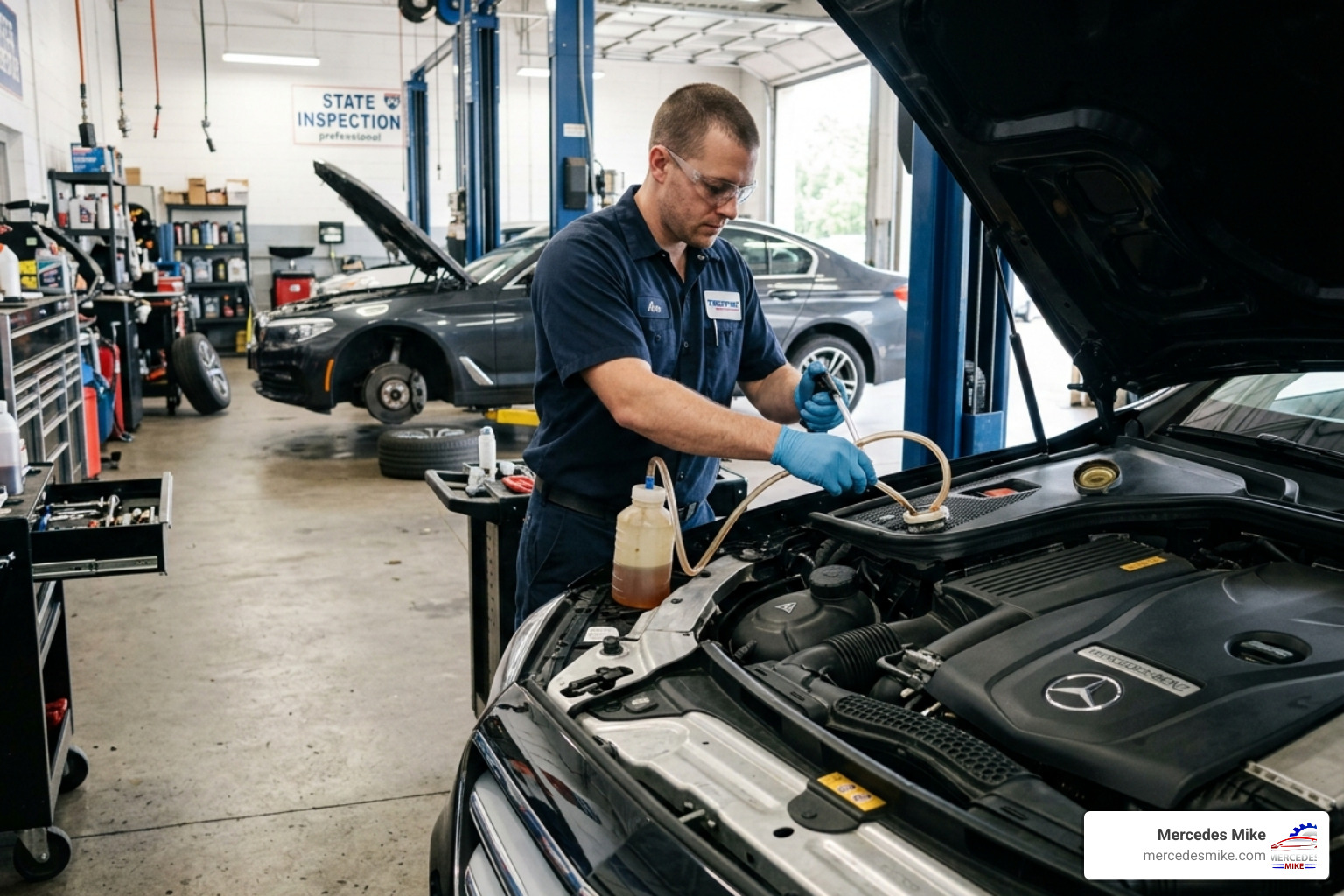
This is the most neglected service in the automotive world. Brake fluid is hygroscopic, meaning it naturally absorbs moisture from the air. Over time, this moisture lowers the fluid's boiling point (bad for stopping) and causes internal corrosion in your expensive ABS modules and calipers.
The 2026 Standard: You should exchange your brake fluid every 24 months or 24,000 miles. This simple flush prevents thousands of dollars in hydraulic repairs down the road.
How to Choose a Reliable Service Center in 2026
Choosing a shop in Pompano Beach or Deerfield Beach shouldn't be a guessing game. Here is what we recommend looking for:
Certifications: Look for ASE-certified technicians. For German cars, factory training is even better.
Specialized Tools: Ask if they have the specific diagnostic software for your car brand. If they don't know what a "service position" for an electronic parking brake is, run!
Transparency: A reputable shop will provide a digital inspection report, often with photos of your worn parts, so you can see exactly what you’re paying for.
Warranty: Quality labor should be backed by at least a 12-month/12,000-mile guarantee. Premium services often extend this to 24 months.
Frequently Asked Questions about Brakes
How often should I have my brakes inspected?
We recommend an inspection every 12,000 miles or once a year. However, if you're planning a long road trip or notice any changes in pedal feel, get them checked immediately. Most reputable shops will perform a visual check during a standard oil change.
Why does my car shake when I apply the brakes?
The most common culprit is warped rotors. When rotors get too hot, the metal can physically distort, or brake pad material can transfer unevenly to the surface. This creates "high spots" that cause the pads to bounce, sending a vibration through the steering wheel. A professional runout measurement can determine if they can be machined or if they need replacement.
Is a free brake inspection actually worth it?
It depends on what "free" includes. A quick visual check (looking through the wheels) is a good start, but a comprehensive evaluation involves taking the wheels off, measuring rotor thickness with micrometers, and testing the moisture content of the brake fluid. To get the full picture, you can Contact Mercedes Mike for a Professional Evaluation.
Conclusion
Your car's ability to go is important, but its ability to stop is vital. Whether you're commuting in South Florida or pushing your car to its limits, your braking system deserves expert attention.
At Mercedes Mike, we specialize in the unique needs of German-engineered vehicles. With decades of experience and the latest diagnostic tools at our Pompano Beach facility, we ensure your Mercedes, BMW, Audi, or Porsche performs exactly as the factory intended. Don't settle for "good enough" when it comes to your safety.