
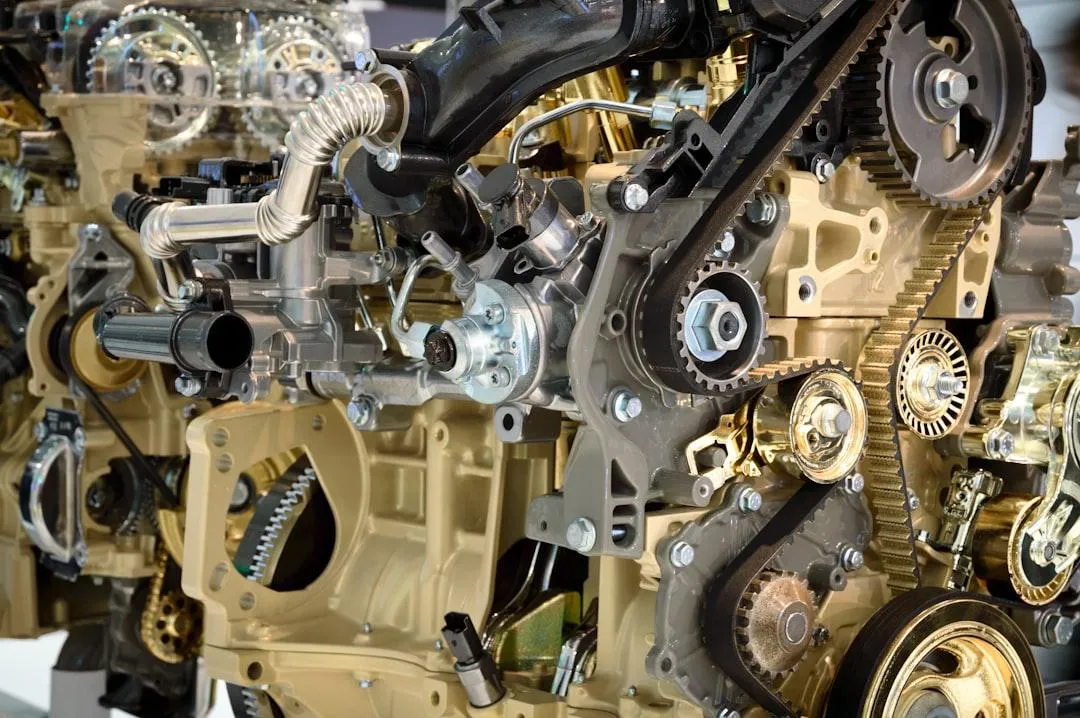
Change Timing Belt Cost vs Timing Chain Cost: What’s More Expensive?
The Real Cost to Replace a Timing Belt — And Why It Matters for Your Engine
The cost to replace a timing belt typically falls between $500 and $1,000 for most vehicles — but for German luxury cars like Mercedes-Benz and BMW, that number can climb higher depending on engine complexity and labor rates.
Here's a quick breakdown before we dive deeper:
What You're Paying For Typical Cost Range Timing belt kit (parts only) $100 – $350 Labor (3–5 hours) $300 – $650 Total replacement cost $500 – $1,000+ With water pump added $650 – $1,300+ Engine repair after belt failure $3,000 – $5,000+
Skip the service, and a $700 maintenance job can turn into a $5,000 engine repair — or a totaled car.
Timing belts are made of reinforced rubber. They wear out. And unlike a check engine light or a squeaky brake, a failing timing belt usually gives you no warning before it snaps.
If your engine suddenly dies on the highway with no prior symptoms, a broken timing belt is often the culprit. It's one of the most preventable — and most expensive — mistakes a car owner can make.
This guide breaks down exactly what you'll pay, what drives the cost up or down, and how to avoid the worst-case scenario.
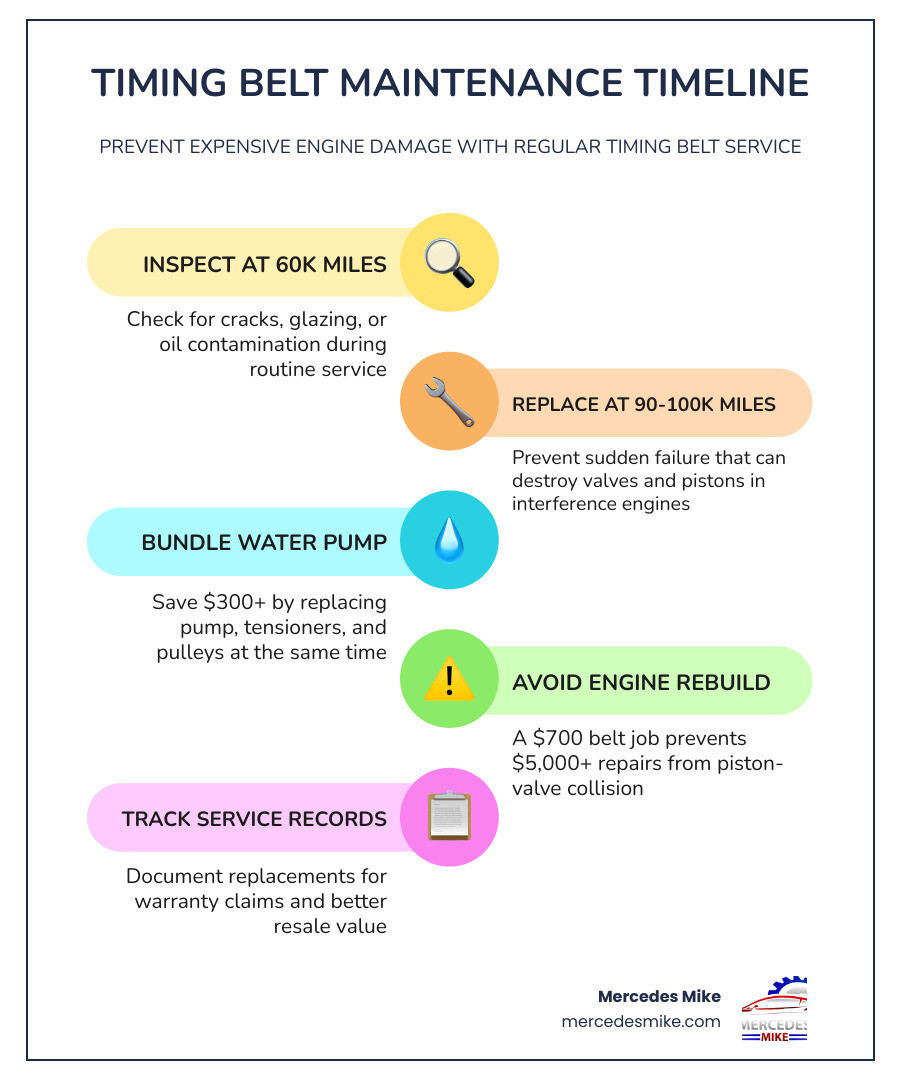
Understanding the Cost to Replace Timing Belt vs. Timing Chain Maintenance
When we talk about engine timing, we are referring to the precise synchronization of the crankshaft and the camshaft. This ensures that the engine's valves open and close at exactly the right moment during the intake and exhaust strokes. To achieve this, manufacturers use either a rubber timing belt or a metal timing chain.
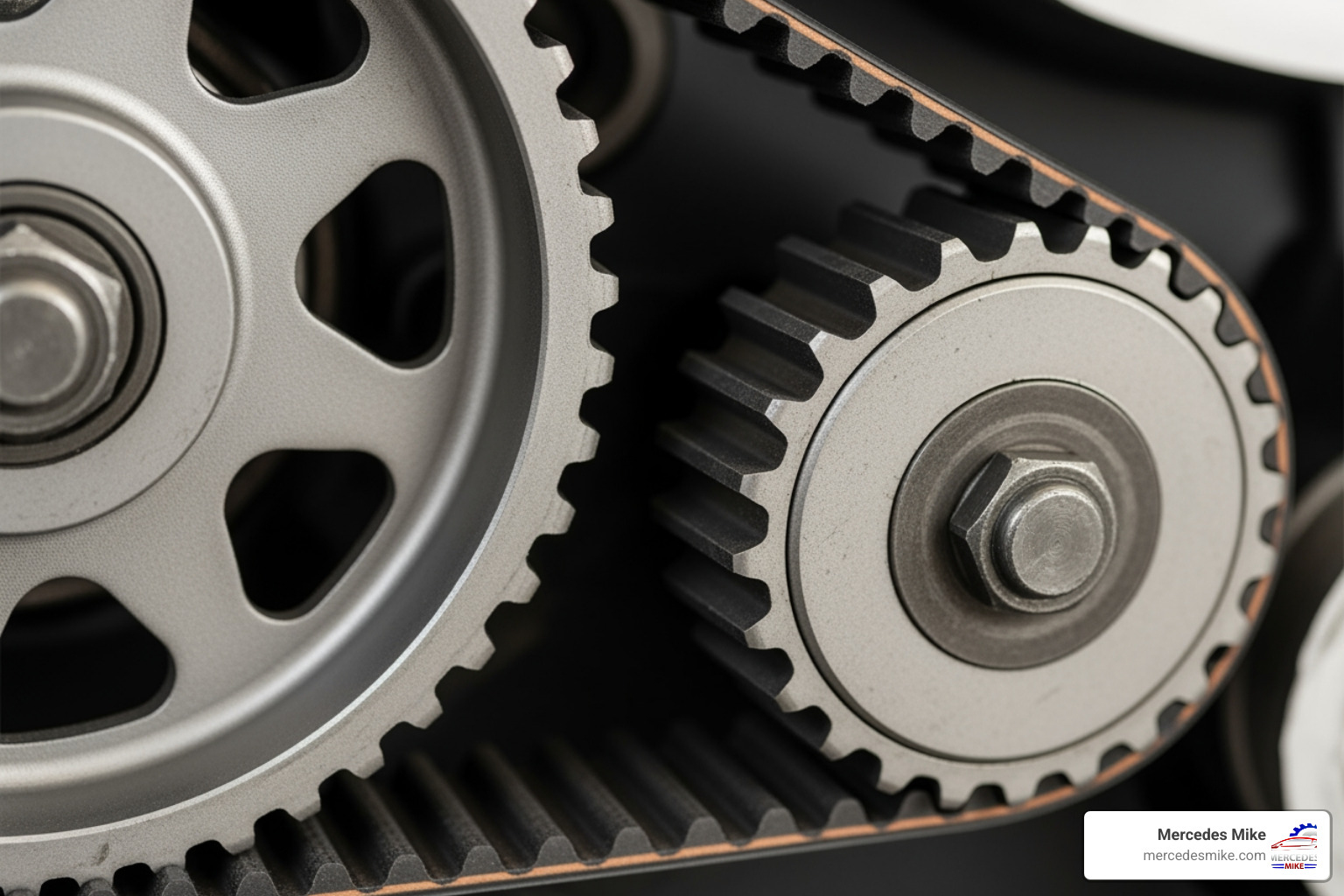
A timing belt is a high-quality rubber component reinforced with nylon or Kevlar cords. Because it is made of rubber, it is subject to heat, friction, and simple age-related degradation. Most manufacturers recommend a strict maintenance interval for these belts. According to Timing Belt Replacement Prices & Cost Estimates | Kelley Blue Book, these intervals typically range from 60,000 to 100,000 miles.
In contrast, timing chains are made of metal, much like a bicycle chain. They are designed to be "lifetime" components, meaning they should theoretically last as long as the engine itself. However, they aren't completely maintenance-free. They rely on engine oil for lubrication and hydraulic tensioners to stay tight. Neglecting oil changes is one of The Most Common Problems with German Cars and How to Prevent Them, and it can lead to timing chain "stretch" or tensioner failure.
Average Cost to Replace Timing Belt in 2026
As of May 2026, the cost to replace a timing belt remains one of the most significant preventive maintenance tasks for vehicle owners in South Florida. On average, you can expect to spend between $500 and $1,000 for a standard vehicle.
The price is broken down into two main categories:
Parts: A timing belt kit, which usually includes the belt, tensioners, and idler pulleys, typically runs between $100 and $350.
Labor: This is the "heavy lifting" part of the bill. Replacing a belt is labor-intensive because it requires removing several layers of the engine (covers, fans, and sometimes the radiator) to gain access. Most jobs take between 3 and 5 hours of professional labor.
According to data from Timing Belt Replacement Cost (2026) - Complete Price Guide | TheCostGuide, while some smaller cars might squeeze in under the $500 mark, luxury German vehicles often sit at the higher end of the spectrum due to the precision required during installation.
Why Timing Chain Repairs Often Cost More
If timing belts are "cheaper" to replace, why do people prefer timing chains? It comes down to frequency. You might replace a timing belt three times over the life of a car, whereas you might never touch a timing chain.
However, if a timing chain does fail—usually due to a broken guide or a failing tensioner—the repair bill is significantly higher than a belt replacement. Timing chains are located inside the engine block and are lubricated by engine oil. Replacing one requires extensive engine disassembly. The labor alone can easily exceed 10 to 15 hours, and because the parts are heavy-duty metal, they are more expensive than rubber kits. When a timing chain system fails, you aren't just looking at a maintenance bill; you're looking at a major engine overhaul.
Factors Influencing Your Timing Belt Replacement Price
Not all timing belt jobs are created equal. If you are driving a vintage Volkswagen through Pompano Beach, your quote will look very different from someone driving a late-model Audi with a V8 engine.
Vehicle Type Estimated Replacement Cost Complexity Level Economy Sedan (4-Cylinder) $400 - $700 Low Mid-Size SUV / Minivan $700 - $1,100 Medium German Luxury (Mercedes/BMW/Audi) $900 - $1,800+ High Performance / Turbocharged $1,200 - $2,500 Very High
Several variables dictate where you fall on this scale. If the belt is easy to get to, the labor cost stays low. If we have to pull half the front end of the car off just to see the belt, the price goes up. Additionally, the quality of parts matters. We always recommend OEM (Original Equipment Manufacturer) or high-quality aftermarket brands like Continental or Gates to ensure the belt doesn't fail prematurely. If the damage is already done, you might be looking at the Cost to Rebuild Engine, which is a far more daunting figure.
Labor Rates and Engine Complexity
In South Florida, labor rates can vary based on the type of shop you visit. Dealerships in areas like Deerfield Beach or Pompano Beach often charge between $150 and $200 per hour. Independent specialists (like us) typically offer more competitive rates while providing the same—or better—level of expertise with German engineering.
The engine layout also plays a massive role. Transverse engines (sideways) often have very little "elbow room" between the engine and the side of the car, making the cost to replace a timing belt higher due to the sheer difficulty of the reach. Longitudinal engines (front-to-back) usually offer better access but may require removing the cooling fan and radiator.
Bundling the Water Pump and Tensioners
One of the most common questions we get is: "Do I really need to replace the water pump too?"
The answer is almost always yes. In many German engines, the timing belt actually drives the water pump. Since we already have the engine torn down to reach the belt, the "extra" labor to swap the water pump is minimal—usually only adding about 30 minutes to an hour of work.
If you skip the water pump and it fails 10,000 miles later, you will have to pay that $500–$800 labor charge all over again. Bundling the water pump, tensioners, and idler pulleys usually adds $150 to $300 to the total bill today but saves you nearly $1,000 in the long run. It is the smartest preventive strategy you can employ.
The Financial Risk of a Broken Timing Belt
The cost to replace a timing belt is a "known" expense. You can budget for it. A broken timing belt, however, is a financial catastrophe.
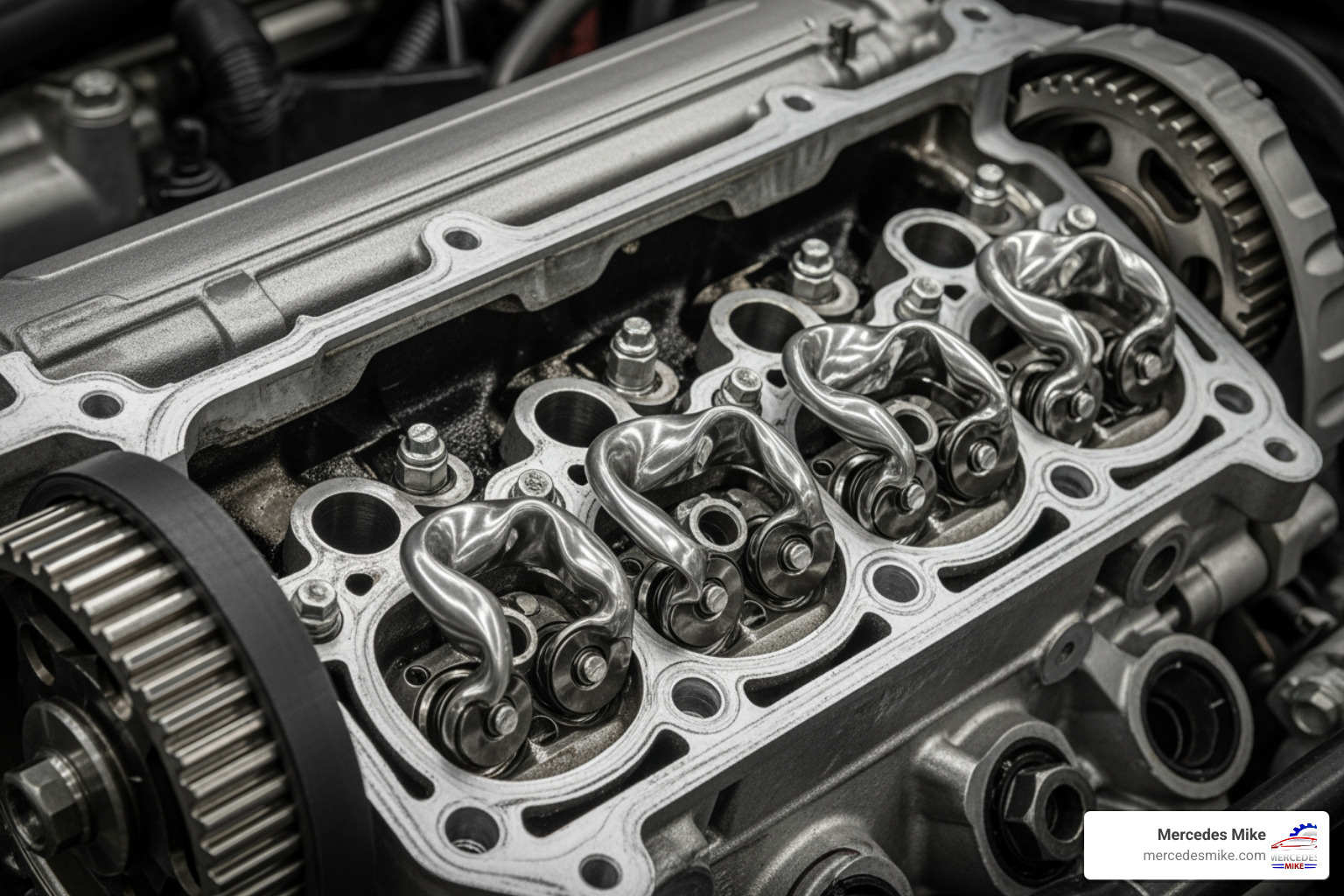
When a belt snaps while you are driving down N Dixie Hwy, the engine doesn't just stop; it often destroys itself. Beyond the repair costs, you have to factor in towing fees, the danger of a sudden stall in traffic, and the potential for being stranded. You can use tools like the Timing Belt Replacement Cost Estimate - RepairPal to see local averages, but those estimates usually assume the belt is still in one piece.
Interference Engines and Catastrophic Damage
Most modern German cars use "interference engines." This means that the area where the valves open and the area where the pistons move actually overlap. The only thing keeping them from hitting each other is—you guessed it—the timing belt.
If the belt breaks, the camshaft stops turning, leaving some valves stuck in the "open" position. Meanwhile, the pistons continue to fire upward. The result is a violent collision. This "zero clearance" design means that a snapped belt leads to:
Bent or broken valves
Damaged piston heads
Cylinder head destruction
Potential camshaft damage
Comparing Preventive Cost to Replace Timing Belt vs. Engine Rebuilds
Let’s look at the math. A preventive cost to replace a timing belt in Pompano Beach might set you back $800. If that belt breaks, the repair cost for an interference engine typically jumps to between $3,000 and $5,000.
In many cases, for older vehicles, a $5,000 repair bill exceeds the total market value of the car. This effectively "totals" the vehicle over a part that costs less than $100. By staying ahead of the maintenance schedule, you aren't just spending money; you are protecting a five-figure investment.
When to Schedule Service: Signs and Intervals
The scariest thing about a timing belt is that it rarely "acts up" before it fails. It doesn't usually squeal like a serpentine belt. However, there are a few red flags to watch for.
The 60k-100k Rule: This is the most important factor. If your odometer is hitting six figures and you don't have a record of a belt change, you are driving a ticking time bomb.
Ticking Noises: A worn belt may start to make a rhythmic ticking or clicking sound as it loses tension or begins to fray.
Engine Misfires: If the belt has stretched or "jumped a tooth," the timing will be off, causing the engine to stumble or misfire.
Oil Leaks: If you have an oil leak near the front of the engine, the oil can get onto the rubber belt. Oil softens rubber, causing it to degrade and snap much faster than normal.
Visual Inspection: Many engines have small plastic inspection ports. A quick peek can reveal if the belt is glazed, cracked, or fraying at the edges.
For more details on symptoms, Timing Belt Replacement Costs and When to Replace - AutoZone provides a great overview of what to look for during a DIY inspection.
Frequently Asked Questions about Timing Systems
Should I replace the water pump with the timing belt?
Absolutely. As we mentioned, the labor overlap is the primary reason. Water pumps have a similar lifespan to timing belts (60,000 to 100,000 miles). Replacing them together ensures your cooling system and timing system stay healthy for another five years. It is the most cost-effective way to maintain a German car.
Can you DIY a timing belt replacement?
We generally advise against it unless you are a highly experienced mechanic with specialty tools. Timing belt replacement requires precision calibration. If you are off by even one "tooth" on the sprocket, you can cause the very engine damage you were trying to prevent. Modern Mercedes and BMW engines often require specific locking tools to hold the camshafts in place during the swap.
Is it worth fixing a broken timing belt on an older car?
This depends on the extent of the damage. If the belt broke while the engine was at idle, you might have escaped with just a few bent valves. If it happened at 70 mph on the highway, the engine is likely toast. We usually perform a "leak-down test" to see if the cylinders still hold pressure before recommending a repair on an older vehicle.
Conclusion
The cost to replace a timing belt is a small price to pay for the peace of mind that comes with a reliable engine. At Mercedes Mike, we specialize in the intricate timing systems of German luxury vehicles. Whether you are in Pompano Beach, Deerfield Beach, or anywhere in South Florida, our decades-experienced technicians use the latest diagnostic tools to ensure your Mercedes, BMW, Audi, or Porsche stays in peak condition.
Don't wait for a catastrophic failure to leave you stranded on the side of the road. If you're approaching your mileage interval or haven't had your belt inspected recently, give us a call or visit us at 882 NE 41st Court.
Schedule your professional timing belt service today and keep your engine running like the precision machine it was designed to be.