
Don't Let Your Wallet Stall with These Transmission Replacement Prices
When Your Transmission Goes, So Does Your Budget — Here's What to Expect
The average cost to replace a transmission will likely be the biggest repair bill you'll see outside of an engine replacement. And if you drive a German luxury vehicle like a Mercedes-Benz or BMW, that number climbs even higher.
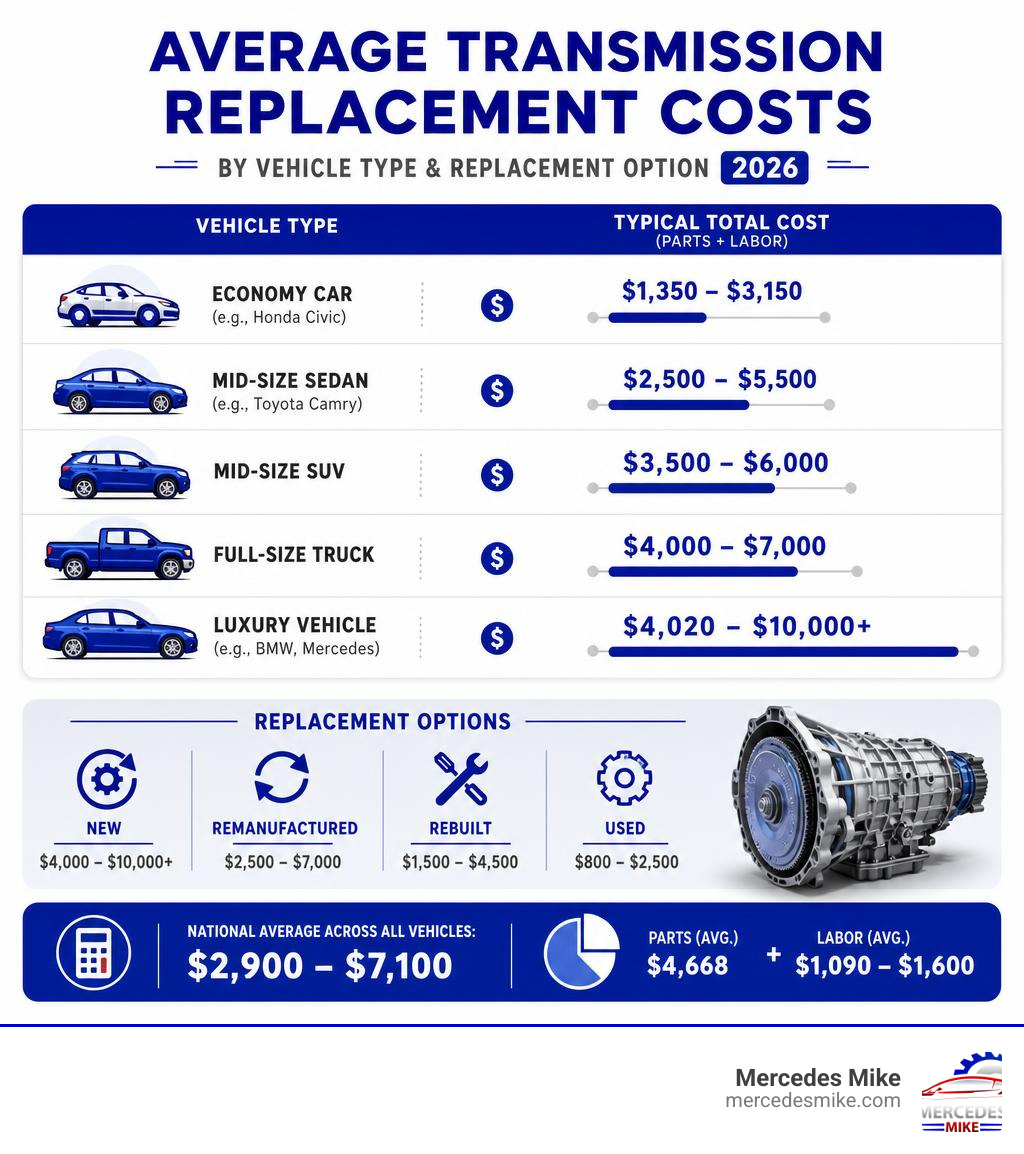
Here's a quick look at what most drivers pay in 2026:
Vehicle Type Typical Total Cost (Parts + Labor) Economy car (e.g., Honda Civic) $1,350 - $3,150 Mid-size sedan (e.g., Toyota Camry) $2,500 - $5,500 Mid-size SUV $3,500 - $6,000 Full-size truck $4,000 - $7,000 Luxury vehicle (e.g., BMW, Mercedes) $4,020 - $10,000+
The national average across all vehicles runs roughly $2,900 to $7,100. RepairPal puts the midpoint closer to $5,758 to $6,267, with parts accounting for most of that — around $4,668 — and labor adding another $1,090 to $1,600.
Those numbers assume a standard domestic or mainstream import vehicle. For a German luxury car, expect to pay significantly more.
That's the uncomfortable truth. A transmission replacement isn't a weekend repair or a minor inconvenience — it's a major financial decision. And making the wrong call (replacing when you should rebuild, or waiting too long when you should act now) can cost you thousands of extra dollars.
This guide breaks down exactly what drives those costs, what your options are, and how to make the smartest choice for your specific situation.
What is the Average Cost to Replace Transmission Units in 2026?
As we navigate 2026, the automotive repair landscape faces unique pressures. The global transmission repair market has grown to an estimated $148.81 billion this year, largely driven by the fact that the average age of vehicles on South Florida roads now exceeds 12 years. Older cars mean more worn-out gears, and consequently, a higher demand for major powertrain overhauls.
When looking at the average cost to replace transmission assemblies today, the standard price range sits between $2,900 and $7,100 for mainstream vehicles. However, if you are driving a high-performance German machine around Pompano Beach, that baseline shifts upward. For instance, replacing the gearbox on a late-model luxury SUV or sports sedan can easily range from $5,000 to $10,000 or more depending on how you source the replacement unit.
To help you understand the financial breakdown, let's look at parts versus labor. According to the RepairPal Transmission Replacement Cost index, parts make up the lion's share of the bill, averaging around $4,668. Labor adds another $1,090 to $1,600 to the total. If you want a deeper look at the step-by-step replacement process and what to expect during the job, check out our comprehensive Transmission Replacement Guide 2026.
Key Factors That Influence Your Total Replacement Bill
No two transmission bills are exactly alike. When you bring your vehicle into a shop, several distinct variables determine whether your estimate lands on the lower or higher end of the spectrum:
Vehicle Make and Model: Mainstream domestic and Japanese commuter cars have widely available, mass-produced parts. German luxury vehicles (such as Mercedes-Benz, BMW, Audi, and Porsche) require highly specialized components and advanced engineering, which naturally increases parts costs.
Drivetrain Configuration (FWD vs. RWD vs. AWD): Front-wheel-drive (FWD) cars package the engine and transmission tightly together under the hood, making disassembly highly labor-intensive. Rear-wheel-drive (RWD) vehicles are typically more straightforward. All-wheel-drive (AWD) and four-wheel-drive (4WD) systems are the most complex because the mechanic must also remove the transfer case and additional driveshafts, adding hours to the job.
Geographic Location and Labor Rates: Labor rates vary significantly by region. Here in South Florida—spanning Pompano Beach and Deerfield Beach FL—local shop rates generally run from $70 to $150+ per hour. Specialized import shops charge on the higher end of this range because of the advanced diagnostic equipment and certified training required to service complex European systems safely. For precision care, choosing a dedicated facility for German Auto Repair Pompano Beach ensures the job is done right the first time.
How Transmission Type Affects the Average Cost to Replace Transmission Systems
The internal mechanics of your gearbox play a massive role in the final price tag. Different transmission designs require different levels of manufacturing precision and labor:
Manual Transmissions ($1,500 - $4,000 for parts): These are the simplest gearboxes. Because they contain fewer moving parts and no complex hydraulic valve bodies, they are the cheapest to replace. Labor typically takes only 4 to 6 hours ($280 - $900).
Automatic Transmissions ($2,500 - $6,000+ for parts): Standard automatics use complex planetary gearsets, torque converters, and hydraulic systems. They contain twice as many parts as a manual, requiring 6 to 10 hours of highly detailed labor. For a closer look at these costs, read our guide on Automatic Transmission Replacement Cost.
Continuously Variable Transmissions (CVTs) ($2,500 - $8,000 total): CVTs use a system of belts and pulleys rather than traditional gears. While common in fuel-efficient vehicles, they are incredibly difficult to rebuild. Most general repair shops will not attempt a rebuild, forcing a complete unit replacement if a major failure occurs.
Dual-Clutch Transmissions (DCTs) ($3,500 - $10,000+ total): Essentially two manual gearboxes working in tandem via electronic controls, DCTs are highly popular in European sports cars. Their computer-guided clutch actuators make them incredibly fast-shifting, but also highly expensive to repair or replace when they fail.
Rebuilt vs. Remanufactured vs. New OEM: Choosing Your Replacement Option
When your transmission is beyond a simple fix, you have four primary avenues for sourcing a replacement. Each option balances cost, reliability, and warranty coverage differently:
New OEM (Original Equipment Manufacturer): Sourced directly from the vehicle manufacturer, these are brand-new units built to factory specifications. They offer the highest level of reliability and typically carry a 3+ year warranty, but they are also the most expensive option ($3,600 to $7,200+ for mainstream; up to $10,000+ for luxury).
Remanufactured: These units are completely disassembled in a specialized factory setting. Every single internal component is inspected, worn parts are replaced, and known factory design flaws are often engineered out of the unit. Remanufactured transmissions can reduce parts costs by up to 50% compared to new OEM units while still offering robust 2-to-3-year warranties, making them the "smart-value" pick for most drivers.
Rebuilt: A local technician disassembles your car’s existing transmission, identifies the broken or worn parts, replaces those specific pieces, and puts it back together. This is a highly hands-on local repair. It generally costs $2,000 to $4,000, but the quality depends entirely on the individual mechanic's skill level.
Used (Salvage): Sourced from a donor vehicle in a salvage yard, this is the cheapest option ($1,100 to $2,700 installed) but also the biggest gamble. Used units typically come with very short warranties (30 to 90 days) and no guarantee of how long they will last.
To help you compare, check out our decision guide sourced from TheCostGuide Transmission Replacement Cost analysis:
Option Average Cost Range Typical Warranty Best For Used $1,100 - $2,700 30 - 90 Days Low-value vehicles, quick budget fixes Rebuilt $2,000 - $4,000 1 - 2 Years Classic cars, rare gearboxes, trusted local shops Remanufactured $2,100 - $4,700 2 - 3 Years Best balance of price, reliability, and warranty New OEM $3,600 - $7,200+ 3+ Years Newer vehicles, maximum peace of mind
Labor Costs, Time Estimates, and Additional Parts to Expect
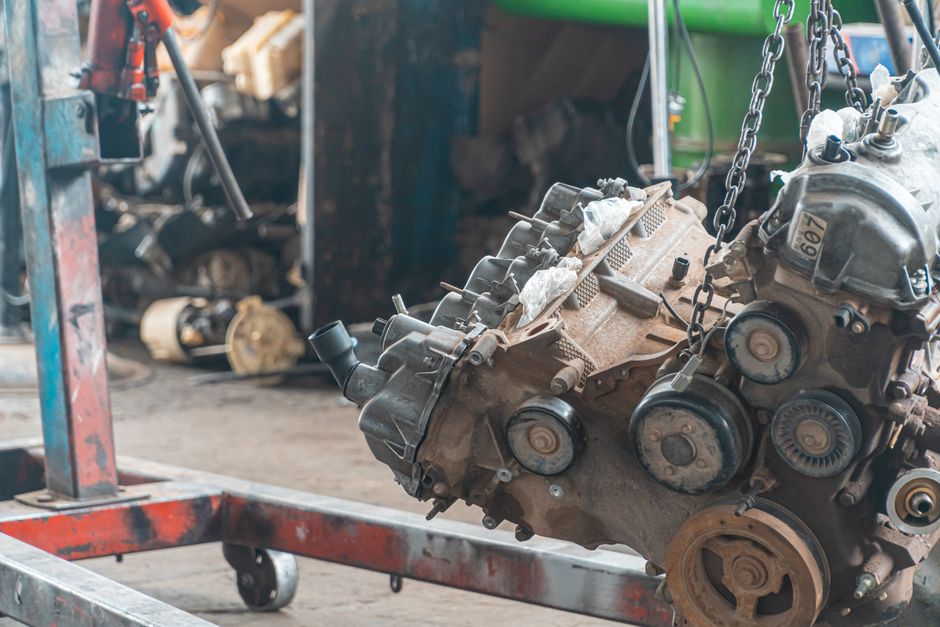
Replacing a transmission is a highly technical, multi-step surgical procedure for your car. It is not as simple as unplugging the old unit and bolting on the new one. The process involves supporting the engine, dropping the subframe, disconnecting driveshafts, draining fluids, and reprogramming the vehicle's engine control units (ECU).
Because of this complexity, labor times range from 4 to 12+ hours. At standard shop rates, this labor translates to a charge of $800 to $1,500+.
Furthermore, a professional transmission replacement often requires replacing supporting components to ensure the new system functions correctly and to preserve your warranty:
Transmission Oil Cooler ($150 - $400): When a transmission fails, it often sheds tiny metal shavings. These shavings travel into the transmission cooler. If you do not replace or thoroughly flush the cooler, those metal particles will wash right into your brand-new transmission, destroying it within miles. Many manufacturers will void your warranty if you do not replace the cooler during installation.
Transmission Mounts ($100 - $300): These rubber-and-metal mounts isolate the cabin from transmission vibrations. If they are cracked or worn, installing them on a fresh transmission will cause rough shifting and cabin vibration.
Seals and Gaskets ($50 - $150): Replacing rear main engine seals and axle seals while the transmission is already removed is highly cost-effective, saving you from paying for the same labor later.
Transmission Control Module (TCM) ($500 - $1,600): The TCM is the computer brain of your gearbox. If electronic issues caused your transmission to fail, you may need a new TCM, which requires specialized programming to match your car's VIN. You can find more details on these component costs in the ConsumerAffairs Transmission Cost Guide.
Warning Signs and the Decision Framework: Rebuild vs. Replace
Catching transmission trouble early can mean the difference between a $400 minor repair and a $6,000 replacement bill. Keep an eye out for these critical warning signs:
Slipping Gears: If your engine revs up but your car doesn't accelerate, or if the vehicle suddenly drops out of gear while driving, your clutch packs or bands are slipping.
Delayed Engagement: If you shift from Park to Drive and there is a noticeable two-to-three-second pause before the vehicle engages, your transmission is suffering from internal pressure loss.
Burning Smell: Overheating transmission fluid smells sweet but burnt. Heat is the number one killer of gearboxes; every 20°F increase above 200°F can cut your fluid’s operational life in half.
Fluid Leaks: Transmission fluid is bright red or pink. If you spot puddles of red fluid under your car in your driveway, address it immediately.
Check Engine Light: Modern cars have sensors monitoring everything. A transmission-related diagnostic trouble code (DTC) will instantly trigger the dashboard light.
If you drive a European luxury vehicle, these symptoms can sometimes be unique to their engineering quirks. Read about The Most Common Problems with German Cars and How to Prevent Them to keep your vehicle running smoothly.
When major issues arise, how do you decide whether to rebuild or replace? Use the 60% Rule: if the cost of repairing or rebuilding your current transmission exceeds 60% of the cost of a complete remanufactured replacement, go with the replacement. A fresh, factory-remanufactured unit will always offer a better warranty and longer lifespan than a localized patch-job.
How to Save Money on the Average Cost to Replace Transmission Assemblies
The absolute best way to save money on a transmission replacement is to prevent the need for one in the first place.
Prioritize Preventive Maintenance: Changing your transmission fluid and filter every 30,000 to 60,000 miles is the single most cost-effective maintenance task you can perform. While some manufacturers claim "lifetime fill" fluids, mechanics agree that no fluid lasts forever. Regular servicing can save you up to 30% on lifetime vehicle ownership costs.
Get an Accurate Diagnosis: Nearly half of the cars brought to shops with suspected transmission failures actually have minor electronic issues, such as a bad wheel speed sensor, a faulty engine sensor, or a failed shift solenoid. Paying for a professional diagnostic scan ($100 to $150) prevents you from paying for an unnecessary replacement.
Choose Independent Specialists over Dealerships: Dealership service departments typically charge 30% to 40% more for transmission replacements than independent specialized shops. An independent shop specializing in your vehicle's make can offer factory-grade precision at a much more reasonable price. If you are driving a Mercedes and want to see how repair costs scale, check out our breakdown of How Much to Repair Mercedes Transmission.
Frequently Asked Questions about Transmission Replacement
Is it worth replacing a transmission on an older car?
To make this decision, apply the 50% Rule: if the total cost of the transmission replacement exceeds 50% of your car's current market value, it may be time to trade it in. However, if the engine is in excellent shape, the body has no rust, and you have a detailed history of consistent maintenance, installing a remanufactured transmission can easily give you another 100,000+ miles of service, which is much cheaper than buying a new car.
How long does a transmission replacement typically take?
For a standard front-wheel-drive or rear-wheel-drive commuter vehicle, a professional shop can typically complete the physical swap in 1 to 2 business days (4 to 8 labor hours). For complex all-wheel-drive systems, heavy-duty trucks, or European luxury cars with extensive belly pans and exhaust systems to remove, the process can take 2 to 3 business days (8 to 12+ labor hours) to ensure proper calibration and road testing.
Can a bad Transmission Control Module (TCM) mimic transmission failure?
Absolutely. Because modern transmissions are highly computerized, a failing TCM, a blown fuse, or a damaged wire harness can cause severe shifting issues, "limp mode," or a complete refusal to shift gears. A bad TCM can easily be misdiagnosed as mechanical failure by an inexperienced general mechanic. A proper diagnostic scan will reveal if the issue is purely electronic, saving you thousands of dollars since a TCM replacement ($500 to $1,600) is far cheaper than a full mechanical replacement.
Conclusion
Facing a transmission replacement can be stressful, but understanding the options, costs, and diagnostics empowers you to make the smartest financial decision for your vehicle.
If you are located in South Florida—whether in Pompano Beach, Deerfield Beach FL, or the surrounding areas—and suspect your car has transmission trouble, don't leave it to chance or general mechanics who treat transmissions like a "black box." At Mercedes Mike, our decades-experienced, certified technicians use the latest factory-diagnostic tools to pinpoint your exact problem. We will never recommend a full replacement if a minor sensor or fluid service can get you back on the road safely.
Ready for an honest, expert assessment? Visit our Mercedes Mike Services page to schedule a professional diagnostic consultation at our Pompano Beach shop today.