
How to Diagnose and Fix Engine Issues in 7 Days
Common Causes of Failure and Essential Engine Repair Services
Engine failures are rarely random. They usually occur when routine maintenance is deferred or when early warning signs are ignored. Understanding the root causes of engine damage helps you catch problems before they result in a complete breakdown.
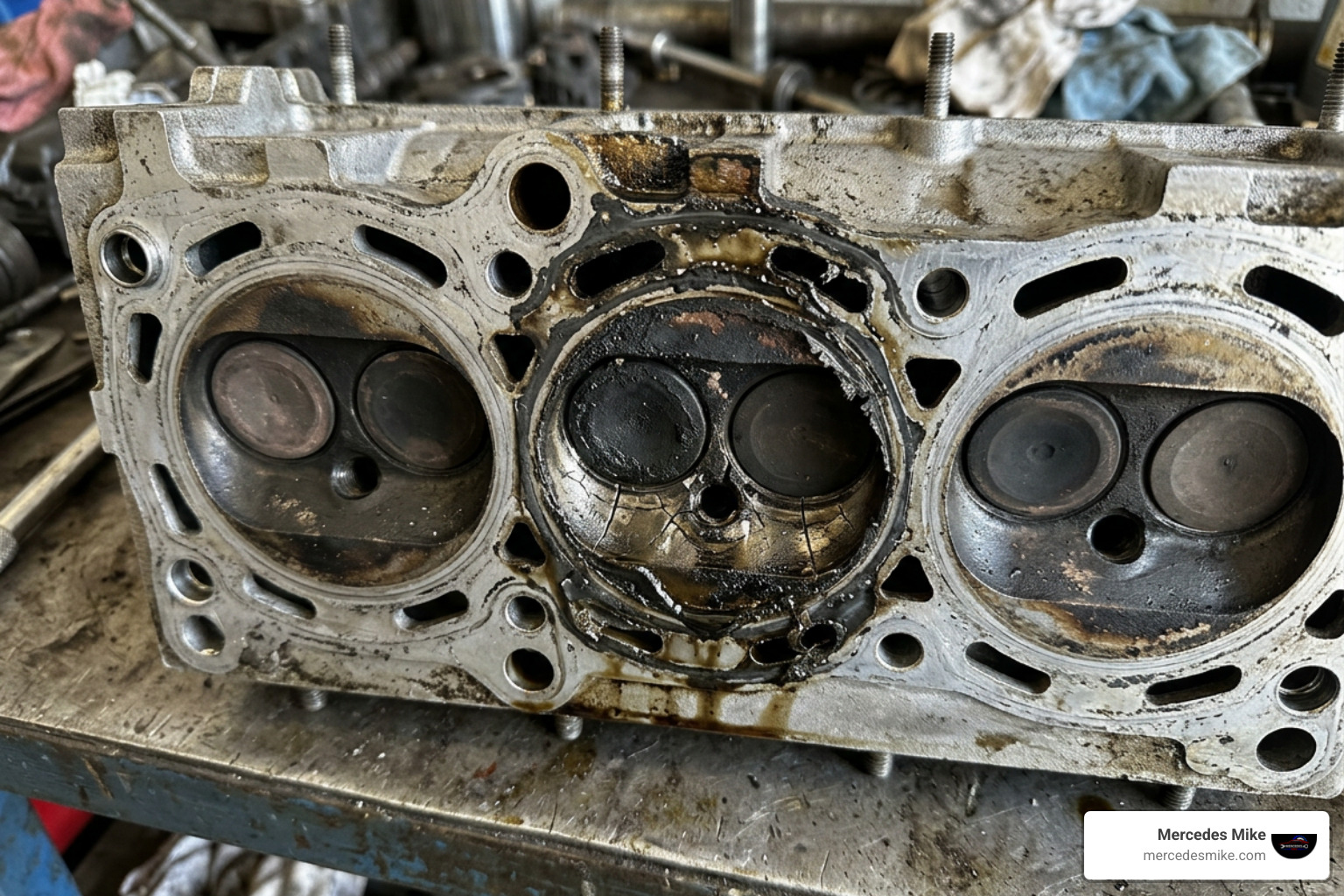
Overheating: Modern engines rely on strict thermal management. Heat damage occurs quickly when coolant levels drop due to leaks in the radiator, water pump, or hoses. Overheating can warp the cylinder head, break seals, and cause severe mechanical failure.
Oil Starvation: Engine oil cleans, cools, and lubricates moving metal parts. Running an engine with low oil levels or degraded oil creates excessive friction. This friction destroys main bearings, camshafts, and cylinder walls.
Timing Belt or Chain Failure: The timing belt or chain synchronizes the crankshaft and camshaft. In interference engines—found in many European vehicles—a broken timing belt causes pistons to collide with open valves, smashing internal components in a fraction of a second.
Head Gasket Leak: The head gasket seals the combustion chambers and internal coolant/oil passages. When it fails, coolant can mix with engine oil, stripping away lubrication efficiency and causing severe internal corrosion.
Identifying Warning Symptoms and Diagnostic Triggers
Your vehicle will generally signal when internal components begin to wear out. Recognizing these triggers early saves money on engine repair.
Flashing Check Engine Light: A solid check engine light indicates an issue that needs attention soon, such as a faulty oxygen sensor or loose fuel cap. A flashing check engine light means a severe misfire is occurring, which can destroy the catalytic converter and damage the engine if driven further.
Engine Knocking or Ticking: Mechanical knocking noises usually point to worn rod bearings, excessive piston slap, or valve train issues. Ticking sounds often relate to low oil pressure or worn lifters.
Exhaust Smoke Indicators: Blue smoke means the engine is burning oil (often due to worn valve guides or piston rings). White smoke that smells sweet indicates burning coolant, pointing to a blown head gasket. Heavy dark smoke signals an over-rich fuel mixture.
Loss of Power: Sluggish acceleration and hesitation often stem from compromised compression, restricted fuel injectors, or failing ignition coils.
Visible Oil and Coolant Leaks: Spots on your driveway or liquid pooling under the intake manifold signal leaking seals or failing gaskets that must be sealed before total fluid loss occurs.
Engine Repair vs. Rebuild vs. Replacement
When severe engine trouble strikes, choosing the right repair strategy depends on the vehicle's overall condition, age, and the extent of internal damage.
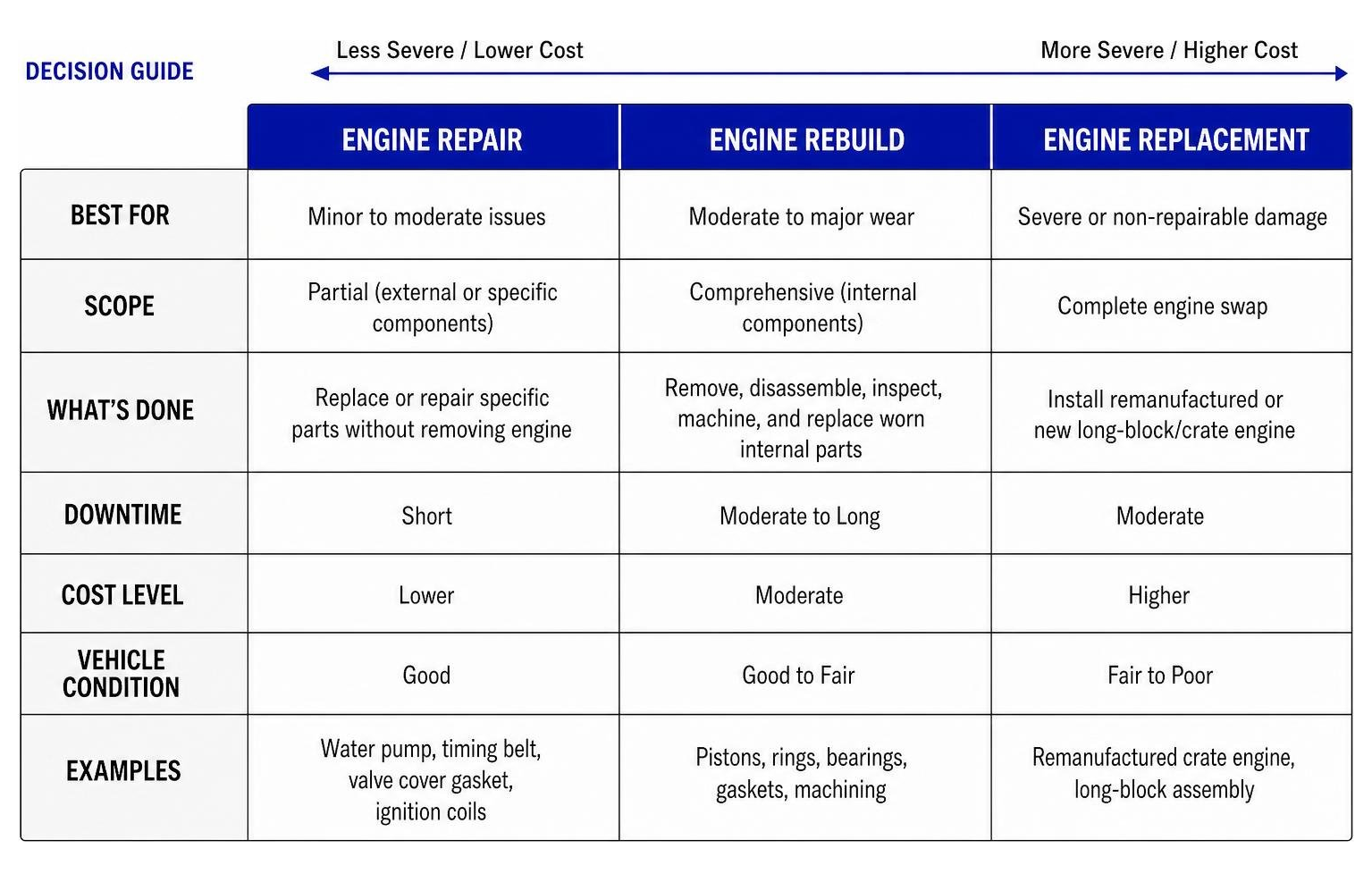
Standard Engine Repair: Involves replacing external or specific damaged components without removing the block from the engine bay. Examples include replacing a water pump, timing belt, valve cover gasket, or ignition coils.
Engine Rebuild: The engine is removed, disassembled, cleaned, and inspected. Worn internal components (pistons, rings, bearings, gaskets) are replaced, and precision machining is performed on the block and cylinder heads to restore factory tolerances. If you are exploring this option, reviewing the cost to rebuild engine can help you set realistic expectations.
Engine Replacement: Involves installing a remanufactured crate engine or a long-block assembly (which includes the block, crankshaft, pistons, and cylinder head). This is often the best choice when the original engine block has suffered non-repairable cracking or cylinder wall scoring.
The 7-Day Plan to Diagnose and Resolve Motor Problems
When your car exhibits major engine symptoms, structured action prevents unnecessary delays. This 7-day timeline takes you from the initial warning light to a fully restored vehicle.

Days 1–2: Diagnostic Tests and Root Cause Analysis
The first step is pinpointing the exact mechanical or electrical cause of the issue rather than blindly replacing parts.
Computerized OBD-II Diagnostic Scan: A technician connects diagnostic equipment to read active Diagnostic Trouble Codes (DTCs) and evaluate real-time sensor stream data (such as fuel trim, timing advance, and oxygen sensor outputs).
Live Data & Misfire Analysis: Checking individual cylinder misfire counters pinpoints whether the problem is isolated to one cylinder or widespread.
Mechanical Compression & Leak-Down Testing: A manual compression gauge measures the pressure built up by each piston. A leak-down test pushes compressed air into the cylinder to check where air escapes (past valves, rings, or into the cooling system).
Fuel Pressure and Ignition Testing: Verifies that fuel pumps, injectors, spark plugs, and ignition modules are delivering proper pressure and spark voltage.
A professional diagnostic test typically takes between 45 minutes and 2 hours to accurately identify root causes.
Days 3–5: Executing Complex Engine Repair Procedures
Once testing is complete and the repair plan is approved, physical repair work begins.
Component Teardown: Technicians carefully disassemble intake manifolds, timing covers, or cylinder heads to access damaged parts.
Machining and Parts Prep: If a head gasket failed, the cylinder head is checked for flatness and resurfaced if warped. Drivers searching for a cylinder head rebuild near me should ensure the shop uses precision machining equipment to restore an airtight compression seal.
Precision Installation: Replacing timing belts, timing chains, head gaskets, or water pumps requires strict adherence to manufacturer torque specs and timing alignment marks. High-quality OEM or equivalent parts are installed to protect future engine life.
Days 6–7: Quality Testing and Preventive Upkeep
After reassembly, thorough verification ensures the repair was successful and protects your engine moving forward.
Fluid Refill and Bleeding: Fresh engine oil, fresh coolant, and necessary fluids are added. Thermal bleeding removes trapped air bubbles from the cooling system.
Extended Test Drives and Thermal Cycles: Technicians start the engine, bring it to operating temperature, check for leaks, and take the vehicle on road tests to monitor performance under load.
Preventive System Upkeep: To keep the rest of the drivetrain healthy, major maintenance is updated. Most manufacturers recommend a transmission flush every 30,000 miles or two years to clear metal shavings and clutch material. Coupling engine fixes with routine fluid services prevents future breakdowns.
To avoid recurring issues, drivers should review the most common problems with german cars and how to prevent them.
Engine Repair Costs and Shop Selection Guide
Engine repairs represent a significant investment in your vehicle's lifespan. Knowing how costs break down helps you evaluate estimates accurately.
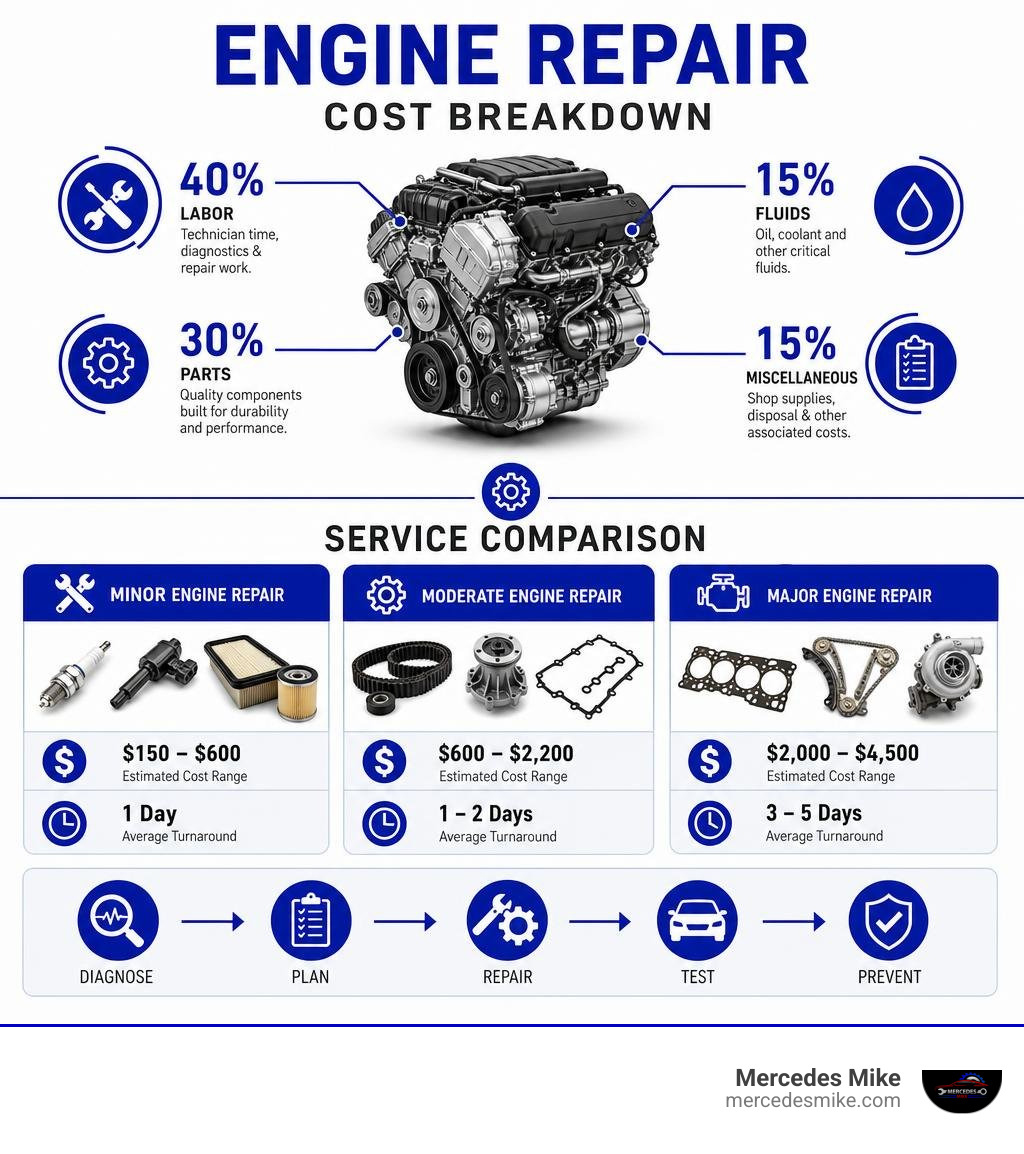
Service Type Typical Scope Estimated Cost Range Average Turnaround Minor Engine Repair Sensors, spark plugs, ignition coils, air/fuel filters $150 – $600 1 Day Moderate Engine Repair Timing belt, water pump, valve cover gaskets, oil pan leak $600 – $2,200 1 – 2 Days Major Engine Repair Head gasket replacement, timing chain assembly, turbo replacement $2,000 – $4,500 3 – 5 Days Engine Rebuild Engine removal, block machining, new pistons/bearings/seals $4,000 – $7,500+ 5 – 10 Days Engine Replacement Remanufactured long-block or crate engine installation $5,000 – $10,000+ 4 – 7 Days
Estimating Costs for Minor and Major Services
Labor rates reflect the specialized tooling and expertise required to work on modern engines.
Minor Services and Tune-Ups: Basic preventive services like changing spark plugs and air filters generally cost between $150 and $350.
Major Mechanical Repairs: Services such as head gasket replacements or timing chain jobs require substantial labor hours for teardown and reassembly, shifting the bulk of the invoice toward labor rather than raw component costs.
Machine Shop Overhead: Rebuilding internal assemblies adds machining expenses for cylinder honing, valve grinding, and crank polishing. If your engine requires extensive machine work, consulting specialized motor rebuild shops ensures precision craftsmanship.
Choosing a Qualified Engine Repair Shop
Trusting your car to the right shop makes a major difference in repair quality and longevity.
ASE-Certified Technicians: Look for facilities with ASE certifications, particularly in Advanced Engine Performance (L1).
Specialized Diagnostic Equipment: Modern European engines require factory-level diagnostic software (such as XENTRY for Mercedes-Benz or ISTA for BMW) to read manufacturer-specific fault codes.
Parts and Labor Warranties: A reliable auto repair shop stands behind its work with a parts-and-labor warranty—typically at least 12 months or 12,000 miles.
Proximity and Local Service: When facing severe engine trouble, finding a trusted location for an engine rebuild near me minimizes towing costs and simplifies project updates.
Drivers in South Florida and Deerfield Beach should prioritize facilities with certified mechanics and proper factory diagnostics to ensure repairs are completed to original manufacturer standards.
Frequently Asked Questions About Engine Diagnostics and Upkeep
How often should engine maintenance be performed?
Regular preventive engine maintenance should follow a structured schedule based on mileage and operating conditions:
Every 5,000 to 7,500 Miles: Perform basic synthetic oil and oil filter changes, along with a visual inspection of belts, hoses, and fluid levels.
Every 15,000 to 30,000 Miles: Replace engine air filters and cabin filters, inspect spark plugs, and evaluate the fuel system.
Every 30,000 Miles: Perform major system services, including coolant flushes, transmission fluid flushes, and comprehensive fuel system cleanings.
Every 60,000 to 90,000 Miles: Inspect and replace timing belts (on equipped models) to prevent interference valve damage.
What is involved in an engine diagnostic test?
An engine diagnostic evaluation goes far beyond pulling error codes with an inexpensive handheld scanner. A complete test involves:
Digital Diagnostic Scan: Reading active, pending, and historic trouble codes across all control modules.
Live Data Stream Monitoring: Checking fuel trims, mass airflow values, coolant temperatures, and oxygen sensor speeds in real time.
Physical Inspections: Checking vacuum lines, wiring harnesses, intake ducting, and drive belts for cracking or damage.
Targeted Mechanical Tests: Conducting compression, fuel pressure, or cooling system pressure tests to confirm mechanical integrity.
A full diagnostic scan typically takes between 45 minutes and an hour to identify root causes cleanly.
How can I extend the life of my vehicle's engine?
Extending engine life comes down to simple, consistent habits:
Never Ignore Fluid Leaks or Low Oil: Check your oil dipstick and coolant levels monthly.
Warm Up Your Vehicle Gently: Avoid hard acceleration immediately after starting your car on cool mornings to allow oil to reach operating pressure.
Fix Leaks Immediately: Address small oil pan or valve cover seeps before they damage drive belts or create low-oil conditions.
Follow Factory Maintenance Schedules: Use high-quality OEM fluids and filters designed specifically for your engine's tolerances.
Conclusion
A warning light or unusual engine noise does not have to mean catastrophic financial stress. By following a structured 7-day approach—identifying symptoms promptly, getting accurate diagnostic testing, executing proper repairs, and keeping up with fluid schedules—you can preserve your engine's reliability and resale value for years to come.
At Mercedes Mike, our decades-experienced technicians specialize in servicing German vehicles (Mercedes, BMW, Audi, and Porsche) in Pompano Beach and South Florida. Located at 882 NE 41st Court near N Dixie Hwy, we use state-of-the-art diagnostic tools to handle everything from routine factory maintenance to complete engine overhauls.
Explore our professional engine repair and auto services to schedule your engine diagnostic evaluation with our team today!