

The Ultimate Map to Local Engine and Diesel Rebuilders
When Your Engine Can't Wait: Finding the Right Rebuild Shop Near You
If you're searching for an engine rebuild near me, here are the most important things to know right now:
Quick answers for engine rebuild searches:
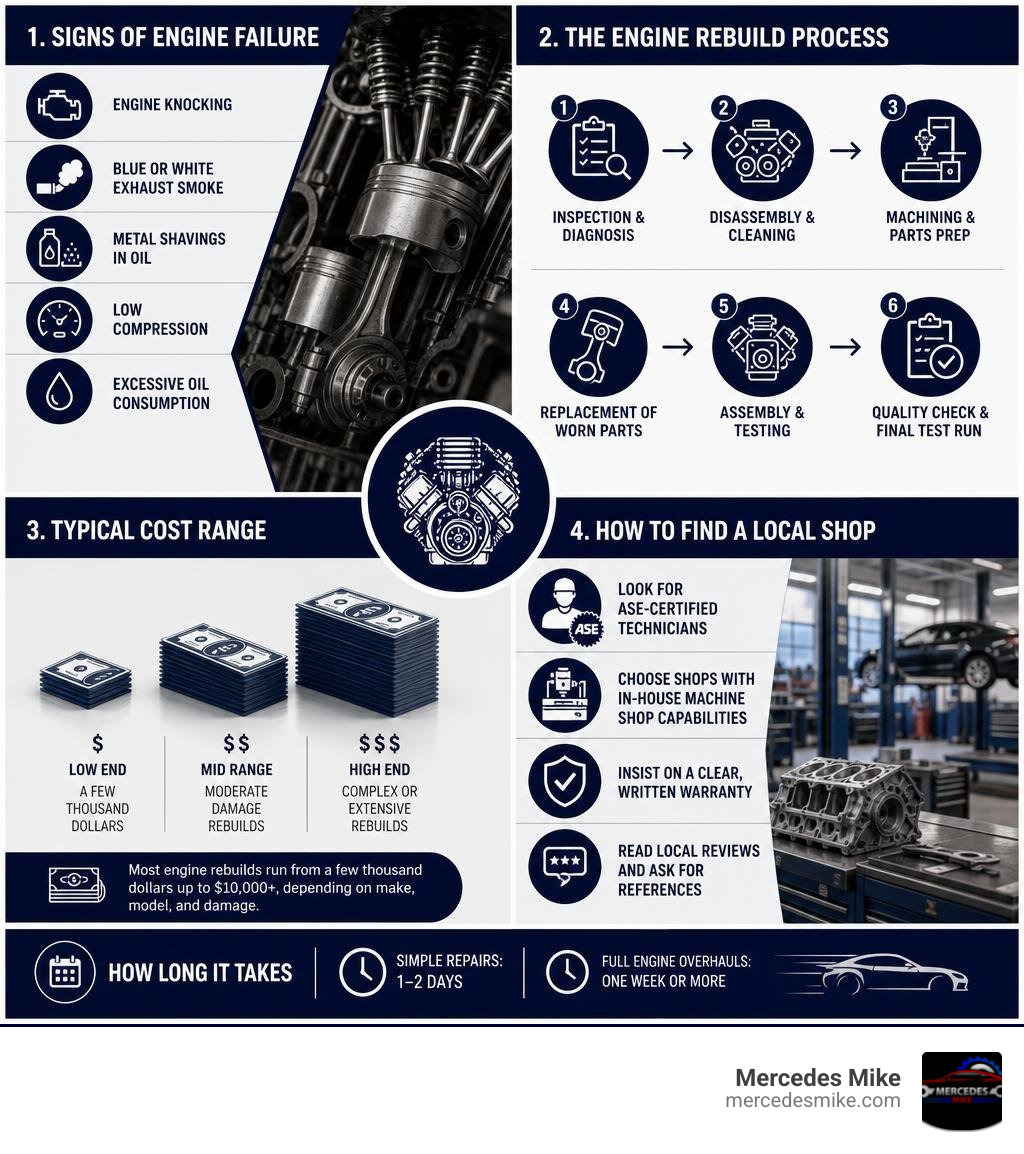
Signs you need a rebuild - engine knocking, blue or white exhaust smoke, metal shavings in oil, low compression, or excessive oil consumption
Rebuild vs. replacement - a rebuild restores your existing engine; a replacement swaps it for a remanufactured or used unit
Typical cost range - most engine rebuilds run from a few thousand dollars up to $10,000+, depending on make, model, and damage
How to find a shop - look for ASE-certified technicians, in-house machine shop capabilities, and a clear written warranty
How long it takes - simple repairs take 1-2 days; full engine overhauls typically take one week or more
Your engine is the hardest-working part of your car. When it starts failing, the clock starts ticking — and the decisions you make next can mean the difference between a smart repair and a money pit.
For owners of German luxury vehicles like a Mercedes-Benz or BMW, the stakes are even higher. These engines are precision-built machines. They don't respond well to shortcuts, stop-leak additives, or a shop that isn't familiar with their specific tolerances and design.
The good news? The right local engine rebuild shop does exist — you just need to know what to look for.
This guide will walk you through everything: the warning signs, the process, what to ask a shop, and how to make the smartest call for your vehicle and your budget.
Engine Rebuild vs. Engine Replacement: Key Differences
When you are faced with a failing powertrain, you generally arrive at a major financial crossroads. Should you rebuild the engine you already have, or should you replace it entirely?
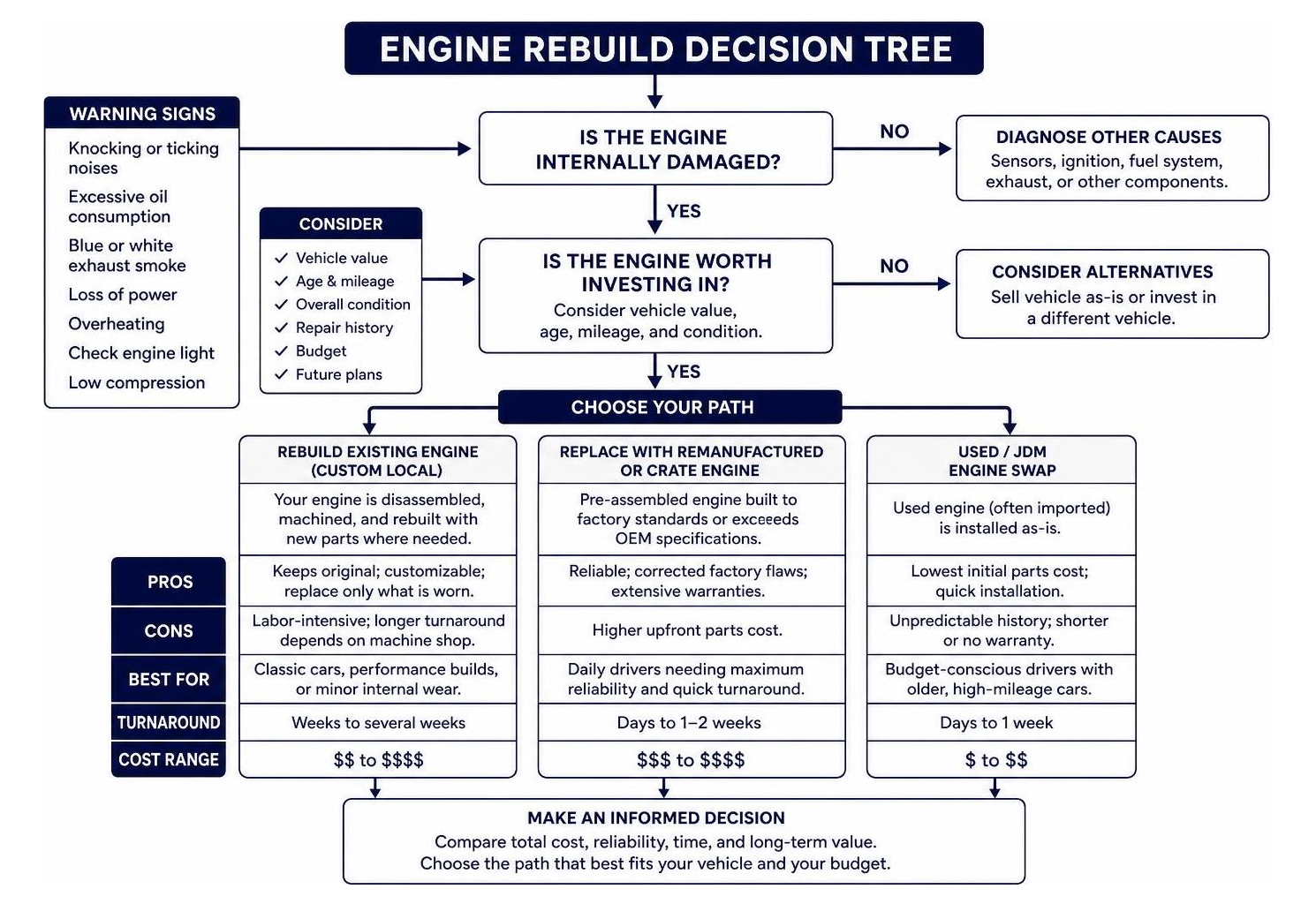
To make an informed decision, it helps to understand the terminology. An engine rebuild involves taking your existing engine completely apart, cleaning all the internal components, inspecting them for wear, machining any parts that can be salvaged, and replacing worn-out components (like piston rings, bearings, and gaskets) with brand-new ones.
An engine replacement, on the other hand, means removing your old engine and dropping in a different one. This replacement unit could be a brand-new OEM German engine, a used engine sourced from a salvage yard, a Japanese Domestic Market (JDM) import, or a remanufactured engine. Remanufactured engines—such as those produced by national brands like JASPER, which has produced over 1 million remanufactured products since 1942—are completely disassembled and built back to meet or exceed original factory specifications in a centralized facility.
Depending on the extent of the damage, your mechanic might recommend one of two rebuild pathways:
Short Block Rebuild: This focus is strictly on the lower half of your engine. It includes the engine block itself, the crankshaft, pistons, connecting rods, main and rod bearings, and the rear main seal.
Long Block Rebuild: This is a comprehensive overhaul. It includes everything in the short block, plus the cylinder heads, valvetrain, camshafts, timing gears, and the water pump.
Here is a quick comparison to help you weigh your options:
Feature Engine Rebuild (Custom Local) Engine Replacement (Remanufactured / Crate) Used / JDM Engine Swap What is it? Your original engine is disassembled, machined, and rebuilt. A pre-assembled engine built to factory standards is swapped in. A used engine (often imported) is installed as-is. Pros Keeps original matching numbers; highly customized; only replace what is worn. Faster turnaround; corrected factory flaws; extensive nationwide warranties. Lowest initial parts cost; quick installation. Cons Turnaround time depends on local machine shop schedules; highly labor-intensive. Higher upfront parts cost. Unpredictable history; shorter or nonexistent warranties. Best For Classic cars, performance builds, or minor internal wear. Daily drivers needing maximum reliability and a quick turnaround. Budget-conscious drivers with older high-mileage cars.
Understanding the Cost to Rebuild Engine is critical before making this choice. In some cases, if your vehicle is older and has multiple failing systems, you might also need to consult a Transmission Replacement Guide 2026 to see if a complete powertrain overhaul is financially viable compared to buying a new vehicle.
Signs Your Vehicle Needs an Engine Rebuild Near Me
Engines rarely fail without warning. They usually drop hints—sometimes very loud, smoky hints—that internal mechanical components are reaching the end of their lives.

If you notice any of the following symptoms, it is time to search for a professional engine rebuild near me:
Engine Knocking or Tapping: A deep, rhythmic metallic knocking sound from the bottom of the engine often points to worn engine bearings. When bearings wear down, the connecting rods physically tap against the crankshaft. Ignored bearing wear will eventually cause catastrophic engine failure.
Excessive Blue Exhaust Smoke: Blue smoke is a classic sign of burning oil. This happens when oil leaks past worn piston rings or degraded valve guide seals and enters the combustion chamber. If you find yourself constantly topping off your oil between changes, your engine's internal seals are failing.
Billowing White Exhaust Smoke: White, sweet-smelling smoke points to coolant burning in the combustion chamber, which is a classic symptom of a blown head gasket or a cracked cylinder head.
Metal Shavings in the Oil: During your next oil change, inspect the oil and the oil filter. If you see shiny metallic flakes or shavings, it means internal components are grinding against each other and self-destructing.
Loss of Power and Low Compression: If your car struggles to accelerate or climb hills, it may have low compression. Worn cylinder walls or leaking valves prevent the engine from sealing properly, resulting in a loss of combustion pressure.
The Step-by-Step Process of a Professional Engine Overhaul
A professional engine overhaul is a highly technical, multi-day process that requires absolute precision. It is not a job that can be rushed.
Here is what happens when you bring your vehicle in for a complete rebuild:
Complete Teardown & Cleaning: The engine is carefully extracted from the vehicle and stripped down to the bare block. Every individual component is cleaned in an industrial chemical wash or ultrasonic tank to remove decades of carbon buildup, sludge, and grease.
Meticulous Inspection & Measurement: Using micrometers and dial indicators, our technicians measure every component to ensure they meet factory-grade tolerances. The cylinder walls are checked for roundness, and the crankshaft is inspected for wear.
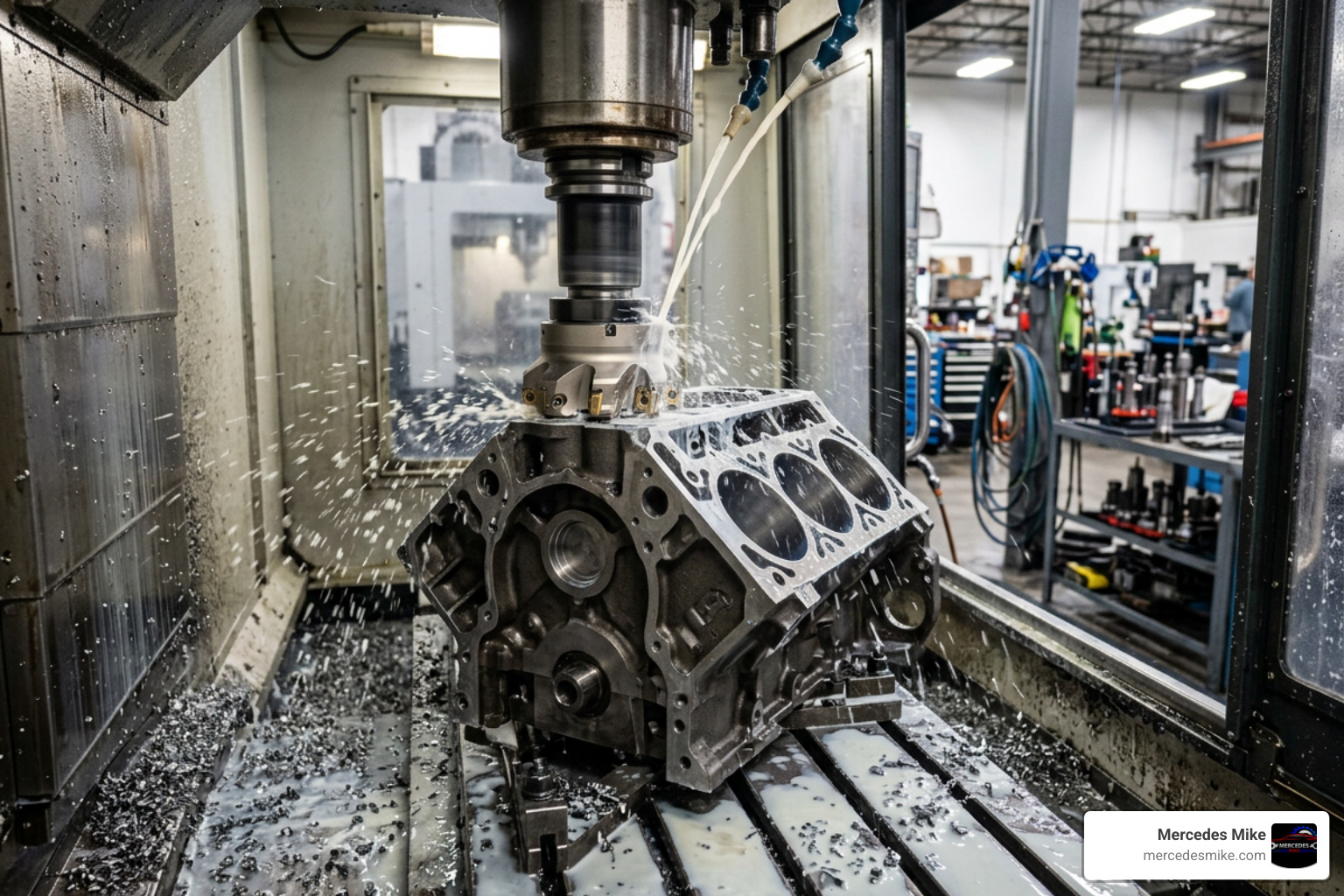
Precision Machining: This is where the magic happens. The engine block and cylinder heads are sent to a specialized machine shop. Common procedures include:
Precision Boring & Honing: Boring out the cylinders to a slightly larger size to remove scratches, followed by a two-stage honing process to create a perfect cross-hatch pattern that helps new piston rings seat correctly.
Block Decking & Surfacing: Shaving a microscopic layer of metal off the engine block and cylinder head mating surfaces to ensure they are perfectly flat, preventing future head gasket leaks.
Cylinder Head & Valve Jobs: Regrinding the valve seats and replacing guides to restore perfect compression.
Meticulous Assembly: The engine is reassembled in a dedicated, dust-free clean room. Technicians install new pistons, rings, bearings, gaskets, and seals, verifying the torque specifications of every single bolt.
Final Performance Test: Once reinstalled, the engine undergoes a rigorous break-in and testing phase to monitor oil pressure, operating temperatures, and compression before the vehicle is handed back to you.
How to Choose the Best Engine Rebuild Shop
Choosing the right shop is the most important factor in how long your rebuilt engine will last.
First, you must understand the difference between a dedicated machine shop and a full-service auto repair shop. A machine shop specializes in the precise cutting, boring, and resurfacing of metal engine parts. However, they usually do not pull the engine out of your car or put it back in. A full-service auto shop handles the entire "turnkey" process: they diagnose the car, pull the engine, perform or coordinate the machining, reassemble everything, reinstall it, and troubleshoot any post-installation issues.
For the average driver, choosing a full-service shop that takes 100% responsibility for the vehicle running perfectly is the safest and most convenient option. When researching local Motor Rebuild Shops, always look for ASE-certified technicians, clean facilities, and clear communication.
Evaluating a Local Engine Rebuild Near Me
When searching for an engine rebuild near me, do not just choose the cheapest quote. A quality rebuild is an investment in craftsmanship.
To evaluate a shop, read community forums and local reviews rather than relying solely on the shop’s self-promotion. Ask about their turnaround times and parts sourcing. It is also wise to check their technician compensation structure; shops that pay their mechanics an hourly wage rather than a flat-rate "by-the-job" system often produce higher-quality, more meticulous work because technicians are incentivized to take their time rather than rush.
Finding Specialized Diesel and European Engine Rebuild Near Me
If you drive a European luxury vehicle (like a Mercedes-Benz, BMW, Audi, or Porsche) or a German diesel vehicle, general auto repair shops simply will not do. These engines feature highly complex layouts, variable valve timing systems, and strict torque-to-yield bolt specifications that require specialized tools and expert training.
A generalist shop might struggle to properly diagnose or rebuild a high-performance German engine, leading to costly timing issues or premature gasket failures. Always seek out a shop that specializes in European imports and possesses factory-level diagnostic software.
Frequently Asked Questions About Engine Rebuilding
How much does an engine rebuild typically cost?
The cost of an engine rebuild varies wildly depending on your vehicle's make, model, the extent of the damage, and local labor rates. A standard four-cylinder domestic engine rebuild might cost between $3,000 and $5,000. However, high-performance European engines or heavy-duty diesel engines can easily range from $7,000 to $12,000 or more.
To put this in perspective, even a single localized repair like a head gasket replacement has a national average cost of $2,396 to $3,137, though this can easily climb higher on complex European layouts. When faced with these numbers, it is helpful to compare them to other major component failures, such as the Average Cost to Replace Transmission, to decide if rebuilding your vehicle's engine is a sound financial decision.
How long does a complete engine rebuild take?
A complete engine rebuild typically takes one week or more. While simple gasket replacements or minor top-end repairs might only take 1 to 2 days, a full overhaul requires extracting the engine, completely disassembling it, sending components out for precision machining, waiting for specialized replacement parts to arrive, meticulously reassembling the unit, and performing extensive post-installation testing.
What are the risks of using engine repair additives or quick fixes?
We strongly advise against using chemical "quick-fix" coolant leak sealants or head gasket stop-leak additives. While these products claim to seal leaks from the inside, they work by reacting to heat and hardening. Unfortunately, they cannot distinguish between a leak in a head gasket and the tiny passages inside your radiator or heater core.
Using these additives often leads to a clogged radiator, a ruined water pump, and blocked cooling passages. This restricts coolant flow, causes severe engine overheating, and transforms a repairable head gasket leak into a completely melted engine block.
Conclusion
An engine rebuild is a major undertaking, but when performed by skilled professionals, it can breathe another decade of life into a vehicle you love. For South Florida drivers in Pompano Beach and Deerfield Beach, cutting corners on engine care is a recipe for disaster.
At Mercedes Mike, located at 882 NE 41st Court near N Dixie Hwy in Pompano Beach, we specialize in independent, high-quality maintenance and repairs for Mercedes-Benz, BMW, Audi, and Porsche vehicles. Our decades-experienced technicians utilize government-grade, factory-level diagnostic tools to pinpoint issues before they require a complete overhaul.
Whether you need to weigh Scheduled Maintenance vs Preventive Maintenance to keep your high-mileage German car running strong, or you need expert diagnostics for a suspected mechanical failure, we are here to help.
Don't wait for a small tapping noise to turn into a thrown rod. Schedule professional engine diagnostics and repair services with our team today and keep your luxury vehicle performing exactly as the engineers intended.