
AC Repair Service: Find Local Pros
When Your Car's AC Stops Working: What You Need to Know
AC repair for your vehicle can range from a quick refrigerant recharge to a full compressor replacement — and knowing what you're dealing with saves time and money.
Quick answer: most common reasons your car AC needs repair
Problem Likely Cause Urgency Warm air from vents Low refrigerant, failed compressor High Weak airflow Clogged cabin filter, bad blower motor Medium Musty or chemical smell Mold on evaporator, refrigerant leak High AC turns on and off rapidly Failing compressor clutch, low charge High High cabin humidity Clogged condensate drain Medium
For most drivers, the first sign something is wrong is warm air blowing on a hot day. For owners of German luxury vehicles like Mercedes-Benz, BMW, or Audi, the stakes are higher — these systems use precision-engineered components and newer refrigerants like R-1234yf that require specialized tools and certified technicians.
Ignoring a small refrigerant leak or a noisy compressor doesn't just mean discomfort. It can lead to compressor seizure, which is one of the most expensive AC repairs on any vehicle.
The good news: most AC problems are fixable in a single visit when diagnosed correctly the first time.
Common Signs You Need Professional Automotive AC Repair
In the sweltering heat of South Florida, a functioning air conditioner isn't a luxury; it’s a survival tool. While it’s tempting to hope that the warm breeze coming from your vents is just a temporary glitch, your car is usually trying to tell you something. Recognizing these signs early can prevent a minor ac repair from turning into a total system meltdown.
Warm Air and Weak Airflow
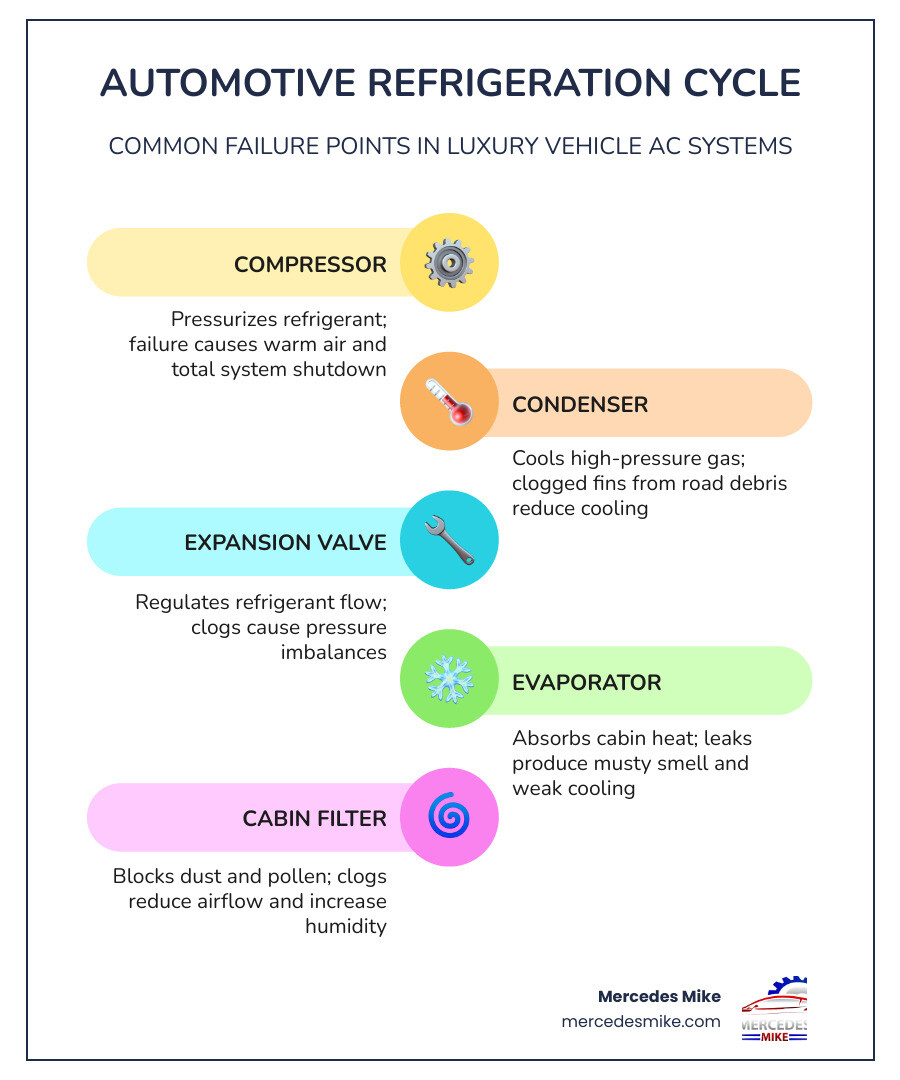
The most obvious red flag is warm air blowing from the vents when the dial is set to "Max AC." This often points to a loss of refrigerant or a compressor that has stopped engaging. However, don't overlook weak airflow. If you feel like you're being breathed on by a tired puppy rather than blasted by a gale-force Arctic wind, you likely have a clogged cabin air filter or a failing blower motor.
Strange Noises and Dashboard Gremlins
Your car should be a sanctuary of German engineering, not a source of mysterious sound effects. If you hear a grinding or squealing sound from the engine bay when you click the AC on, your compressor clutch might be failing. Inside the cabin, a hissing sound can indicate a Refrigerant Leak Repair is needed. Furthermore, in modern luxury vehicles, the climate control system is governed by complex electronic modules. If your dual-zone climate control thinks "60 degrees" means "lava," you're likely facing a sensor or control module malfunction.
Pungent Odors and High Humidity
Does your car smell like a gym locker room the moment you turn on the vents? That musty odor is usually caused by mold or mildew growth on the evaporator core. On the other hand, a sweet, chemical smell is a classic sign of a refrigerant leak. If the air feels "heavy" or humid inside the car, your condensate drain line might be clogged, preventing the system from stripping moisture out of the air.

Understanding the Cost of Vehicle Air Conditioning Services
We know that "how much is this going to cost?" is the first question on every driver's mind. In May 2026, the cost of ac repair is influenced significantly by the type of refrigerant your vehicle uses and the complexity of its components.
Diagnostic Fees and Labor
A professional diagnostic is the most important step. At Mercedes Mike, we use specialized OBD-II scanners and pressure testing tools specifically designed for European makes. A standard diagnostic fee usually ranges from $85 to $150, but this is often waived or applied toward the repair once you approve the work.
Comparing Repair Costs
Repairing a luxury vehicle requires precision. While a simple O-ring replacement is inexpensive, neglecting it can lead to a $3,000 compressor failure.
Component Estimated Repair Cost (Parts & Labor) Complexity O-Rings / Seals $150 – $350 Low AC Pressure Sensor $200 – $450 Medium Refrigerant Recharge (R-134a) $150 – $300 Low Refrigerant Recharge (R-1234yf) $350 – $600 Medium AC Blower Motor $400 – $800 Medium AC Compressor $1,200 – $2,500+ High Evaporator Core $1,500 – $3,500+ Very High
Refrigerant Pricing: R-134a vs. R-1234yf
Most vehicles built before 2015 use R-134a. However, newer German imports almost exclusively use R-1234yf. This newer refrigerant is more environmentally friendly but significantly more expensive. Because these systems are hermetically sealed, if you are low on gas, you have a leak. We believe in "find the leak, fix the leak" rather than just topping it off every few months, which saves you money in the long run.
Deciding Between AC Component Repair and System Overhaul
When you’re staring at a repair estimate, you have to decide: do I fix the part or overhaul the system?
The "Major Component" Rule
A common rule of thumb in the automotive world is the age-versus-cost balance. Most modern factory seals and hoses have a lifespan of 10 to 15 years. If your vehicle is 12 years old and the compressor has failed, there is a high probability that the evaporator or condenser is also nearing the end of its life. If a repair cost exceeds 50% of the cost of a full system overhaul, we often recommend the latter to ensure long-term reliability.
Environmental Impact and Efficiency
As of May 2026, environmental regulations have made it more critical than ever to ensure your system is leak-free. Leaking refrigerant isn't just bad for your wallet; it’s harmful to the atmosphere. Modern German AC systems are designed for maximum efficiency with high SEER-equivalent performance. A precision-engineered installation ensures that your car doesn't work harder than it needs to, preserving your fuel economy or EV range.
Specialized German Automotive AC Repair
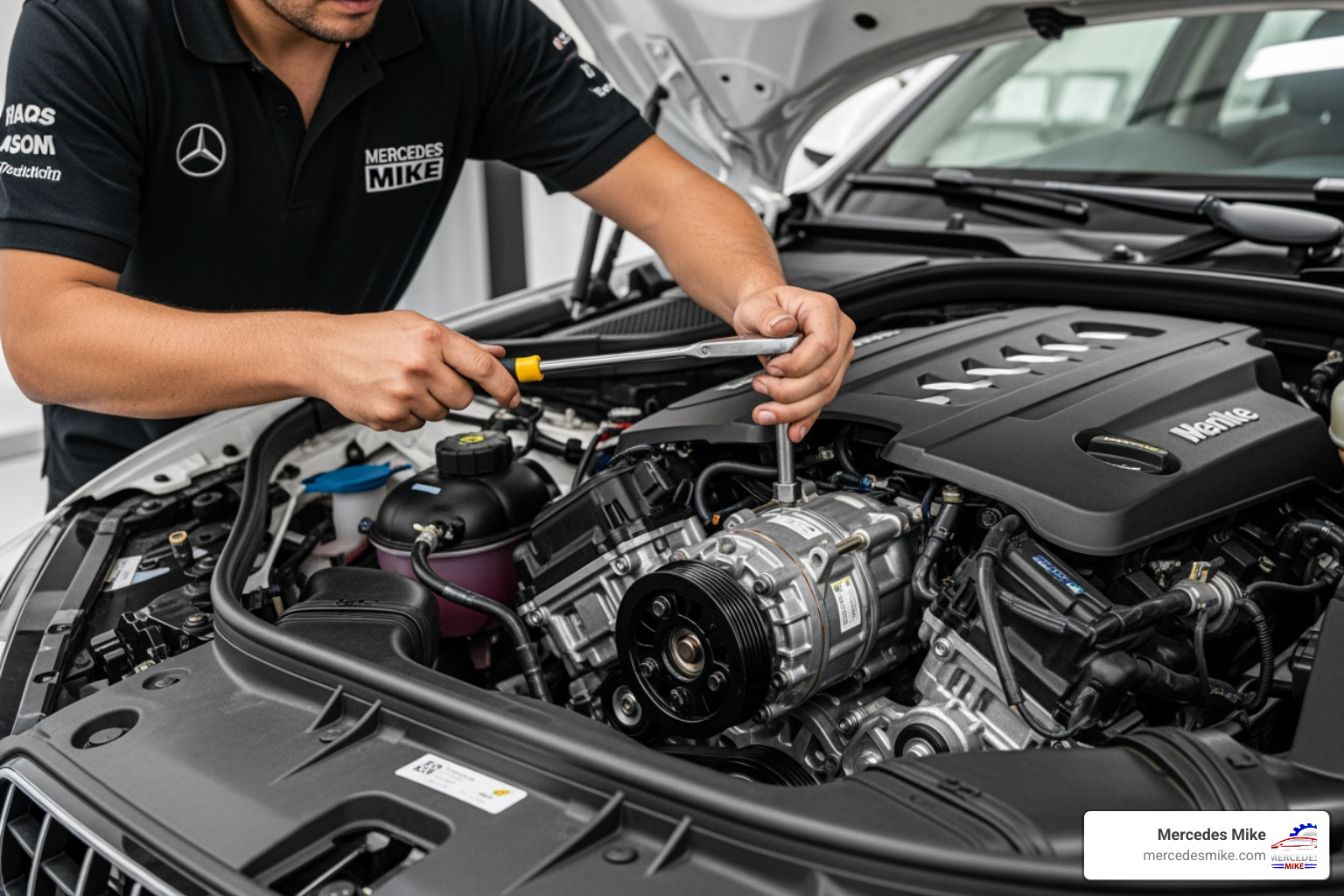
German cars like Mercedes-Benz, Audi, and BMW don't just use "standard" AC parts. They often utilize variable displacement compressors that don't simply turn on and off; they adjust their output based on the cabin's needs. This provides superior comfort but requires specialized knowledge to fix.
Mercedes-Benz: Known for complex sensor arrays and "Airscarf" technology. See our Mercedes Air Conditioning Service page for brand-specific details.
Audi: Often requires specific dash-disassembly procedures for evaporator work. Check out our guide on Audi Q5 AC Repair.
BMW: Focuses on high-pressure systems that require exact refrigerant weights to the gram.
What to Expect During Your Service Visit
When you bring your vehicle to our Pompano Beach facility, we don't guess. We follow a rigorous process to get you back into the cool air as quickly as possible.
The Diagnostic Workflow
Visual Inspection: We check for obvious signs of trouble, like oily residue on hoses (a sign of a leak) or debris blocking the condenser.
Pressure Testing: Using a professional manifold gauge set, we monitor the high and low-side pressures of the system.
Electronic Leak Detection: We use "sniffers" that can detect refrigerant molecules in the air, allowing us to find leaks hidden deep behind the dashboard.
System Vacuum: Before refilling any system, we pull a vacuum to remove all moisture and air. If the system can't hold a vacuum, we know there is still a leak.
Same-Day Windows
For common issues like a failed sensor, a blower motor, or a simple recharge, we offer same-day repair windows. Our service bays are fully equipped with the latest recovery and recharging stations for both R-134a and R-1234yf systems. We provide upfront estimates before any wrenches turn, so there are never any surprises on your final bill.
Essential Maintenance to Prevent Costly AC Repair
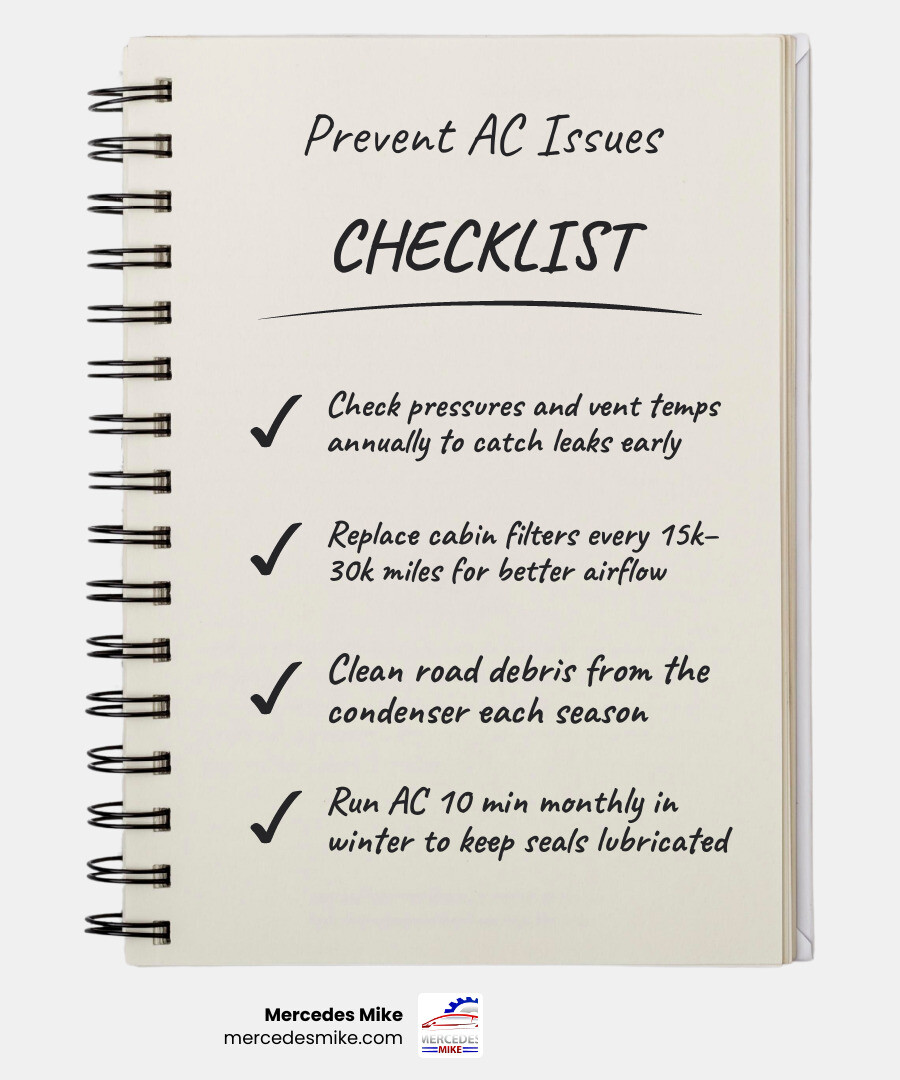
You wouldn't go ten years without changing your oil, so why ignore your AC? Preventive maintenance is the best way to avoid a $2,000 bill in the middle of a July heatwave.
Annual Performance Checks: Have a technician check your pressures and vent temperatures once a year.
Cabin Air Filter Replacement: These should be changed every 15,000 to 30,000 miles. A clogged filter makes the whole system work harder.
Condenser Cleaning: Road salt, bugs, and leaves can clog the condenser (the "radiator" for your AC). Cleaning this out improves heat exchange.
Run the AC in Winter: Turn your AC on for at least 10 minutes once a month during the winter. This keeps the seals lubricated and prevents them from drying out and leaking.
Clear the Drains: Ensure the condensate drain is clear to prevent water from backing up into your floorboards.
Frequently Asked Questions about AC Repair
How long does a typical automotive air conditioning repair take?
Most standard ac repair jobs, such as a refrigerant recharge or replacing a pressure sensor, take between 1 and 3 hours. More complex jobs, like replacing an AC compressor, usually take 3 to 5 hours. However, if your evaporator core is leaking (which is located deep inside the dashboard), the repair can take 8 to 12 hours of labor and may require keeping the vehicle overnight.
Why is my car AC running but not blowing cold air?
If you hear the fan blowing but the air isn't cold, the most common culprit is low refrigerant due to a leak. Other possibilities include a failed compressor clutch that isn't engaging the pump, a broken blend door actuator (which is stuck on the "heat" position), or a clogged expansion valve that is preventing the refrigerant from circulating.
Is automotive AC repair covered by extended vehicle warranties?
In many cases, yes! Most "Bumper-to-Bumper" or comprehensive extended warranties cover major mechanical components like the AC compressor, evaporator, and condenser. However, "wear and tear" items like cabin air filters and refrigerant recharges are typically not covered unless they are part of a larger covered repair. We can help you navigate your warranty paperwork to see what's covered.
Conclusion
At Mercedes Mike, we understand that driving in Pompano Beach, Deerfield Beach, or anywhere in South Florida without air conditioning is simply not an option. With decades of experience specifically focused on German automotive excellence, we bring a level of precision to ac repair that general shops simply can't match.
Whether you're driving a classic Mercedes-Benz or a brand-new Audi, our technicians use the latest tools and specialized diagnostics to ensure your climate control system performs exactly as the factory intended. Don't sweat through another commute — let us restore your cabin comfort with the expertise your vehicle deserves.