
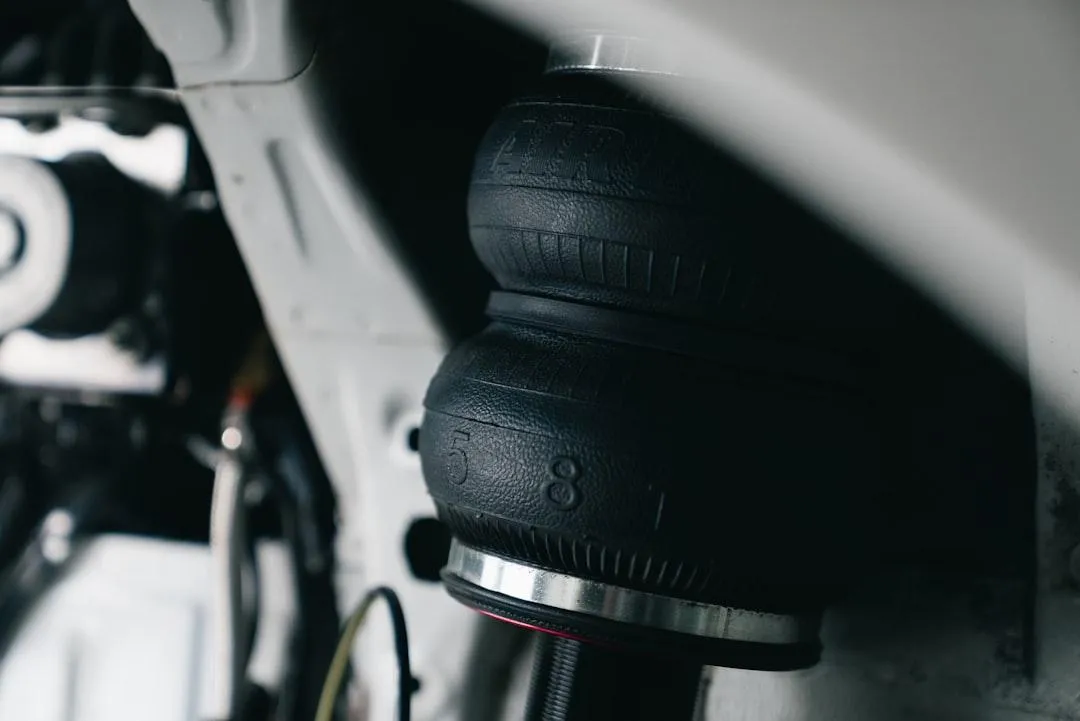
Air Bag Suspension Replacement Made Easy
Why Air Bag Suspension Replacement Matters for Your Ride
Air bag suspension replacement is one of the most important repairs you can make to restore ride quality, load stability, and vehicle safety — especially on German luxury vehicles like Mercedes-Benz and BMW.
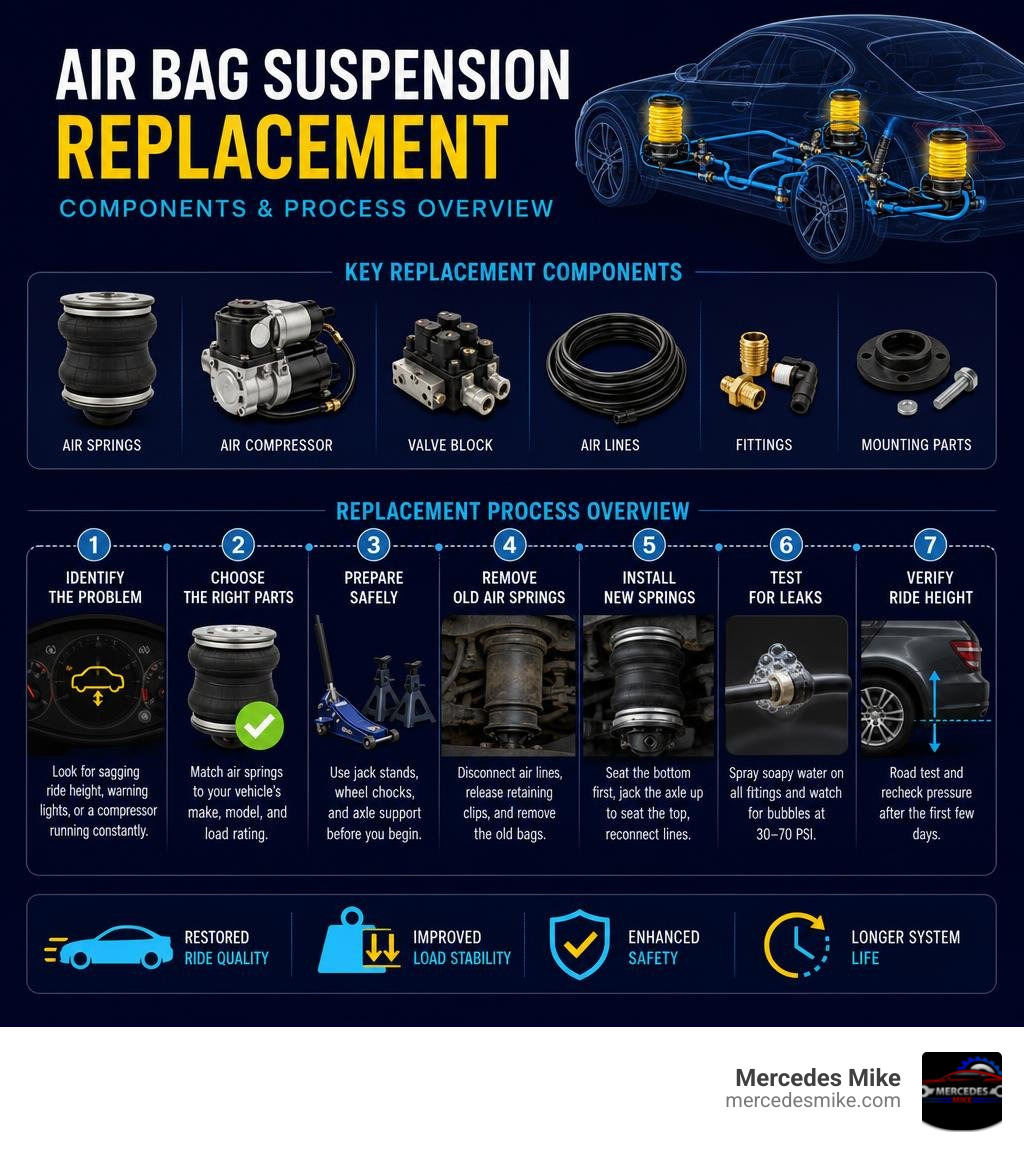
Quick answer: How does air bag suspension replacement work?
Identify the problem — sagging ride height, warning lights, or a compressor running constantly
Choose the right parts — match air springs to your vehicle's make, model, and load rating
Prepare safely — jack stands, wheel chocks, and axle support before you touch anything
Remove the old air springs — disconnect air lines, release retaining clips, and drop the old bags
Install the new springs — seat the bottom first, jack the axle up to seat the top, reconnect lines
Test for leaks — spray soapy water on all fittings and watch for bubbles at 30–70 PSI
Verify ride height — road test and recheck pressure after the first few days
Air springs don't last forever. Most fail after 6–10 years, and hot, dry climates can speed that up significantly. When they go, the symptoms are hard to miss — a sagging rear end, a compressor that won't quit, or a ride that suddenly feels like you're driving a brick.
The good news? With the right parts and a clear process, this is a job many vehicle owners can tackle themselves.
When to Consider Air Bag Suspension Replacement
Air suspension is a marvelous piece of engineering. Instead of relying on rigid, cold steel coils, your vehicle floats on pressurized columns of air. But over time, the physical environment takes its toll. In South Florida, the combination of intense heat, road debris, and constant humidity accelerates the wear on rubber components. When the rubber bellows dry out, crack, or tear, you are looking at a necessary Air Ride Suspension Repair.
As air bags age, they develop micro-cracks, often referred to as "dry rot." This typically occurs where the rubber folds over itself during normal suspension travel. At first, these leaks are tiny, only releasing air when the suspension flexes over a bump. However, as they expand, they create a constant demand on your air compressor.
If you ignore a leaking air bag, your onboard air compressor will run continuously to keep the vehicle level. Onboard compressors are designed for intermittent duty, not continuous operation. Running them constantly leads to rapid overheating and mechanical failure. Before you know it, what could have been a simple air spring swap escalates, adding the Car Suspension Fix Cost of a brand-new compressor and control valves to your bill.
Symptoms of Failing Air Springs
Recognizing the warning signs of a failing air suspension early can save you thousands of dollars in secondary repairs. Here are the most common symptoms:
The Morning Sag: You walk out to your driveway in Pompano Beach and notice your vehicle is squatting on one side or slammed to the ground. If the car rises back to its normal height after you start the engine, you have a slow leak in that corner's air bag.
The Overworked Compressor: You can hear the air compressor running constantly or clicking on far more frequently than usual.
A Harsh, Bumpy Ride: When an air bag loses its pressure, the vehicle rides on its internal jounce bumpers. This results in an incredibly stiff, jarring ride that transmits every single road imperfection directly into the cabin.
Suspension Warning Lights: Modern German vehicles are packed with sensors. When the ride height control module detects that a corner cannot reach or maintain its target height within a set timeframe, it will trigger a chassis warning light on your dashboard.
If you notice any of these signs while driving around Pompano Beach or Deerfield Beach FL, it is time to search for a professional Suspension Fix Near Me or prepare your tools for a hands-on replacement.
Air Bags vs. Coil Spring Conversion
When faced with a failing air suspension system, many owners ask themselves: Should I replace the air bags, or should I convert the entire system to traditional coil springs?
Both options have distinct advantages and disadvantages. Air bags provide an unparalleled cloud-like ride quality and automatic load leveling. Whether you have a trunk full of heavy luggage or are towing a trailer, the system automatically pumps more air into the bags to keep the vehicle level, preserving steering geometry and braking contact.
Coil spring conversions, on the other hand, offer simplicity. Once you install steel springs, you never have to worry about air leaks, compressor failures, or height sensors again. However, you sacrifice that signature luxury ride and lose your vehicle's self-leveling capabilities entirely.
Feature Air Bag Suspension Coil Spring Conversion Ride Quality Exceptionally smooth, adaptive, and plush Consistent, but firmer and less adaptive Load Leveling Automatic; maintains ride height under load None; rear will sag under heavy loads System Complexity High (compressor, lines, sensors, bags) Very low (simple mechanical steel springs) Long-Term Reliability Requires maintenance every 6–10 years Virtually lifetime durability Installation Difficulty Moderate (direct bolt-on component swap) Moderate to High (requires deleting electronics)
Choosing the Right Replacement Parts
Choosing the right replacement parts is crucial to maintaining your vehicle's performance. You cannot simply grab any generic air bag off a shelf and expect it to work seamlessly with your vehicle's active suspension management system.
When choosing parts, consult a professional Air Spring Replacement Guide to match the exact specifications of your vehicle's year, make, model, and trim level. German luxury cars often feature sophisticated electronic damping systems integrated directly into the air strut assembly. Ensuring compatibility with these electronic systems prevents dashboard warning lights and preserves your adaptive driving modes.
Sourcing Quality Kits and Components
When sourcing your replacement parts, look for high-quality aftermarket kits or OEM components that feature:
Heavy-Duty Bellows Design: Multi-ply rubber (often double-convoluted for heavy utility vehicles or high-grade synthetic elastomers for passenger cars) provides the durability needed to withstand extreme pressures and environmental debris.
Premium Brass Fittings: Avoid cheap plastic push-to-connect fittings. High-quality brass fittings ensure a secure, airtight seal that won't crack under temperature swings.
DOT-Approved High-Pressure Lines: If your kit includes replacement air lines, ensure they are DOT-approved 1/4-inch or vehicle-specific high-pressure nylon lines.
Using premium components is especially important for European imports. Cutting corners on air suspension components is one of The Most Common Problems with German Cars and How to Prevent Them, leading to premature failures and repeated repair bills.
Warranty and Ride Quality Impact
Opting for high-quality replacement air bags ensures your ride quality remains exactly as the engineers intended. Premium aftermarket brands often offer limited lifetime warranties with no mileage restrictions, giving you peace of mind.
Furthermore, replacing your worn, leaking air bags with fresh units will immediately restore your vehicle's handling dynamics. When air springs are operating at their correct pressures, they reduce body roll in corners, eliminate nose-diving during hard braking, and keep your headlights properly aligned with the road.
How to Perform a DIY Air Bag Suspension Replacement
If you are mechanically inclined, replacing your rear air springs is a highly rewarding project that you can accomplish in your own garage.

Safety is the absolute priority when working on any air suspension system. These systems operate under extremely high pressures (often up to 100 PSI or more). Never attempt to loosen a fitting, cut a line, or remove an air bag while the system is fully pressurized. Doing so can cause the air spring to rupture or cause the vehicle to drop suddenly, posing a severe risk of injury.
Preparing for Air Bag Suspension Replacement
Before lifting your vehicle, park on a flat, level concrete surface. Engage the parking brake and place heavy-duty wheel chocks in front of and behind the front wheels.
To prevent the air suspension system from trying to auto-level or activate the compressor while you are working, disconnect the vehicle's negative battery cable or pull the dedicated air suspension fuse/relay.
Gather the following tools before you begin:
Floor jack and heavy-duty jack stands (never rely solely on a floor jack!)
Metric socket set and open-ended wrenches
Long-reach needle-nose pliers or a strong pick set
Specialized air line cutter or a brand-new, ultra-sharp utility knife
Thread-locking compound and anti-seize lubricant
Spray bottle filled with a mix of dish soap and water
Step-by-Step Guide to Air Bag Suspension Replacement
While specific steps vary slightly depending on whether you are working on a passenger car or a heavy-duty truck, the core process for replacing rear air springs remains highly consistent. For those working on utility platforms, reviewing a detailed RAM 2500 Air Bag Installation Guide can provide valuable structural context.
Here is the general step-by-step replacement process:
Raise the Vehicle and Support the Axle: Use your floor jack to lift the rear chassis of the vehicle by the frame. Place jack stands securely under the frame rails. Gently lower the jack until the frame rests on the stands. Next, place your floor jack lightly under the rear axle or lower control arm to support its weight — do not let the axle hang fully unsupported, as this can stretch brake lines and sensor wires.
Deflate the Air Springs: Carefully and slowly loosen the air line fitting at the top of the air bag or at the valve block to allow the pressurized air to bleed out completely.
Remove Retaining Clips and Hardware: Many rear air bags are held in place at the top mount by a metal retaining clip (sometimes referred to by DIYers as the "clip of hope" due to its hard-to-reach location). Use long needle-nose pliers or an angled pick to pull this clip free. If your vehicle uses lower mounting bolts or J-bolts, remove them from the lower spring seat.
Extract the Old Air Bag: Once disconnected from its mounts and completely deflated, compress the rubber bellows of the old air bag by hand and slide it out from between the frame and the axle.
Prep and Install the New Air Spring: Before installing the new bag, ensure the mounting plates on both the frame and the axle are clean and free of rust or road grime. Collapse the new air spring manually. Position it into place, seating the bottom alignment pins or brackets first.
Secure the Mounts: Slowly raise your floor jack under the axle to compress the new air spring slightly, aligning the top mount. Reinstall the top retaining clip or upper mounting hardware. If your replacement kit uses J-bolts, ensure they are trimmed flush below the lower plate surface so they cannot rub against and puncture the rubber bellows.
Disconnecting and Reconnecting Air Lines
Handling the air lines requires a delicate touch. Most modern air suspension systems use push-to-connect (PTC) fittings. To disconnect an air line from a PTC fitting, press the outer collar (collet) inward toward the fitting while pulling the air line straight out.
When reconnecting or installing new air lines, follow these critical rules:
Make a Perfect Square Cut: Never use side cutters or pliers to cut an air line; they will pinch and deform the tubing. Use a dedicated hose cutter or a razor-sharp utility knife to make a clean, perfectly square 90-degree cut. An angled or jagged cut will not seat properly inside the fitting, causing an immediate leak.
Insert Fully: Push the air line firmly into the brass push-to-connect fitting. You should feel it slide past the internal O-ring and click into place (typically inserting about 3/4 of an inch). Give the line a gentle tug to ensure the internal metal teeth have gripped the tubing securely.
Route with Care: Route your air lines along the frame rails, securing them with nylon zip ties. Keep them at least 8 inches away from hot exhaust components and moving suspension parts. Use thermal sleeves where lines must run near heat sources.
Post-Installation Testing and Maintenance
Once your new air bags are physically installed and all lines are securely connected, it is time to repressurize the system and verify your work.
Testing for Air Leaks
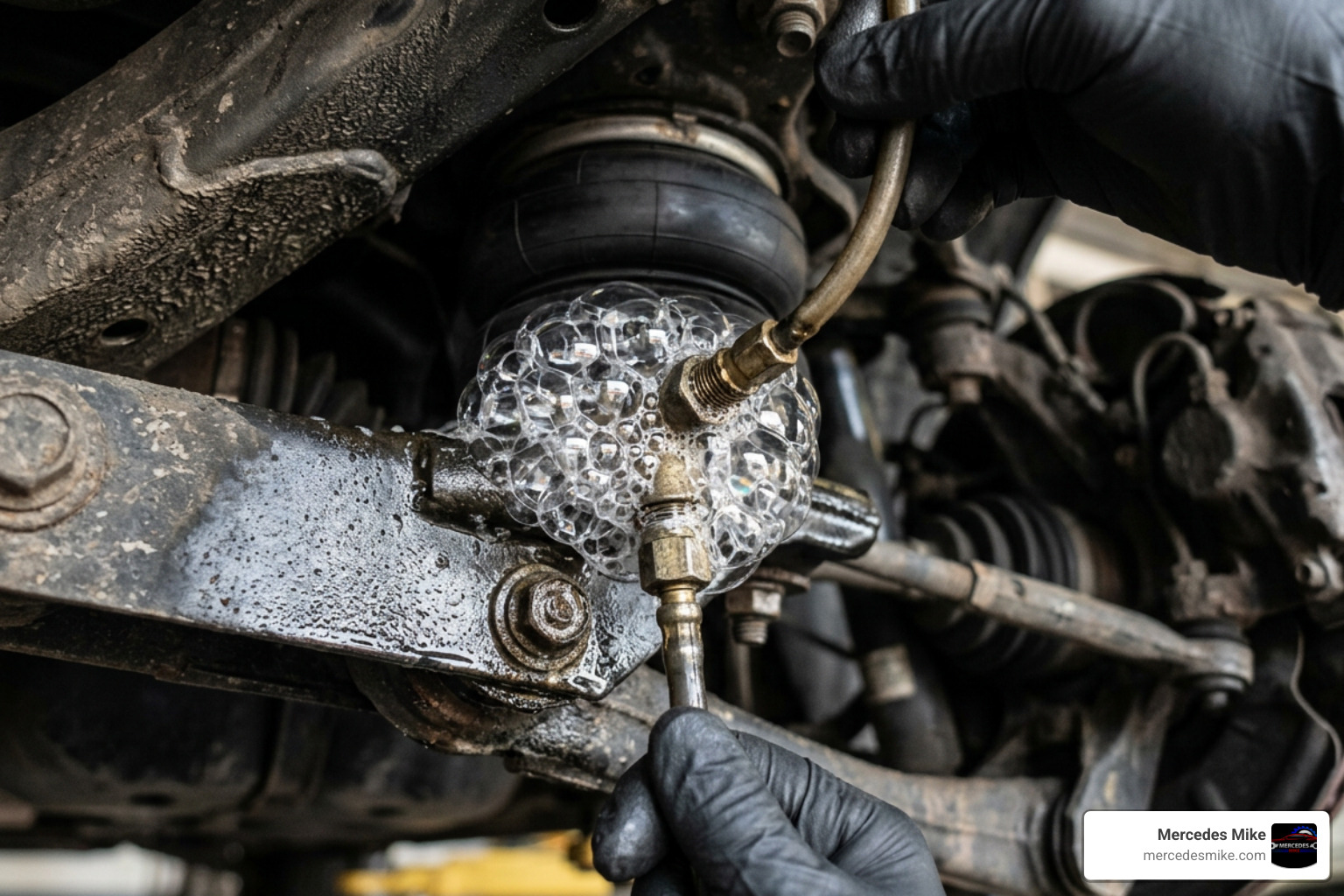
Reinstall your air suspension fuse or reconnect the negative battery terminal. Start the vehicle and allow the onboard compressor to inflate the new air springs. Once the vehicle reaches its standard ride height, perform the classic "bubble test":
Mix a generous amount of liquid dish soap with water in a spray bottle.
Spray the soapy solution directly onto all air line connections, brass fittings, and the top and bottom seals of the new air bags.
Watch the sprayed areas closely for at least 60 seconds.
If you see expanding, foaming bubbles, you have an active air leak. You will need to deflate the system, remove the leaking line, recut it cleanly, and re-seat it into the fitting.
Lifespan and Preventative Maintenance
A quality replacement air bag should easily last another 6 to 10 years with basic preventative care. To maximize the lifespan of your new suspension, keep these best practices in mind:
Never Run at 0 PSI: If your vehicle uses helper springs or manual inflation valves, always maintain a minimum baseline pressure of 5 to 10 PSI, even when driving completely unloaded. Running an air bag completely empty will cause the rubber bellows to pinch, fold incorrectly, and fail prematurely.
Wash Away Road Debris: Whenever you wash your vehicle, take a garden hose and thoroughly rinse the air springs. Blasting away accumulated road salt, sand, mud, and grit prevents these abrasive materials from wearing down the rubber folds as the suspension cycles.
Perform Regular Inspections: Every six months, take a quick peek under your vehicle. Look for any signs of rubbing, checking that the air lines remain securely tied away from hot exhaust pipes and moving suspension arms.
Frequently Asked Questions
Navigating air suspension repairs can bring up several questions. Here are clear answers to the most common concerns.
How much does it cost to replace air suspension?
The cost of air suspension repair varies widely depending on your vehicle and whether you choose a DIY route or professional service. For a standard rear air bag replacement on a truck or SUV, high-quality aftermarket kits typically range from $200 to $500 for the parts.
If you bring your vehicle to a professional shop, labor rates and OEM parts pricing can bring the total cost to anywhere from $800 to $2,000+ per axle. While the upfront cost is higher, professional installation ensures the system is correctly calibrated, the ride height sensors are programmed, and the work is backed by a robust warranty.
Can I drive with a leaking air bag?
We strongly advise against driving with a leaking air bag. Operating your vehicle with a collapsed air spring forces the chassis to ride directly on the solid rubber jounce bumpers. This completely ruins your ride quality and subjects your vehicle's steering rack, control arms, and ball joints to massive, un-cushioned road impacts, which can quickly lead to a separate Steering Repair bill.
Furthermore, a leaking bag forces your air compressor to run continuously. This will quickly burn out the compressor motor, turning a simple air bag replacement into a much more expensive repair.
How long do replacement air bags last?
On average, high-quality replacement air bags last between 6 and 10 years. Their actual lifespan is heavily influenced by environmental factors and maintenance. Vehicles driven in hot, dry, or sandy climates like South Florida often experience faster rubber degradation. Regularly washing road grime off the bellows and maintaining the recommended minimum air pressure will significantly extend their operational life.
Conclusion
Replacing your vehicle's air springs doesn't have to be an overwhelming or stressful experience. By understanding the warning signs of failure, sourcing high-quality replacement parts, and following a methodical installation process, you can easily restore your vehicle's legendary ride comfort and load-carrying stability.
If you are located in Pompano Beach, Deerfield Beach FL, or anywhere in the South Florida area, and would prefer to leave this precise job to the experts, we are here to help. At Mercedes Mike, located at 882 NE 41st Court in Pompano Beach, our team of highly experienced, certified technicians specializes in premium maintenance and repair services for German luxury cars, including Mercedes-Benz, BMW, Audi, and Porsche.
We use the latest diagnostic tools and premium components to ensure your vehicle's sophisticated air suspension is restored to factory-perfect specifications. Explore our full range of professional services on our Mercedes Mike Services page, or stop by our shop off N Dixie Hwy to experience the ultimate in European automotive care.