
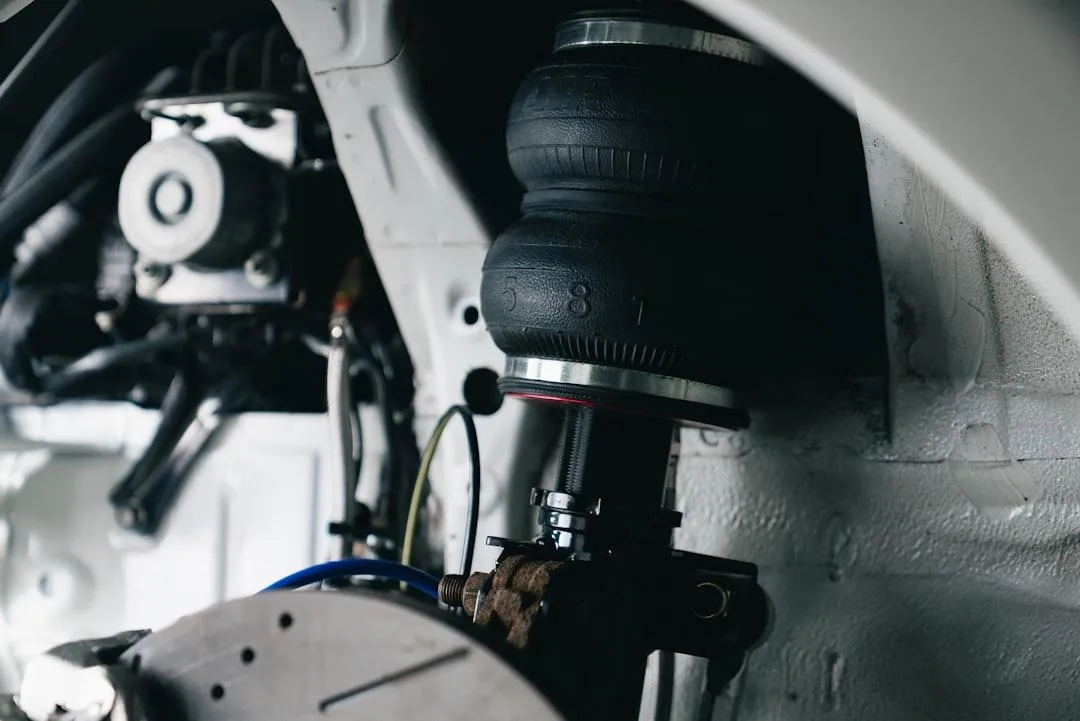
Air Suspension Repair 101: Keeping Your Car Off the Ground
Why Air Ride Suspension Repair Matters for Your Luxury Car
Air ride suspension repair is something every owner of a German luxury vehicle — Mercedes, BMW, Audi — will likely face at some point.
Here's a quick summary of what you need to know:
What it is: Air suspension uses pressurized air bags (instead of steel coil springs) to support your vehicle and adjust ride height automatically.
Common problems: Air leaks, compressor failure, faulty height sensors, and damaged air lines.
Warning signs: A sagging corner, rough ride, hissing sounds, or a suspension warning light on your dashboard.
Repair costs: Anywhere from $300 to over $7,000 depending on what needs fixing.
Key decision: Weigh the cost of repeated repairs against a full conversion to conventional coilovers (sometimes as low as $830).
Bottom line: Don't ignore it — a failed air suspension affects your safety, handling, and fuel economy.
Air suspension is one of the defining features of modern German luxury cars. It delivers that famously smooth, composed ride by replacing rigid metal springs with pneumatic air bags that adapt in real time to road conditions and load weight.
But that sophistication comes with a tradeoff. These systems are complex, and they wear out. Many owners report problems appearing anywhere between 58,000 and 140,000 miles — and some describe failure as a matter of when, not if.
The good news? Most air suspension problems are diagnosable and fixable — especially when caught early. This guide walks you through how the system works, what goes wrong, how to spot it, and what your repair options actually cost.
Understanding Air Suspension: How It Works and Why It Fails
To understand why air ride suspension repair becomes necessary, we first have to look at the anatomy of the system. Traditional cars rely on steel coil springs to absorb road impacts. German luxury vehicles, however, use a dynamic, pressurized system to keep you floating on a cushion of air.
While this setup delivers unmatched comfort, the combination of high pressure, moving parts, and rubber components makes it vulnerable to wear and tear over time. In fact, suspension issues are among the most common problems with german cars and how to prevent them before they lead to expensive roadside breakdowns.
The Mechanics of a Smooth Ride
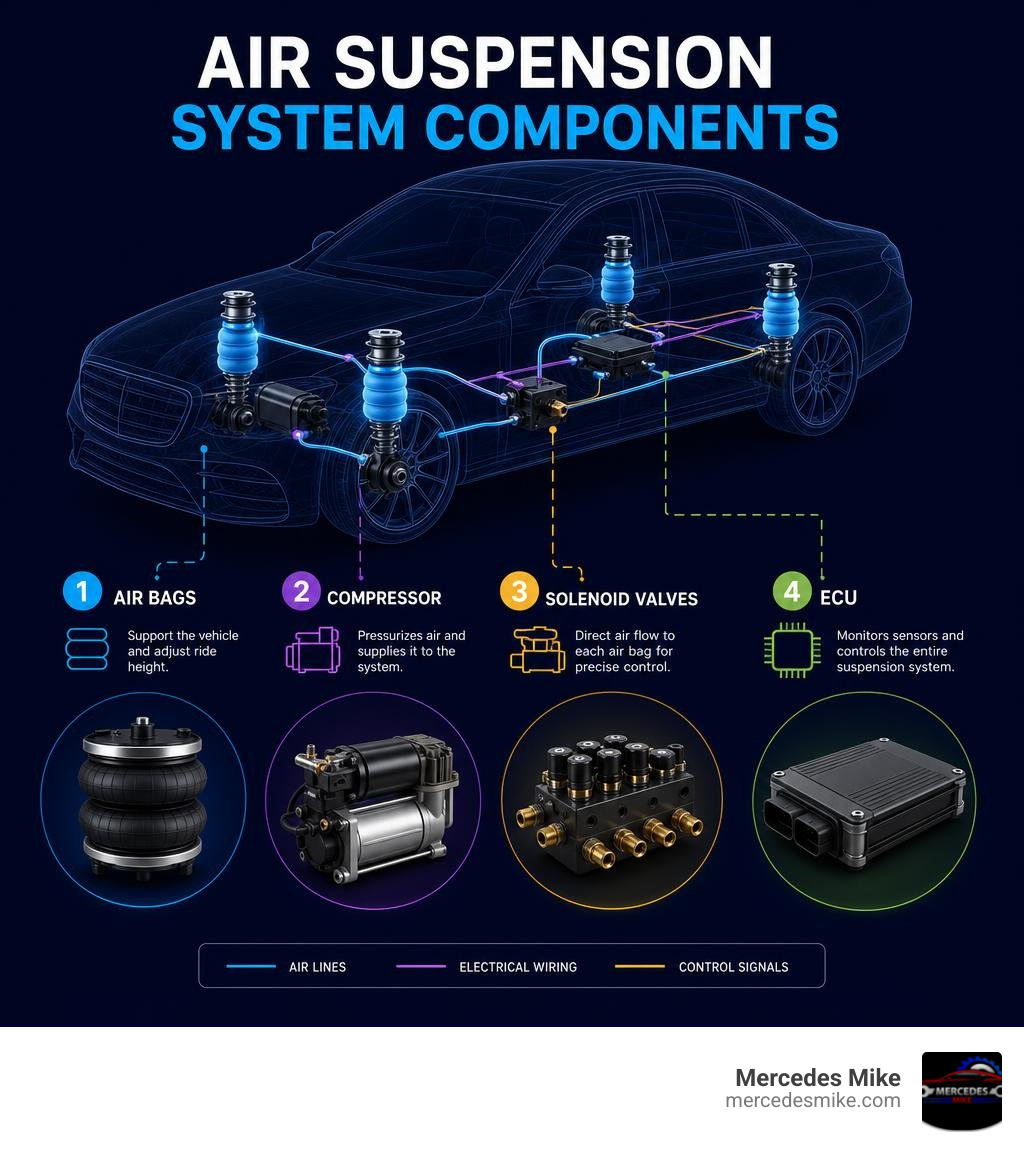
At the heart of the system is an onboard air compressor. This electric pump generates the pressurized air required to lift and level the vehicle. The air is stored in a pressurized reservoir (or air tank) so that height adjustments can happen instantly without waiting for the compressor to pump from scratch.
When the vehicle needs to adjust its height, the Electronic Control Unit (ECU) sends signals to a block of solenoid valves. These valves act as electronic gatekeepers, opening and closing to distribute air through plastic lines directly to the air bags (also known as air springs or bellows) located at each wheel.
The ECU constantly monitors ride height using electronic sensors. If you load heavy luggage into the trunk, the system detects the sag and pumps more pressurized air into the rear air bags to level the vehicle. This continuous self-leveling process isolates the cabin from road shock, providing that signature "cloud-like" driving experience.
Impact on Safety, Handling, and Fuel Economy
A healthy air suspension does far more than just keep you comfortable; it plays a critical role in the physics of your drive. When the system begins to fail, the consequences ripple across your vehicle's performance:
Body Roll and Handling: Air springs stiffen during cornering to reduce body roll. When an air bag loses pressure or a valve block malfunctions, the suspension cannot support the vehicle's weight during turns, leading to sloppy handling and unpredictable steering behavior.
Braking Distance: Proper braking relies on even weight distribution. If your front air struts are leaking or under-pressurized, the front end of the car will "nose-dive" excessively during hard braking. This shifts too much weight forward, reducing rear-wheel traction and significantly increasing your braking distance.
Aerodynamic Drag and Fuel Efficiency: Modern luxury vehicles are programmed to lower their ride height at highway speeds to decrease aerodynamic drag. If the system is locked in its highest position due to a sensor malfunction—or if it is sagging unevenly—airflow underneath the vehicle becomes turbulent, dragging down your fuel economy.
Common Symptoms and Diagnosing Air Ride Suspension Repair Issues
Diagnosing a suspension issue early can mean the difference between a simple fitting replacement and a total system overhaul. When the system springs a leak, your compressor has to work overtime to keep up, eventually burning itself out.
Identifying Air Leaks and Compressor Failures
The most frequent culprit in any air suspension system is a physical air leak. Because the air bags are made of flexible, textile-reinforced rubber, they degrade due to dry rot, road salt, and constant flexing.
Here is how you can spot and diagnose leaks and compressor issues:
The Sagging Corner: If you walk out to your driveway in the morning and notice one corner of your car sitting noticeably lower than the rest, you have a leak. Over several hours, the pressurized air escapes from a damaged air bag or fitting, causing that corner to sag.
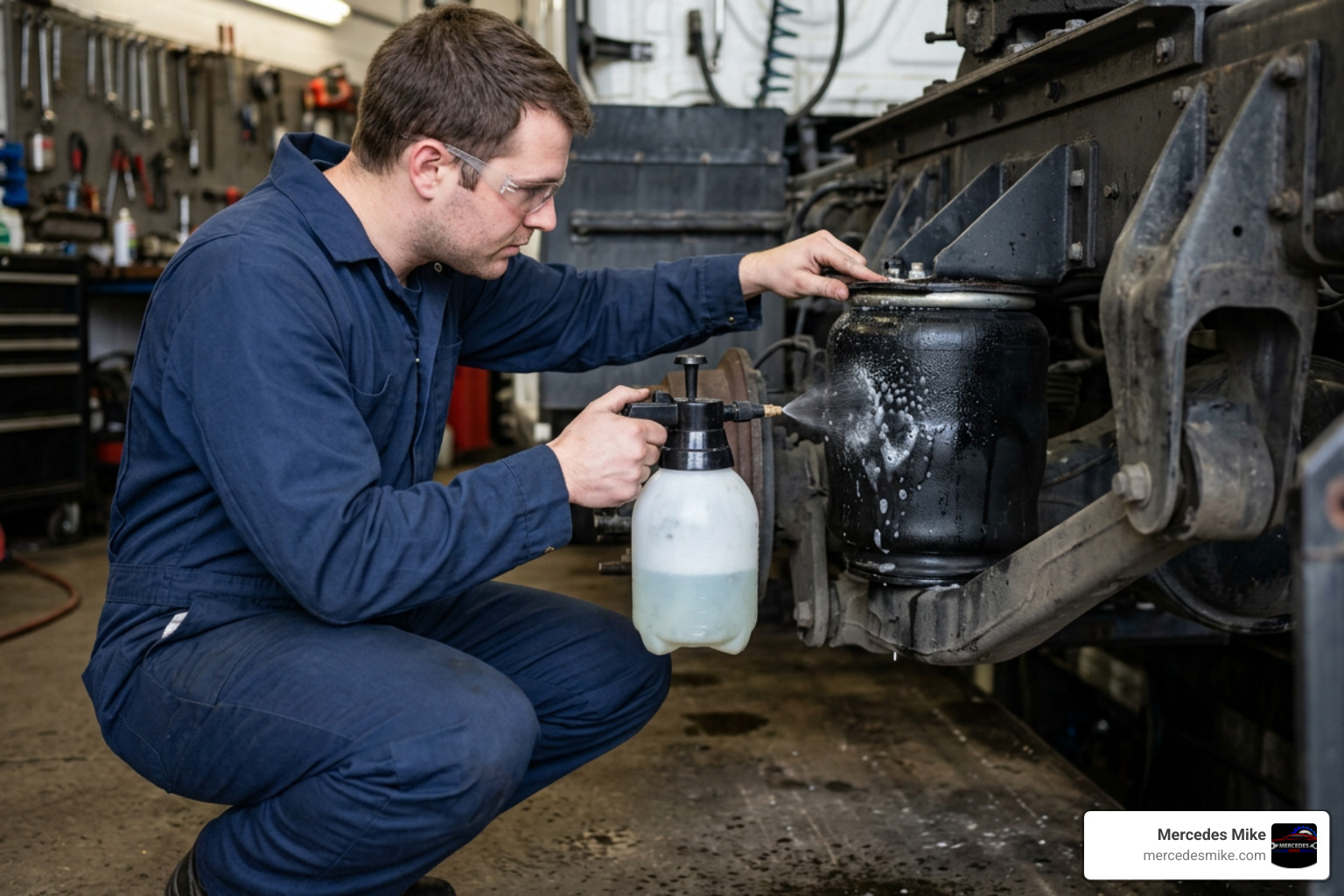
The Soap Test: To pinpoint the exact location of a leak, we use a simple but highly effective diagnostic trick. Mix dish soap and water in a spray bottle and spray it onto the air bags, solenoid valves, and line connections. If there is a leak, escaping air will create rapidly expanding bubbles.
Hissing Noises: Listen closely near the wheel wells while the car is running or immediately after turning it off. A distinct hissing sound is a dead giveaway of a ruptured air spring or a cracked air line.
Compressor Burnout and Slow Pressure Buildup: If your compressor is running constantly, making a loud buzzing or grinding noise, or taking a long time to raise the vehicle, it is on its deathbed. Compressors are only designed to run in short bursts. When a persistent air leak forces the compressor to run continuously, it overheats and burns out.
Troubleshooting Sensors and Electronic Control Units
Sometimes the hardware is perfectly sealed, but the "brain" of the system is miscommunicating. Electronic issues can lock your suspension in place or cause highly erratic behavior.
Height Sensors and Leveling Valves: Each wheel has an electronic height sensor attached to the suspension control arms. If a sensor bracket bends, or if the sensor's internal electrical contacts corrode, it will send incorrect voltage signals to the ECU. The car may believe a corner is too high when it is actually too low, leading to highly uneven ride heights.
Wiring Corrosion and Software Calibration: Because height sensors and solenoid valve blocks are exposed to the elements under the car, wiring harnesses can easily corrode. In other cases, the ECU may simply lose its calibration parameters. This requires professional diagnostic scanners to perform a electronic system recalibration.
Diagnostic Trouble Codes: When the ECU detects a fault—such as a sensor reading out of range or a compressor taking too long to build pressure—it triggers a suspension warning light on your dashboard. Scanning the vehicle's computer will often reveal specific codes like C1562 (ride height control system malfunction), C1200, or C1201 (sensor circuit faults).
Maintenance, Prevention, and Professional Repair Best Practices
Because air suspension systems are highly sensitive to dirt, moisture, and wear, proactive care is essential. Regular preventative maintenance will keep your system sealed and protect your compressor from premature failure.
Recommended Service Schedules for Air Ride Suspension Repair
While many drivers treat air suspension as a "set-it-and-forget-it" system, professional service manuals suggest regular checkups to catch minor leaks before they destroy major components.
Service Interval Recommended Action Daily / Pre-Trip Quick visual check of vehicle levelness; listen for unusual compressor noise upon startup. 6,000 Miles Inspect air bags for debris buildup; check lines for rubbing or heat damage. 12,000 Miles Perform a soap test on fittings; verify proper operation of the moisture-removing air dryer. 50,000 Miles Comprehensive electronic diagnostic scan; check ride height sensor linkages for play or corrosion. Annual / 100,000 Miles Deep inspection of rubber bushings; check structural torque specifications; replace air dryer cartridge.
When performing suspension work, following exact torque specifications is critical. For instance, commercial and heavy-duty air suspension systems outlined in the RIT-207 Service Manual require extreme torque values (up to 1,100 ft-lb for massive pivot bolts) to maintain alignment. While passenger cars use much lower values, using a calibrated torque wrench on your vehicle's mounting bolts and air fittings prevents stripped threads and dangerous structural failures.
Proactive Driver Checks and Professional Installation Steps
To get the most out of your air suspension, incorporate these simple habits into your routine:
Keep It Clean: Road grime, sand, and winter salt act like sandpaper on rubber air bags. Whenever you wash your car, spray down the rubber bellows to remove accumulated debris.
Listen to the Compressor: If you notice your compressor cycling on and off frequently while idling, do not wait. A fast-cycling compressor is a warning that a small leak has developed.
Professional Installation Best Practices: If you are replacing a component yourself or having a shop do it, ensure the vehicle's battery is disconnected first. This prevents the ECU from trying to auto-level the car while it is on jack stands—a mistake that can easily damage the system or cause injury.
Clean Cuts and Straight Lines: When repairing plastic air lines, always use a dedicated tube cutter. An uneven, angled cut with standard wire cutters will prevent push-to-connect fittings from sealing properly, creating an immediate leak. For detailed procedures on proper line routing and component clearance, refer to professional technical guides like the RAR-260 Trailer Manual and the RAR-240 Service Guide.
Repair vs. Replacement: Costs, Safety, and Conversion Options
When faced with a failing air suspension, you have a major decision to make: do you repair the existing pneumatic system, or do you strip it out entirely in favor of traditional steel coil springs?
Evaluating the Cost of Air Ride Suspension Repair
Maintaining an active air suspension is a premium experience, and it comes with a premium price tag. Depending on the make and model of your vehicle, a complete air suspension system can represent a $300 to $7,000 investment over the life of the car.
Dealer vs. Independent Repair: Dealerships will almost always quote you the highest prices, often insisting on replacing entire assemblies and factory air lines. A typical dealer quote to replace leaking air lines alone can climb to $2,100 ($600 in parts and $1,500 in labor).
Component Costs: A single OEM air strut can cost anywhere from $500 to $1,500, while a replacement compressor can run between $300 and $800 before labor is factored in.
Finding the Right Help: To avoid overpaying, it is crucial to seek out independent specialists who have the specific software tools needed to calibrate these systems. If you are looking for a trustworthy suspension fix near me, finding a local shop that specializes in your specific vehicle brand is key to getting an accurate diagnosis. You can also get a realistic breakdown of typical expenses by reviewing our comprehensive guide on car suspension fix cost.
Air Suspension Delete: Converting to Conventional Coilovers
If you are tired of chasing air leaks and facing four-figure repair bills, an "air suspension delete" might be the right path forward. This process involves removing the air bags, compressor, and electronic lines, and installing a conventional coilover conversion kit.
Feature Air Ride Suspension Coilover Conversion Ride Quality Ultra-smooth, adaptive, self-leveling Firm, consistent, traditional feel Complexity High (sensors, valves, compressor, bags) Very low (simple steel springs and shocks) Initial Repair Cost $1,000 - $4,000+ (depending on components) $830 - $1,800 (complete kit + labor) Long-Term Reliability Moderate (requires ongoing maintenance) Extremely high (virtually maintenance-free) Vehicle Resale Value Preserves original luxury features May slightly lower value for purists
Converting to coilovers can cost as little as $830 for the parts. It eliminates the risk of future air leaks entirely, giving you peace of mind and predictable handling for the remaining lifespan of your vehicle.
Frequently Asked Questions about Air Suspension
How long do air suspension systems typically last?
On average, factory air suspension components last between 58,000 and 140,000 miles. The lifespan depends heavily on your driving environment. In hot, dry climates, the rubber air bags are prone to dry rot and cracking much sooner. In cold climates, road salt can corrode the aluminum end caps and electronic height sensors.
Can I drive my car with a failed air suspension?
No, you should not drive a vehicle with a completely failed or sagging air suspension. Doing so poses severe safety hazards. When the suspension drops completely, the vehicle's frame can sit directly on the tires, which will quickly slice through the rubber at speed.
Furthermore, driving a bottomed-out vehicle transfers all road shock directly to the chassis, causing severe structural damage and ruining your steering alignment. If your car is completely slammed to the ground, have it towed to a professional shop to address the issue, and ensure you also check for any related steering repair needs that may have been caused by the extreme impact.
How do I check for air leaks at home?
The easiest way to check for leaks at home is the soapy water test. Mix a few tablespoons of liquid dish soap with water in a spray bottle. Park your vehicle on a flat surface, raise it to its highest ride setting, and spray the mixture onto the rubber air bags, the top strut mounts, and the air line fittings.
Look closely for any bubbling. If you notice the car sagging overnight, you can also measure the distance from the center of the wheel hub to the fender arch on all four corners before bed, and check the measurements again in the morning to identify which corner is dropping. If you notice uneven tire wear or sloppy handling during this process, it may also be time to fix play in steering wheel components to restore crisp steering response.
Conclusion
Whether you want to preserve the cloud-like ride of your factory air system or are considering a conversion to reliable steel coilovers, addressing suspension issues early is the key to keeping your luxury vehicle safe and enjoyable to drive.
At Mercedes Mike, we specialize in high-quality diagnostics, maintenance, and repair services for German luxury cars (Mercedes, BMW, Audi, Porsche) in Pompano Beach and the surrounding South Florida area. Our decades-experienced technicians use the latest factory diagnostic tools to pinpoint leaks, replace worn components, and calibrate your suspension to perfection.
Conveniently located near Deerfield Beach on NE 41st Court off N Dixie Hwy, we are your premier independent alternative to expensive dealership repairs. Schedule professional air suspension service with us today and let our team keep your vehicle riding exactly the way it was engineered to.