
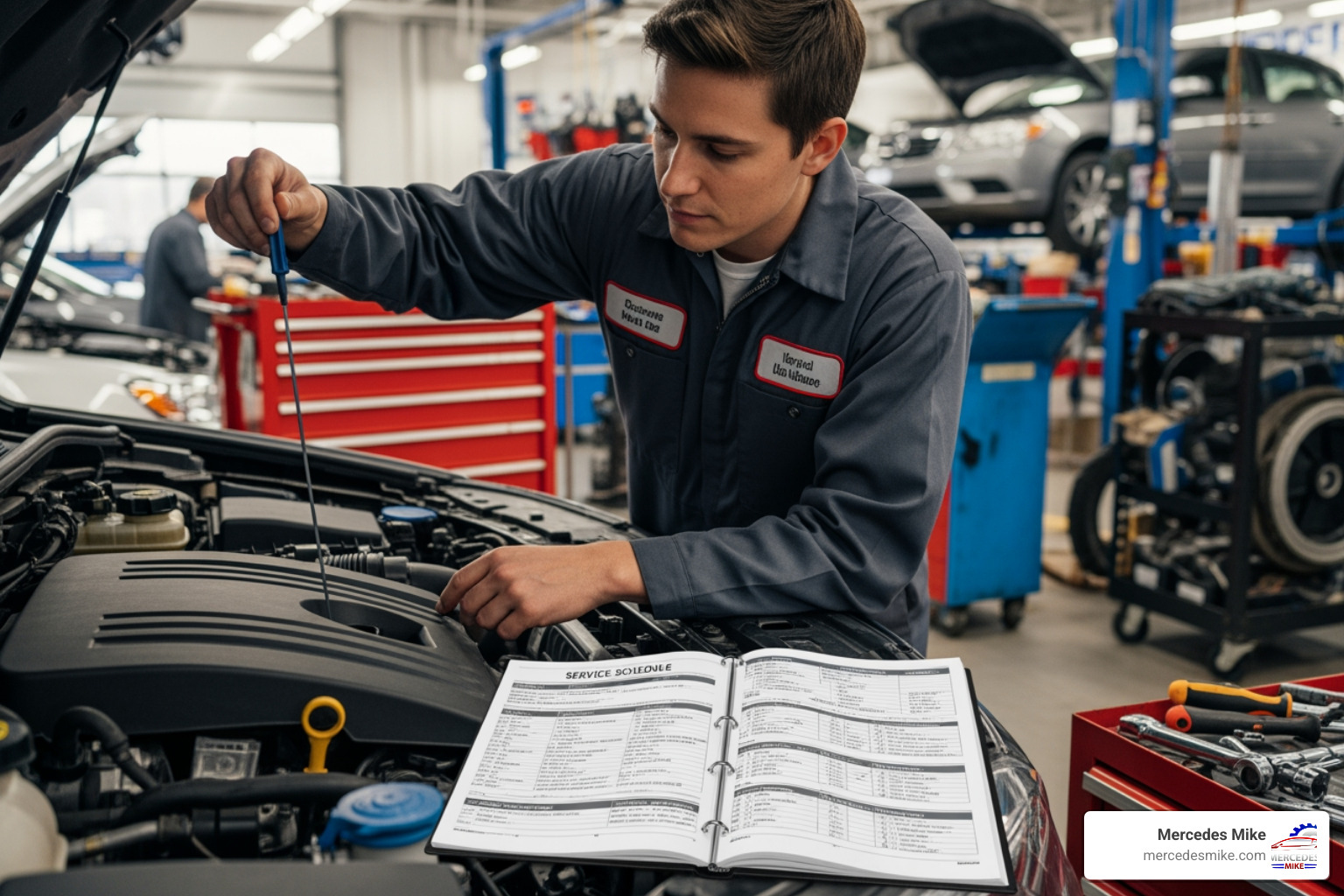
Why Your Factory Recommended Maintenance Schedule is the Secret to Car Longevity
The Secret Most Car Owners Don't Know About Keeping Their Car Alive
Factory scheduled maintenance is the manufacturer-recommended list of services your vehicle needs at specific intervals to stay safe, reliable, and under warranty.
Quick answer — here's what you need to know:
What it is: A set of inspections, fluid changes, and part replacements outlined in your owner's manual
Common intervals: Every 30,000, 60,000, and 90,000 miles (or annually by time)
What's included: Oil changes, filter replacements, brake inspections, fluid flushes, tire rotations, and more
Do you need a dealership? No — federal law protects your right to use any qualified shop without voiding your warranty
What happens if you skip it? Accelerated wear, potential warranty loss, and costly repairs that could have been avoided
Most drivers treat their car like a smartphone — use it until something breaks, then panic. But a luxury vehicle like a Mercedes or BMW is more like a high-performance machine that rewards consistent care.
Think about this: a $50 belt replacement caught during a routine service can prevent a $1,000 engine repair down the road. That's not a coincidence — it's exactly what factory maintenance schedules are designed to do.
Well-maintained vehicles regularly surpass 200,000 miles of reliable service. The difference between a car that gets there and one that doesn't usually comes down to one thing: whether the owner followed the manufacturer's recommended maintenance plan.
This guide breaks down everything you need to know — what's included, when to do it, and how to make sure you're covered without overpaying at the dealership.
The Essentials of Factory Scheduled Maintenance

At its core, Factory Scheduled Maintenance is a roadmap created by the people who engineered your vehicle. It tells you what should be inspected, serviced, adjusted, or replaced based on mileage, time, and driving conditions.
That matters because maintenance is not one-size-fits-all. A BMW, Audi, Porsche, Mercedes-Benz, Mazda, Ford, Volvo, or GM vehicle may all need oil, brakes, and filters, but the exact intervals, fluid specs, and inspection points can differ a lot.
Manufacturers build these schedules around:
Engine design
Transmission type
Cooling system requirements
Brake system materials
Electronics and software needs
Real-world wear patterns
Safety and emissions standards
For example, Mazda states that oil and filter replacement may be due every 10,000 miles or 12 months under normal conditions, but every 5,000 miles or 6 months under severe conditions on certain models. BMW schedules often place oil service in roughly the 5,000 to 10,000 mile range, with larger milestone inspections at higher mileage. Volvo, depending on model year and powertrain, may include annual service recommendations and even complimentary maintenance for certain early ownership periods.
The big lesson: your owner's manual is the boss.
That is why we always recommend checking the personalized maintenance section for your exact model, engine, and year. Generic internet advice is helpful, but your manual is what tells you whether your specific car needs service by mileage, time, or both. If you want to see how official manufacturer schedules are structured, here are examples of scheduled maintenance requirements.
For owners of German vehicles, this precision is even more important. Modern luxury cars are packed with sensors, turbocharging, advanced cooling systems, and software-controlled components. Missing routine service can turn a minor wear item into a major repair. We talk more about that in The Most Common Problems with German Cars and How to Prevent Them.
In 2026, many newer vehicles also use digital service reminders, oil-life monitors, and condition-based service systems. Those tools are useful, but they do not replace the factory plan. They support it. You still need to know the maximum allowed interval and whether your driving habits count as severe use. More on that in a minute.
Key Components of Factory Scheduled Maintenance
While each make and model differs, most maintenance plans include a familiar group of services.
Engine oil and filter changes
Tire rotation and tire pressure checks
Brake pad, rotor, and brake fluid inspections
Engine air filter replacement
Cabin air filter replacement
Coolant inspection or replacement
Transmission fluid inspection or service
Spark plug replacement
Fuel system inspection or filter replacement where applicable
Belt and hose inspection
Battery and charging system testing
Suspension and steering inspection
Wiper blade and washer fluid checks
Multi-point safety inspection
Software resets or service indicator resets
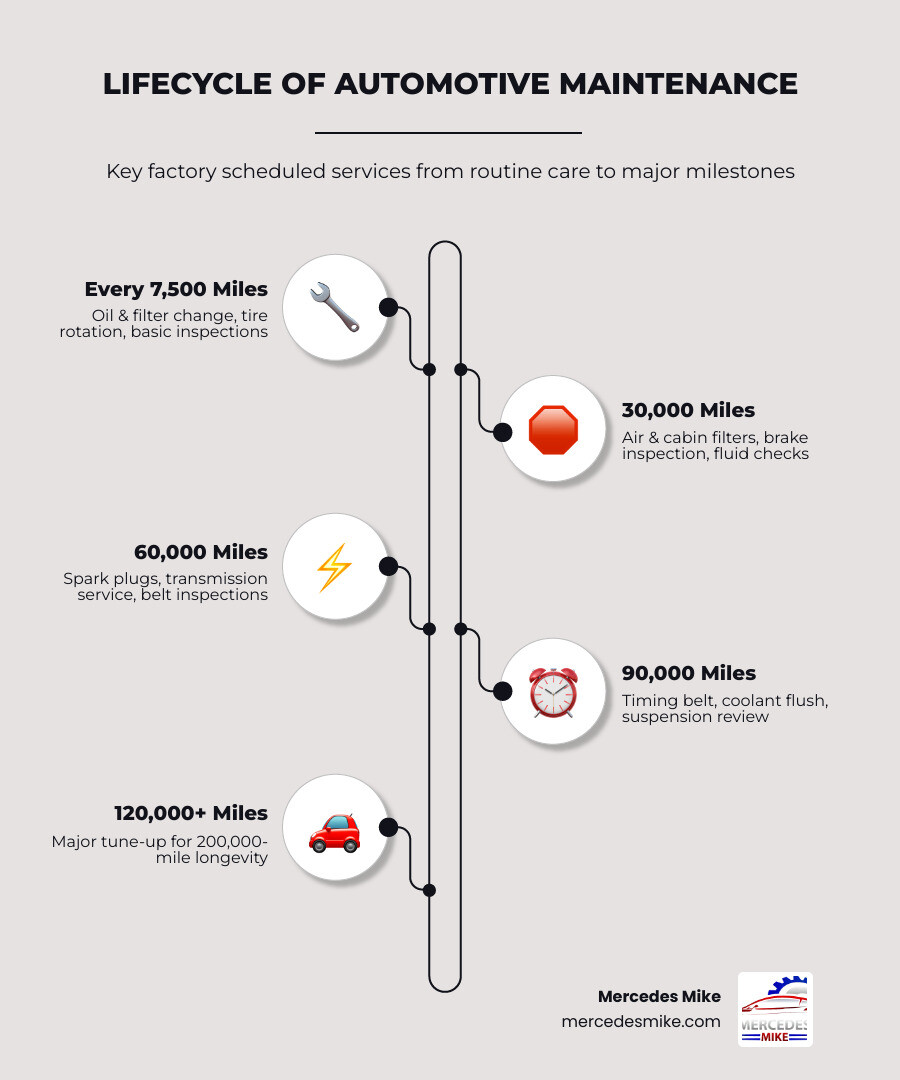
Some of these are basic and frequent. Others are milestone services that show up at 30,000, 60,000, or 90,000 miles.
A few deserve special attention:
Oil changes protect the engine from heat, sludge, and internal wear.
Cabin and engine filters keep airflow clean for both performance and comfort.
Brake inspections catch safety issues before they become expensive rotor or caliper repairs.
Fluid changes matter because fluids wear out chemically, not just visually.
Fuel and emissions components can affect power, fuel economy, and warning lights.
If your vehicle uses a service-specific fuel filter, that interval matters too. For a practical example, see our guide on Mercedes B-Class Fuel Filter Replacement.
Climate-control maintenance is another commonly overlooked part of the schedule in South Florida. Heat and humidity are hard on A/C performance, filters, seals, and refrigerant efficiency. If your cabin air is weak or musty, our Mercedes Air Conditioning Service guide explains why timely maintenance matters.
Understanding the 30/60/90k Service Intervals
The 30,000, 60,000, and 90,000 mile marks are the milestone intervals most drivers hear about. They are not identical across every vehicle, but they are a useful way to understand how maintenance becomes more involved over time.
Here is a simplified comparison:
Interval Typical services Why it matters 30,000 miles Oil and filter, tire rotation, brake inspection, engine air filter, cabin filter, fluid checks, battery check, suspension inspection Catches early wear before it spreads 60,000 miles Everything from 30k plus spark plugs on many models, brake fluid, coolant service on some vehicles, transmission service inspection, deeper belt and hose inspection Addresses mid-life wear items and fluid aging 90,000 miles Everything from earlier intervals plus major inspections, possible timing belt on applicable models, coolant and transmission service if due, ignition and emissions checks Prevents high-mileage failures and protects long-term reliability
A few important notes:
Some vehicles need key services before these milestones.
Some use time-based intervals, like every 12 months or every 3 years.
Some components, such as brake fluid, degrade with age even if mileage is low.
Vehicles with timing chains instead of timing belts still need inspection and oil service discipline.
Mazda schedules, for example, include cabin air filter replacement around 30,000 miles on some models, spark plugs around 70,000 miles, and coolant much later by time and mileage. Volvo schedules often repeat 10,000-mile service operations and call for brake fluid every 3 years. BMW services may be grouped into Oil Service, Inspection I, and Inspection II, with model-year differences on when those larger inspections occur.
That is why we avoid cookie-cutter maintenance recommendations. Your Mercedes C-Class, BMW X5, Audi A4, or Porsche Macan may all hit 60,000 miles, but they may not need the exact same work on the exact same day.
Still, there are patterns:
30,000-mile service
This is often the first "major" factory visit beyond basic oil changes.
Common items include:
Oil and filter service
Tire rotation and tread check
Brake system inspection
Cabin air filter replacement
Engine air filter replacement
Fluid level and leak inspection
Battery test
Suspension and steering check
Wiper and lighting inspection
60,000-mile service
This interval often introduces wear-item replacement and fluid services.
Common items include:
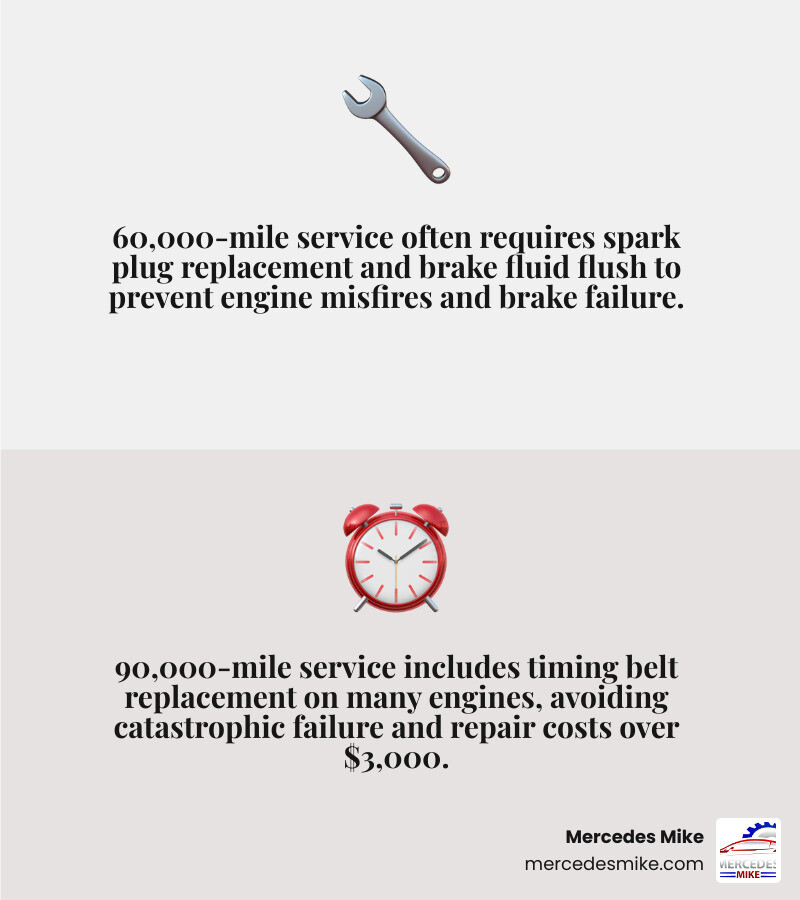
Spark plug replacement on many engines
Brake fluid flush on vehicles due by time or mileage
Coolant check or replacement depending on schedule
Transmission fluid or transmission condition inspection
Drive belt inspection
PCV and emissions-related checks
More detailed underbody inspection
90,000-mile service
This is where preventive maintenance can save you from the painful stuff.
Common items include:
Major fluid services if not already completed
Timing belt replacement on engines that use one
Tensioner or idler inspection
Cooling system inspection
Fuel system and ignition checks
Emissions system diagnostics
Belt, hose, and seal inspection
Ignoring this stage is how "my car was running fine yesterday" becomes "why is my engine estimate so terrifying?"
Some vehicles also need sensors and emissions components as mileage climbs. If you're dealing with drivability issues or check engine lights, our BMW 325i Oxygen Sensor Replacement article is a good example of how a small component can affect overall performance.
Normal vs. Severe Driving Conditions: When to Service Sooner

Here is the part many owners miss: a lot of drivers fall into the "severe" category without realizing it.
AAA has reported that most motorists actually drive under severe conditions, which means they often need more frequent maintenance than the normal schedule suggests.
Severe conditions can include:
Stop-and-go traffic
Frequent short trips
Long periods of idling
Driving in extreme heat
Humid climates
Dusty or dirty environments
Repeated hard braking
Carrying heavy loads
Driving where the engine rarely reaches full operating temperature
That is especially relevant in South Florida. Around Pompano Beach and Deerfield Beach, we regularly see conditions that are harder on vehicles than owners expect:
Heavy traffic and repeated heat cycling
High humidity affecting filters, brakes, and fluids
Intense summer temperatures stressing cooling systems and batteries
Short local trips that are tough on engine oil
Short-trip driving is sneaky. When the engine does not fully warm up, moisture and contaminants can remain in the oil longer. Over time, that can contribute to sludge and increased wear. Heat also accelerates fluid breakdown, especially in the cooling and A/C systems.
Mazda is one of the clearer examples in the research: under normal conditions, some models call for oil and filter changes every 10,000 miles or 12 months, but under severe conditions that drops to 5,000 miles or 6 months. That is a big difference.
So how do you know which schedule to follow?
Check your owner's manual for:
Normal vs. severe schedule definitions
Mileage and time intervals
Oil specification requirements
Brake fluid replacement timing
Spark plug intervals
Transmission service notes
Cooling system requirements
Service indicator reset instructions
If you mostly drive short distances, sit in traffic, idle often, or deal with South Florida heat every day, you should assume your vehicle may need the severe schedule unless your manual says otherwise.
And yes, "severe driving conditions" sounds dramatic. Unfortunately, your car agrees.
For seasonal care tips that complement routine maintenance, see How to Prepare Your Car for Winter Driving. Even though South Florida drivers are not battling snow often, the idea still applies: climate changes what your vehicle needs.
Dealership vs. Independent Shops: Protecting Your Warranty
One of the most common questions we hear is this:
Do you have to go to the dealership for factory scheduled maintenance to keep your warranty valid?
The answer is no.
Federal law, including the Magnuson-Moss Warranty Act, protects your right to have maintenance performed by a qualified independent shop. A manufacturer generally cannot require dealership service simply to keep your warranty in effect, as long as the correct maintenance is performed and documented properly.
Manufacturer materials also make clear that missing required maintenance can affect warranty coverage on related parts. In other words, the issue is not where you service the car. The issue is whether the scheduled maintenance was actually done, using the right parts, fluids, and procedures. Here is an example of manufacturer guidance on scheduled maintenance and warranty-related information.
To protect yourself, make sure your shop:
Follows the maintenance schedule for your exact model
Uses parts and fluids that meet manufacturer specs
Resets service reminders when required
Documents mileage, date, and completed services
Notes inspections and recommendations clearly
This is where a specialist independent shop can be a smart choice, especially for German vehicles.
At Mercedes Mike, we work on Mercedes, BMW, Audi, and Porsche in Pompano Beach and the surrounding South Florida area. That means we understand the service nuances that generic maintenance chains may miss, from fluid specifications to platform-specific inspection points.
Benefits of an experienced independent specialist often include:
Lower cost than dealership service
More personal communication
Better continuity with the same technicians
Brand-specific expertise
Up-to-date diagnostic equipment
Warranty-compliant service documentation
And if a repair grows beyond maintenance into a worn clutch, cooling system issue, or drivability problem, specialist knowledge becomes even more valuable. For example, these kinds of component-level jobs require experience, such as Audi A1 Clutch Replacement.
One more note: recall repairs are different. Manufacturer recalls are typically handled through authorized dealers at no cost to the owner. Routine maintenance, however, does not have to be.
Frequently Asked Questions about Factory Scheduled Maintenance
What is factory scheduled maintenance?
It is the manufacturer’s recommended list of services and inspections performed at specific mileage or time intervals to keep your vehicle safe, reliable, efficient, and warranty-compliant.
How often should you service your vehicle?
Follow whichever comes first: mileage or time. Many vehicles need basic service every 5,000 to 10,000 miles or every 6 to 12 months, with larger milestone services around 30,000, 60,000, and 90,000 miles. Severe driving may shorten those intervals.
What should owners check in the owner's manual?
Look for:
Normal and severe schedules
Oil type and viscosity
Mileage and time intervals
Brake fluid interval
Coolant specification
Spark plug replacement interval
Transmission service guidance
Tire rotation recommendations
Service reminder reset procedures
What common services are usually included?
Most schedules include oil changes, filters, brake inspections, tire rotations, fluid checks, battery testing, suspension checks, and periodic replacement of wear items like spark plugs or belts.
Can factory scheduled maintenance prevent costly repairs?
Absolutely. Preventive service catches small issues before they snowball. Replacing a worn belt, weak battery, dirty filter, or aging fluid early is much cheaper than paying for overheating, engine damage, or transmission failure later. That is the whole point.
Does skipping factory maintenance void the warranty?
Skipping required maintenance can jeopardize warranty coverage on affected parts. The safest move is to follow the schedule and keep records.
Do all makes and models follow the same schedule?
No. Schedules vary widely. BMW may use Oil Service and inspection-based intervals. Mazda clearly distinguishes normal and severe schedules. Volvo has brand-specific annual or mileage-based recommendations and complimentary maintenance programs on certain recent model years. GM and other brands also structure 30k, 60k, and 90k milestones differently.
Are complimentary maintenance programs real?
Yes, some manufacturers offer them for certain vehicles and model years. Volvo is a good example. For model years 2022 to 2025.5 with an internal combustion engine, Volvo covers recommended services once per year for the first 3 years or 30,000 miles, whichever comes first. Recent EV and newer model-year programs can differ, so owners should verify the exact terms for their vehicle. Here are examples of official Volvo materials: Volvo maintenance schedule details.
What about maintenance reminders on the dashboard?
They are helpful, but they are not your whole maintenance strategy. Some systems adjust to driving style, but you should still follow the factory maximum interval and severe-use guidelines.
What if another problem is found during scheduled maintenance?
That is often a good thing. A maintenance visit is also an opportunity to catch unrelated issues early, such as a coolant leak, radiator problem, worn clutch, or failing sensor. If you want examples of how these issues can escalate, see our guides on Audi A1 Radiator Replacement Complete Guide, Automatic Transmission Replacement Cost, and Cost to Rebuild Engine.
Conclusion
Your factory recommended maintenance schedule is not busywork. It is a long-term strategy for safety, performance, warranty protection, and vehicle longevity.
Follow it consistently, adjust for severe South Florida driving conditions, and keep good records. Do that, and your vehicle has a much better chance of delivering the kind of reliable 200,000-mile life that owners hope for.
If you drive a Mercedes, BMW, Audi, or Porsche in Pompano Beach, Deerfield Beach, or the surrounding South Florida area, we can help you stay on the right schedule without guesswork. At Mercedes Mike, our experienced technicians use modern diagnostic tools and manufacturer-informed service practices to keep German vehicles performing the way they were designed to.
Explore our Services to schedule maintenance or talk with us about the right plan for your car.