
How to Get More Suspension Repair Options in 3 Simple Steps
Why Suspension Repair Matters More Than You Think
Suspension repair is one of the most safety-critical services your vehicle needs — and one of the easiest to put off until things get worse.
Here's a quick overview of what you need to know:
Watch for warning signs — excessive bouncing, nose diving when braking, body roll in turns, clunking noises, or uneven tire wear
Understand the risk — worn suspension affects steering control, braking effectiveness, and tire life
Act on a schedule — suspension components should be inspected every 12,000 miles or once a year, with replacement typically needed between 50,000 and 100,000 miles
Always align after repair — wheel alignment is required after most suspension work to prevent premature tire wear
Choose the right shop — look for certified technicians, OEM-quality parts, and a solid warranty (at least 24 months / 24,000 miles)
Your car's suspension does two jobs at once: it keeps your tires in contact with the road and absorbs the impact so you don't feel every crack and pothole. When it starts to fail, both comfort and control suffer.
For drivers of German luxury vehicles like Mercedes-Benz or BMW, the stakes are even higher. These cars are engineered with precise suspension geometry. A worn ball joint or a sagging strut doesn't just affect ride quality — it throws off the entire handling balance the car was designed to deliver.
The good news? Getting more suspension repair options is simpler than most people think. You just need to know where to start.
Understanding Your Vehicle's Suspension System
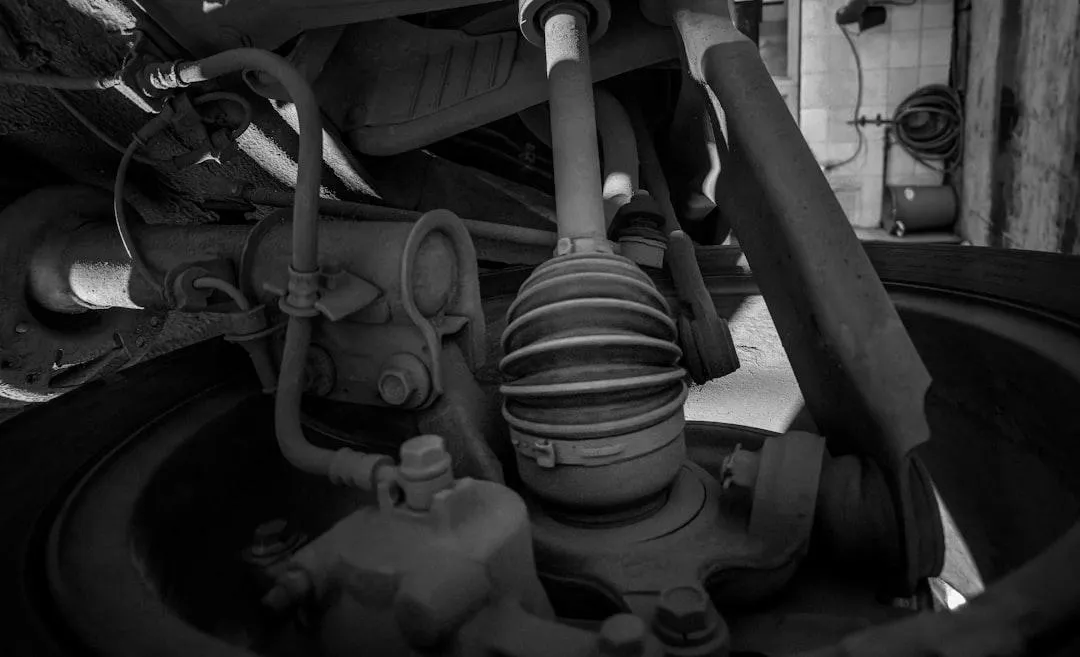
To make smart choices about your vehicle, you first need to understand what is happening beneath the chassis. The suspension system is not a single part; it is a complex, protective network of springs, dampers, links, and joints working in harmony.

Every time you drive down N Dixie Hwy or cruise through South Florida, your suspension components absorb thousands of tiny road impacts. This continuous work keeps the vehicle stable and prevents the cabin from shaking violently. If any part of this system is compromised, it places extra stress on the remaining components, accelerating their wear and compromising your safety. To keep your car driving like new, it helps to understand how these parts interact. You can Learn more about professional suspension services to see how we maintain these intricate systems.
Key Components of a Modern Suspension System
Every piece of your suspension has a highly specific job to do:
Coil Springs: These support the vehicle's weight and compress to absorb major bumps and road irregularities.
Control Arms: These act as the hinges that allow your wheels to move up and down while keeping them securely attached to the vehicle frame.
Ball Joints: Serving as the pivot points between the control arms and the steering knuckles, ball joints allow your wheels to turn left and right while moving vertically.
Tie Rods: These connect your steering gear to the wheels, translating your steering wheel movements into actual directional changes.
Sway Bar Links: Also known as stabilizer bars, these connect opposite wheels to minimize body roll and keep your vehicle flat during sharp turns.
Bushings: These small rubber or polyurethane sleeves cushion the metal joints, absorbing vibrations and reducing road noise.
Leaf Springs: More common on older vehicles, trucks, and heavy-duty trailers, leaf springs consist of several layers of curved steel designed to support heavy loads. If you drive a utility vehicle or haul heavy gear around Deerfield Beach FL, you can explore Leaf spring repair and replacement options to ensure your load-bearing components are up to the task.
Shocks vs. Struts: What is the Difference?
A very common point of confusion for car owners is the difference between shock absorbers and structural struts. While both serve the primary purpose of dampening movement, they are physically and structurally very different.
A shock absorber is designed solely to limit the bouncing of the coil springs. It does not support the weight of the vehicle, nor is it a structural part of the steering system. If you remove a shock absorber, the car will still stand on its wheels (though it will bounce like a trampoline on the road).
A strut, on the other hand, is a structural powerhouse. It is a complete assembly that houses the coil spring and the damper inside a single unit. The strut supports the physical weight of the vehicle, holds the wheel in its correct alignment position, and acts as a pivot point for the steering. Replacing a strut is more complex than replacing a shock and always requires a subsequent wheel alignment.
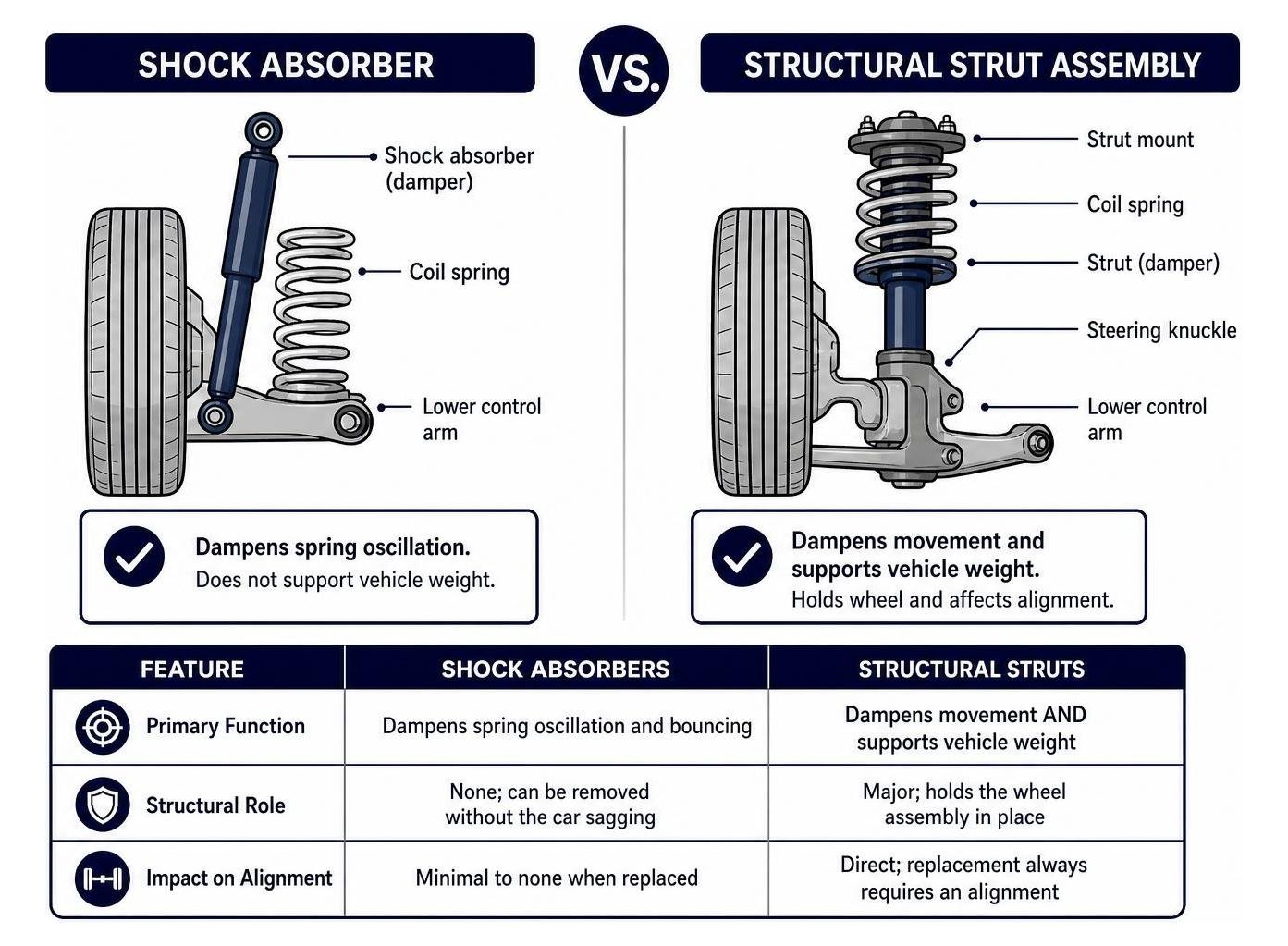
Feature Shock Absorbers Structural Struts Primary Function Dampens spring oscillation and bouncing Dampens movement AND supports vehicle weight Structural Role None; can be removed without the car sagging Major; holds the wheel assembly in place Impact on Alignment Minimal to none when replaced Direct; replacement always requires an alignment Typical Location Rear axle (on most modern passenger cars) Front axle (common on most modern vehicles)
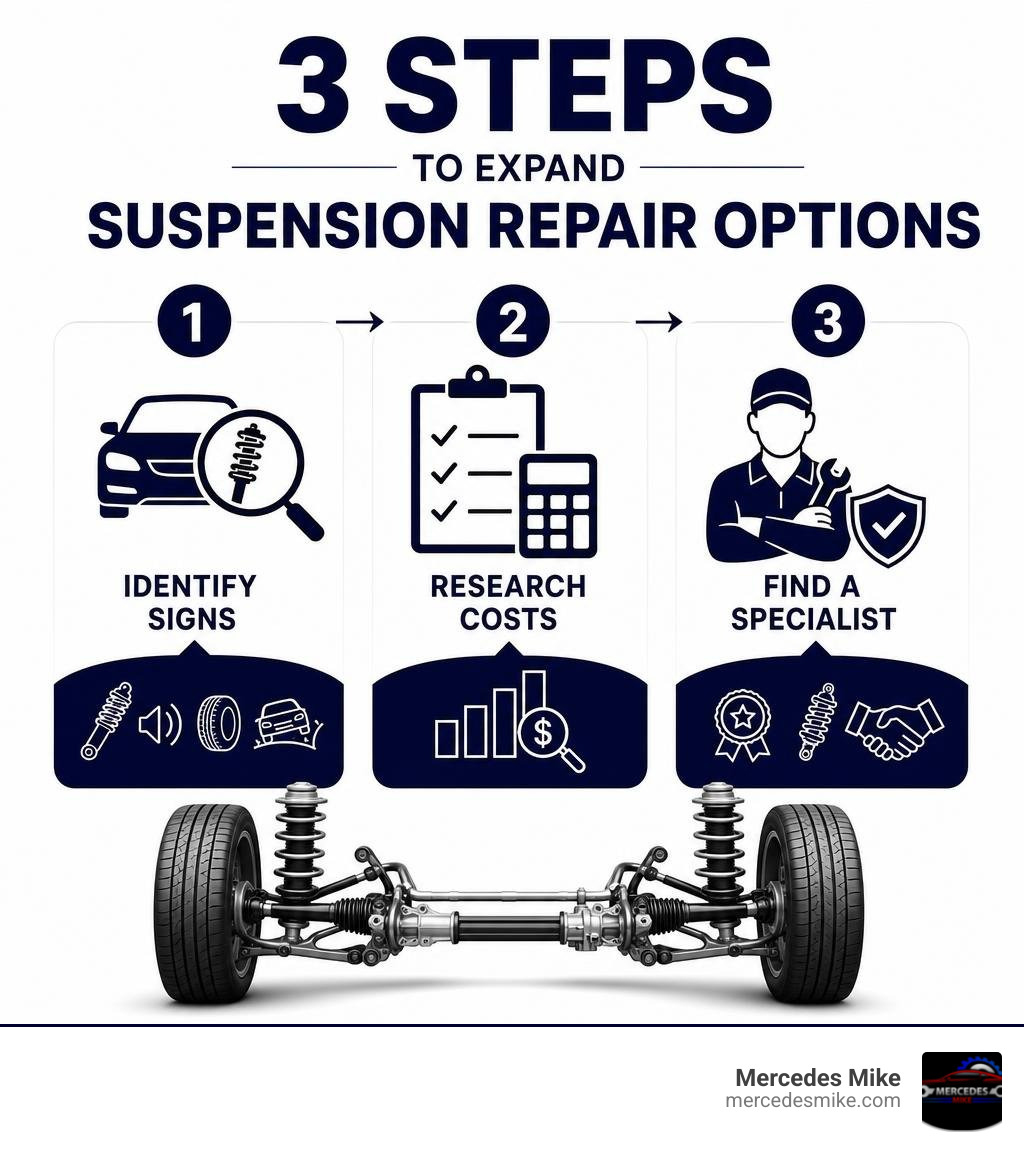
How to Get More Suspension Repair Options in 3 Simple Steps
Now that you know how the system works, let’s look at how you can take control of your suspension repair journey. By following these three simple steps, you can avoid unnecessary expenses, prevent minor issues from turning into major breakdowns, and find the absolute best service options in South Florida.

Step 1: Identify the Warning Signs of Worn Components
The first step to expanding your repair options is catching the warning signs early. When you address suspension wear at the first sign of trouble, you can often replace individual worn bushings or links rather than having to rebuild the entire front end of your car.
Keep an eye and an ear out for these common red flags:
Excessive Bouncing: If your vehicle continues to bounce more than once or twice after hitting a speed bump or dipping into a pothole, your shocks or struts are likely worn out.
Nose Diving and Squatting: If the front end of your car dips significantly toward the pavement when you apply the brakes, or if the rear end squats heavily when you accelerate, your dampers are failing.
Exaggerated Body Roll: If your car sways, leans heavily to the side during turns, or feels unstable in South Florida crosswinds, your sway bar links or struts may need attention.
Uneven or Cupped Tire Wear: Worn suspension parts allow the tire to bounce down the road rather than rolling smoothly. This leads to scalloped, cupped, or uneven bald spots on your tread. Delaying a repair can quickly ruin a brand-new set of tires.
Clunking, Knocking, or Squeaking Noises: A metallic clunk when driving over bumps usually points to worn control arm bushings, sway bar links, or loose ball joints. Squeaking often indicates dry, cracked rubber bushings.
Fluid Leaks: If you look closely at your shock or strut bodies and see wet, oily residue running down the sides, the internal hydraulic seals have failed, and the dampers must be replaced.
A Harsh, Shaky Ride: If you suddenly feel every single crack, pebble, and texture on the road, your suspension is no longer isolating you from the pavement.
For luxury vehicles equipped with advanced air systems, a failing system might cause the vehicle to sag dramatically on one side or refuse to raise to its normal height. If you are experiencing these air-specific issues, you should read about Air Bag Suspension Replacement to understand how these systems are diagnosed and restored.
Step 2: Research Local Suspension Repair Costs and Warranties
Once you suspect a problem, the next step is to research your options. Suspension repair costs can vary widely depending on the make and model of your vehicle, the specific parts that need replacement, and whether you choose aftermarket or Original Equipment Manufacturer (OEM) parts.
Minor repairs, such as replacing a stabilizer bar link or a control arm bushing, are relatively inexpensive. However, major overhauls — like replacing front strut assemblies, control arms, and ball joints — can run into the low four-figure range per axle, especially when you factor in the mandatory wheel alignment. You can review the details on our Car Suspension Fix Cost page to get a clearer picture of what to budget for your specific vehicle class.
When comparing local shops in Pompano Beach and Deerfield Beach FL, don't just look at the bottom-line price. Pay close attention to:
Part Quality: Ensure the shop uses OEM or high-quality equivalent parts. Cheap suspension parts wear out rapidly, sometimes in as little as 10,000 miles, leaving you right back where you started.
The Warranty: A reputable shop should stand firmly behind their work. Look for warranties that cover both parts and labor for at least 24 months or 24,000 miles. Some premium services even offer a 36-month / 36,000-mile warranty.
Comprehensive Estimates: A trustworthy shop will provide a written estimate that clearly breaks down parts, labor, and the alignment. Be cautious of shops that try to sell you a single strut; struts and shocks should always be replaced in pairs across the same axle to maintain balanced handling and braking.
For general reference on suspension standards and engineering, you can consult resources like the Wikipedia Car Suspension guide to understand how different setups handle road conditions.
Step 3: Find a Specialized Suspension Repair Shop Near You
The final step is choosing the right hands to do the work. While any general mechanic can swap out basic parts, modern German luxury vehicles (such as Mercedes-Benz, BMW, Audi, and Porsche) feature highly sophisticated multi-link suspension designs and electronic damping systems. These systems require specialized diagnostic computers, precise torque specifications, and experienced technicians who know exactly what to look for.
To find the best local option, look for:
Specialized Expertise: Choose a shop that specializes in your vehicle's brand. They will have the exact manufacturer-approved diagnostic software and tools required to properly calibrate electronic suspension systems.
Inspection-First Philosophy: The best shops don't just guess or swap parts based on a symptom. They perform a thorough mechanical evaluation, checking for play in the ball joints, cracks in the bushings, and leaks in the dampers.
Proximity and Convenience: Look for a shop located near major thoroughfares like 882 ne 41st Court or N Dixie Hwy in Pompano Beach, making it easy to drop off your vehicle. You can search for a high-quality Suspension Fix Near Me to locate a specialized technician who can perform your annual inspections or 12,000-mile checks.
Frequently Asked Questions
Is it safe to drive with a damaged suspension?
No, it is highly unsafe to drive with a damaged suspension. While a squeaky bushing might just be annoying, a worn shock, loose ball joint, or failing tie rod directly compromises your steering control, braking effectiveness, and tire contact with the road.
For instance, worn shocks can increase your emergency braking distance by up to several feet because the tires bounce and lose traction on the pavement. If a ball joint or tie rod fails completely while you are driving, the wheel can physically separate from the steering system, leading to a catastrophic loss of vehicle control. If you suspect your vehicle has handling issues, Understanding suspension repairs and safety is the first step toward protecting yourself and your passengers.
Why is a wheel alignment required after suspension repairs?
Your suspension components are bolted together at incredibly precise angles (known as camber, caster, and toe) to ensure your tires sit perfectly flat on the road and point in the exact same direction.
When you replace components like struts, control arms, ball joints, or tie rods, the physical geometry of your steering and suspension changes. Even a tiny variance of a millimeter can cause your vehicle to pull to one side, create a crooked steering wheel, and cause rapid, uneven tire wear. A professional 4-wheel alignment restores these angles back to factory specifications, preserving your tires and ensuring steering precision. If you are dealing with advanced air systems, you can also learn about Air Ride Suspension Repair to understand how alignment and ride height calibration work together.
How long does a typical strut replacement take?
For most standard passenger cars and SUVs, a professional strut replacement on a single axle (replacing both front struts or both rear shocks) typically takes between 2 to 4 hours. This timeframe includes the physical replacement of the assemblies, torqueing all fasteners to factory specifications, performing a comprehensive road test, and completing a 4-wheel alignment.
While many straightforward repairs can be completed on a same-day basis, highly complex electronic or air-ride suspensions may take longer if advanced diagnostics or specialized parts are required. You can review our Strut replacement and suspension repair details to see how we streamline our shop turnaround to get you back on the road safely and quickly.
Conclusion
Your vehicle's suspension system is the foundation of your safety, handling, and ride comfort. When components begin to wear out, ignoring the signs can lead to compromised braking, ruined tires, and unpredictable handling. By identifying warning signs early, researching costs, and choosing a specialized shop, you can keep your vehicle driving exactly the way the engineers intended.
At Mercedes Mike, we specialize in the maintenance, diagnosis, and repair of German luxury vehicles, including Mercedes-Benz, BMW, Audi, and Porsche. Serving Pompano Beach, Deerfield Beach FL, and the broader South Florida region from our convenient location near N Dixie Hwy, our decades-experienced technicians use the absolute latest diagnostic tools and OEM-quality parts to ensure your vehicle receives the precise care it deserves.
Don't let a bumpy ride or a mysterious clunk compromise your safety. Schedule your professional suspension service today and experience the difference that expert, specialized care can make for your vehicle.