

The Real Cost to Fix a Torque Converter and Save Your Transmission
When Your Transmission Shudders, Here's What It Will Cost You
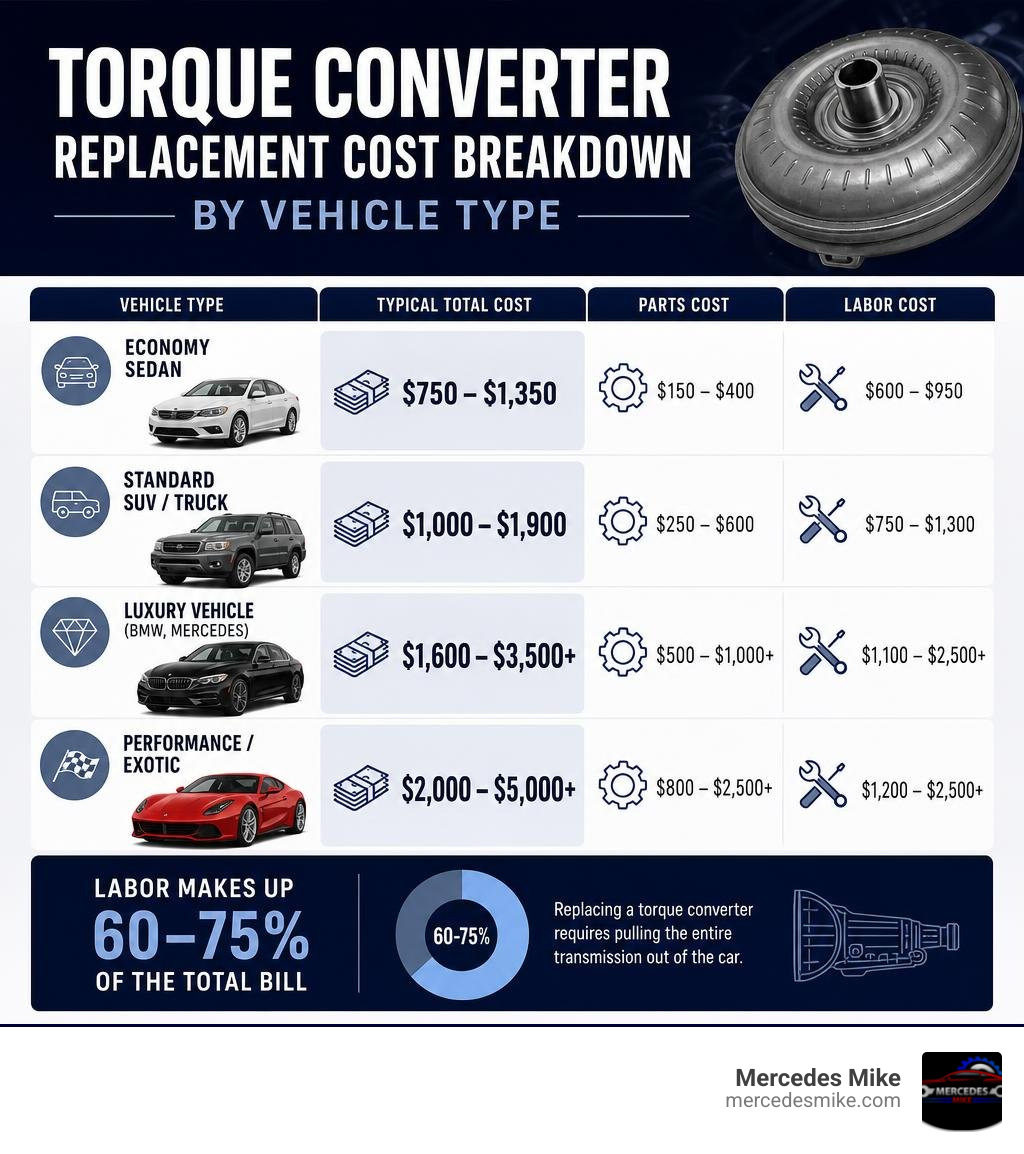
The cost to fix a torque converter typically falls between $800 and $2,000 for most passenger vehicles — but on a German luxury car like a Mercedes-Benz or BMW, that number can climb to $2,200–$3,500 or more.
Here's a quick breakdown before we dive deeper:
Vehicle Type Typical Total Cost Parts Cost Labor Cost Economy sedan $750 – $1,350 $150 – $400 $600 – $950 Standard SUV / truck $1,000 – $1,900 $250 – $600 $750 – $1,300 Luxury vehicle (BMW, Mercedes) $1,600 – $3,500+ $500 – $1,000+ $1,100 – $2,500+ Performance / exotic $2,000 – $5,000+ $800 – $2,500+ $1,200 – $2,500+
The most important number to know: Labor makes up 60–75% of the total bill — because replacing a torque converter requires pulling the entire transmission out of the car.
If you're reading this after noticing a shudder on the highway, a strange clunk shifting into reverse, or a transmission warning light, you're in the right place. Those are classic signs of a failing torque converter — and catching it early is the difference between a $1,200 fix and a $4,000–$6,000 transmission rebuild.
This guide covers exactly what it costs, what drives that cost up (or down), and what to watch out for before you approve any repair.
What is a Torque Converter and How Does It Fail?
To understand why the cost to fix a torque converter is so high, it helps to understand what this component actually does.
In a manual transmission vehicle, a mechanical clutch connects and disconnects the engine from the wheels. In an automatic transmission, the torque converter does this job hydraulically. It is a donut-shaped fluid coupling bolted directly between the engine's flexplate and the transmission's input shaft.
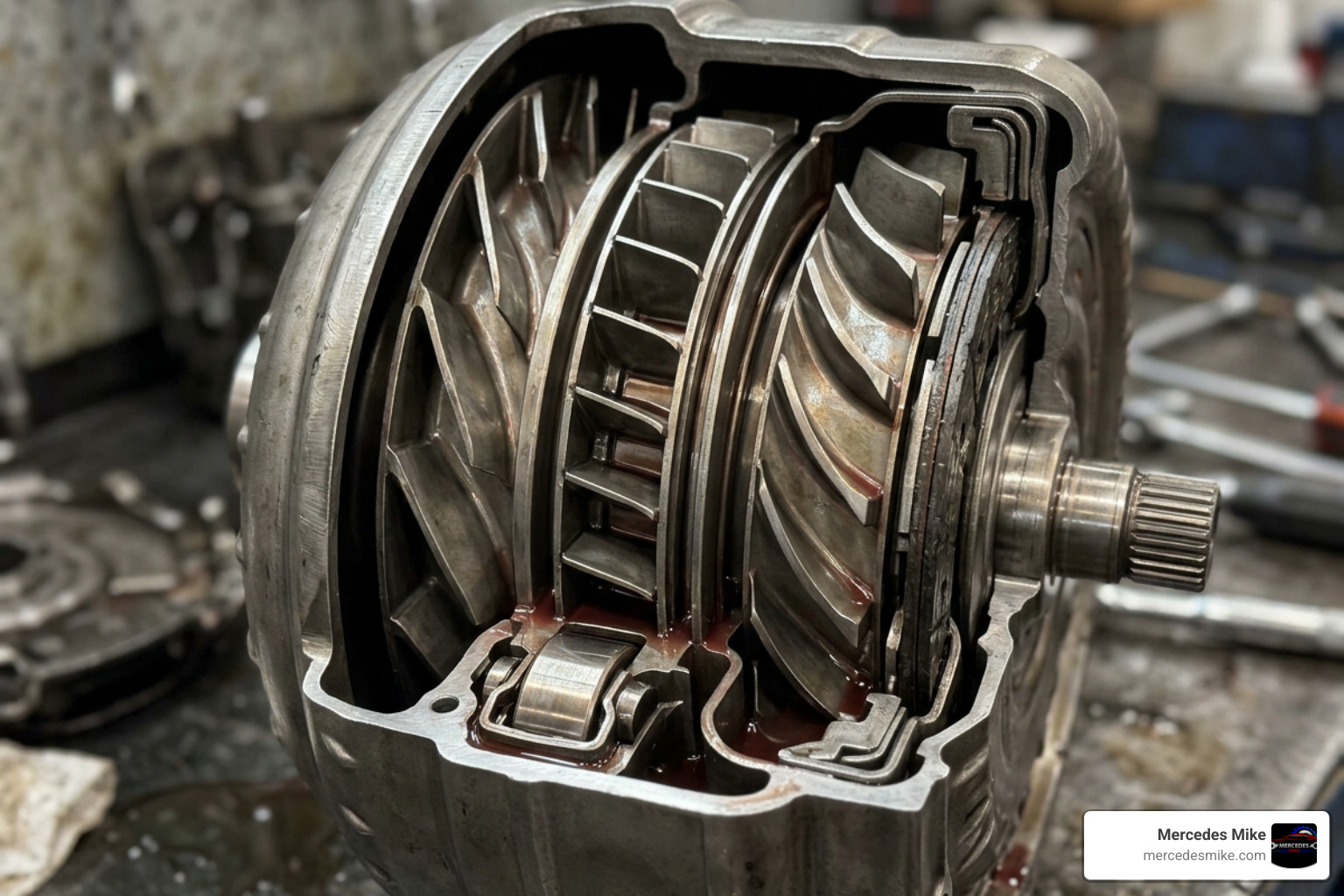
Inside the torque converter, three main components work together in a bath of pressurized transmission fluid:
The Impeller (Pump): Driven directly by the engine, it flings transmission fluid outward.
The Turbine: Driven by the force of that moving fluid, it transfers power to the transmission gears.
The Stator: Located in the center, it redirects fluid returning from the turbine back to the impeller, multiplying engine torque in the process.
Modern torque converters also feature a lock-up clutch. This mechanical clutch locks the engine and transmission together at highway speeds to eliminate fluid slip, improving fuel efficiency.
Why Torque Converters Fail
The primary enemy of any torque converter is fluid contamination and overheating. If you miss scheduled transmission fluid services, the fluid loses its ability to lubricate and cool. The internal friction clutches can begin to wear down, shedding metal debris and friction material directly into the fluid.
Overheating (often caused by heavy towing, aggressive driving, or a ruptured transmission cooler) can warp the internal components, damage the needle bearings, or destroy the front pump seal, leading to catastrophic internal failure.
Common Symptoms of a Failing Torque Converter
When a torque converter begins to slide into retirement, it rarely goes quietly. Watch out for these common warning signs:
The "Rumble Strip" Shudder: This is the most common complaint we see. If your car vibrates or shudders when driving between 30 and 50 mph—feeling exactly like you just drove over a highway rumble strip—your torque converter's lock-up clutch is slipping.
Transmission Slipping: If your engine revs up but your vehicle hesitates to accelerate, the fluid coupling inside the converter is failing to transfer power effectively.
Delayed or Harsh Engagement: Shifting from Park to Drive or Reverse shouldn't take several seconds, nor should it come with a violent jolt.
Strange Noises: Worn internal needle bearings will produce a distinct whining, grinding, or rattling noise when the vehicle is in gear, which often disappears when you shift into Neutral.
Dashboard Warning Lights: Modern vehicles constantly monitor transmission slip rates. If the computer detects irregular performance, it will trigger the Check Engine light and store transmission-specific diagnostic trouble codes.
The Real Cost to Fix Torque Converter Issues in 2026
When calculating the total cost to fix a torque converter in 2026, the final invoice is heavily influenced by your vehicle's layout and engineering. According to national pricing benchmarks, standard passenger cars typically cost between $800 and $2,000 for a replacement. However, if you are driving a precision German machine in South Florida, the engineering complexity changes the math entirely.
For a detailed look at general vehicle pricing structures, you can check out the How Much Does a Torque Converter Replacement Cost? - Engineer Fix guide or read the Torque Converter Replacement Cost And What To Expect - Auto Experts - Driven by Passion, Fueled by Knowledge breakdown.
Several critical variables will dictate where your quote lands on the spectrum:
Drivetrain Layout: Rear-wheel-drive (RWD) vehicles are generally the easiest to service because the transmission is easily accessible from underneath the car. Front-wheel-drive (FWD) and all-wheel-drive (AWD) layouts require significantly more teardown, often involving dropping the subframe, which increases labor time.
German Luxury vs. Domestic: Brands like Mercedes-Benz, BMW, Audi, and Porsche utilize highly advanced multi-clutch torque converters and tightly packaged engine bays. Sourcing specialized parts and navigating these complex layouts naturally commands a premium.
Fluid Condition: If your fluid is pristine, you might get away with a standalone converter swap. If it is burnt or filled with metal debris, you will need a complete transmission flush, new filters, and potentially a full mechanical rebuild.
Understanding the Labor Cost to Fix Torque Converter Problems
Why is the labor bill so high? Because the torque converter is sandwiched deep inside the drivetrain. There is no shortcut; a technician must physically separate the transmission from the engine to reach it.
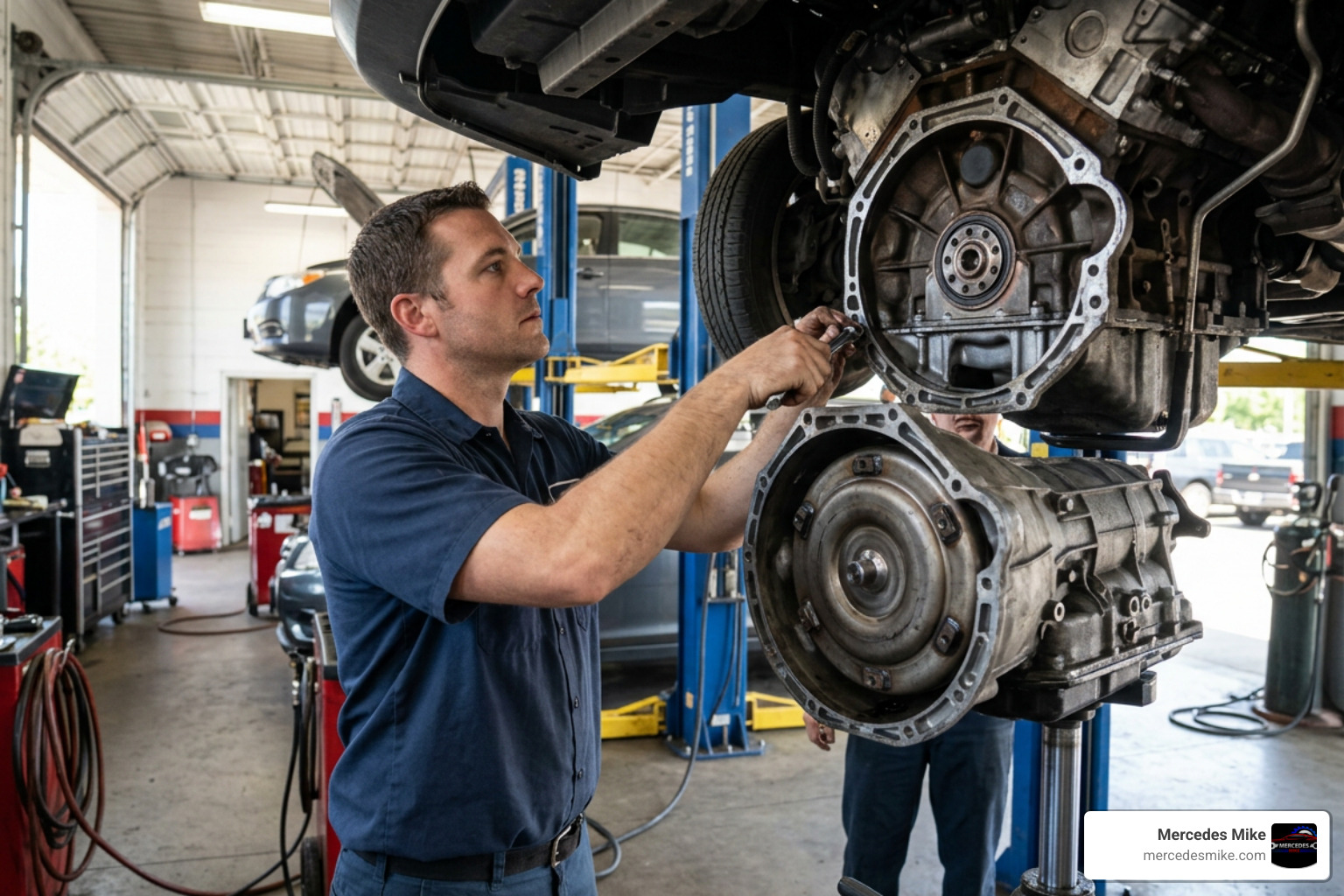
According to industry-standard labor guides, a torque converter replacement takes anywhere from 6 to 10 hours of intensive mechanical work (and up to 12 hours on complex AWD luxury platforms).
Here is what that process actually looks like:
Disconnecting the battery, starter motor, and electrical harnesses.
Draining the transmission fluid.
Removing the driveshaft (or half-shafts on FWD/AWD vehicles).
Unbolting and removing exhaust system components.
Supporting the engine and dropping the transmission crossmember or subframe.
Unbolting the torque converter from the engine flexplate.
Carefully lowering the entire transmission assembly out of the vehicle.
With average professional labor rates in South Florida ranging from $140 to $200+ per hour, labor alone will account for $840 to $2,000+ of your total invoice. For a deeper look at labor structures, read the How Much Does Torque Converter Replacement Cost in 2026? | Empire Auto Protect analysis.
Sourcing Parts: OEM vs. Aftermarket Cost to Fix Torque Converter
When choosing a replacement torque converter, you have three primary options:
OEM (Original Equipment Manufacturer): These are brand-new parts sourced directly from the manufacturer. They offer the highest reliability and perfect compatibility, but they cost 40-60% more. For example, an OEM converter for a truck might cost $450 to $600, while a luxury German OEM unit can easily exceed $800 to $1,200.
Aftermarket Units: Companies like JEGS offer high-quality aftermarket torque converters. These are often designed to meet or exceed factory specifications at a lower price point, typically ranging from $250 to $380 for standard vehicles. You can explore these options in the Pricing Guide: Torque Converter Replacements.
Remanufactured Converters: A remanufactured unit is an original converter that has been completely disassembled, cleaned, fitted with upgraded internal wear components, fluid-balanced, and pressure-tested. These often cost half the price of new OEM units while offering excellent longevity.
Replacing the Torque Converter vs. Rebuilding the Transmission
A common dilemma vehicle owners face is whether to replace just the torque converter or commit to a full transmission service.
If your torque converter failed due to an isolated electrical or mechanical glitch inside the lock-up clutch, and your transmission fluid is clean and free of debris, replacing the converter alone is the smartest and most cost-effective path.
However, if the converter has been slipping and overheating for months, it has likely sent a wave of fine metal shavings and burnt friction material throughout the entire transmission. In this scenario, installing a brand-new torque converter is a waste of money—the contaminated fluid will quickly ruin the new part.
If you find yourself facing more extensive damage, it is wise to compare the Average Cost to Replace Transmission against a localized rebuild. For a comprehensive overview of what to expect during a complete overhaul, consult our Transmission Replacement Guide 2026 or review the overall Automatic Transmission Replacement Cost metrics.
Diagnostic Steps to Take Before Approving a Replacement
At Mercedes Mike, we have a golden rule: Never approve a torque converter replacement based on a symptom alone. A transmission shudder can sometimes be resolved with a simple fluid exchange or a software update.
Before you agree to a multi-thousand-dollar repair, a qualified shop should perform these diagnostic steps:
Electronic Scan & Live Data Analysis: The technician should scan the transmission control module (TCM) for diagnostic trouble codes, specifically looking for circuit codes like P0740, P0741, P0742, P0743, or P0744 (which point directly to the torque converter clutch circuit).
Targeted Road Test: A drive with a scan tool plugged in allows the technician to monitor the actual slip speed of the torque converter clutch in real-time.
Fluid Inspection: The shop must pull the transmission dipstick or drop the transmission pan to inspect the fluid. If the fluid is bright red or light brown, the internal clutches are likely healthy. If it is black, smells burnt, or contains glittering metal flakes, the transmission has suffered internal damage.
For more details on how we approach these complex diagnostics, check out our dedicated guide on Transmission Repair.
Frequently Asked Questions about Torque Converter Repair
Can you drive with a bad torque converter?
You can technically drive with a failing torque converter for a short period, but we highly advise against it. The longer you drive with a shuddering or slipping converter, the more heat you generate. This heat, combined with the metal debris shedding from the failing lock-up clutch, will quickly migrate into your transmission gears and valve body. What started as a torque converter swap can easily turn into a complete transmission failure.
What additional costs should I expect during replacement?
Since the transmission must be removed, it is highly recommended to replace several supporting wear items at the same time:
Fresh Transmission Fluid & Filter: ($150 – $300)
New Front Pump Seal: ($20 – $50) — this seal sits directly behind the converter and is incredibly easy to replace while the transmission is out.
New Pan Gasket: ($30 – $60)
Does an extended warranty cover torque converter replacement?
Yes, in most cases. Because the torque converter is an internally lubricated component of the drivetrain, it is typically covered under both manufacturer powertrain warranties and aftermarket extended service contracts. If you have an extended warranty, you will likely only be responsible for your standard deductible (usually $100 to $250).
Conclusion: Get a Professional Diagnosis in Pompano Beach
Dealing with transmission issues can feel overwhelming, but you don't have to guess. At Mercedes Mike, we specialize in high-end maintenance and repair services for German luxury vehicles—including Mercedes-Benz, BMW, Audi, and Porsche—right here in Pompano Beach, Florida.
Serving Pompano Beach, Deerfield Beach, and the broader South Florida area, our shop features decades-experienced technicians equipped with the latest diagnostic tools to pinpoint exactly what your transmission needs. We pride ourselves on transparent, accurate diagnostics so you never pay for a replacement you don't actually need.
If your car is shuddering, slipping, or displaying a warning light, let us give you the accurate answers and specialized care your vehicle deserves. Schedule your diagnostic appointment today by visiting our Mercedes Mike Services page.