
The Definitive Guide to Transmission Repair
Why Transmission Repair Is One of the Most Important Decisions You'll Make for Your Car
Transmission repair is the process of diagnosing and fixing problems in your vehicle's transmission — the system that transfers engine power to your wheels.
Quick answers to common transmission repair questions:
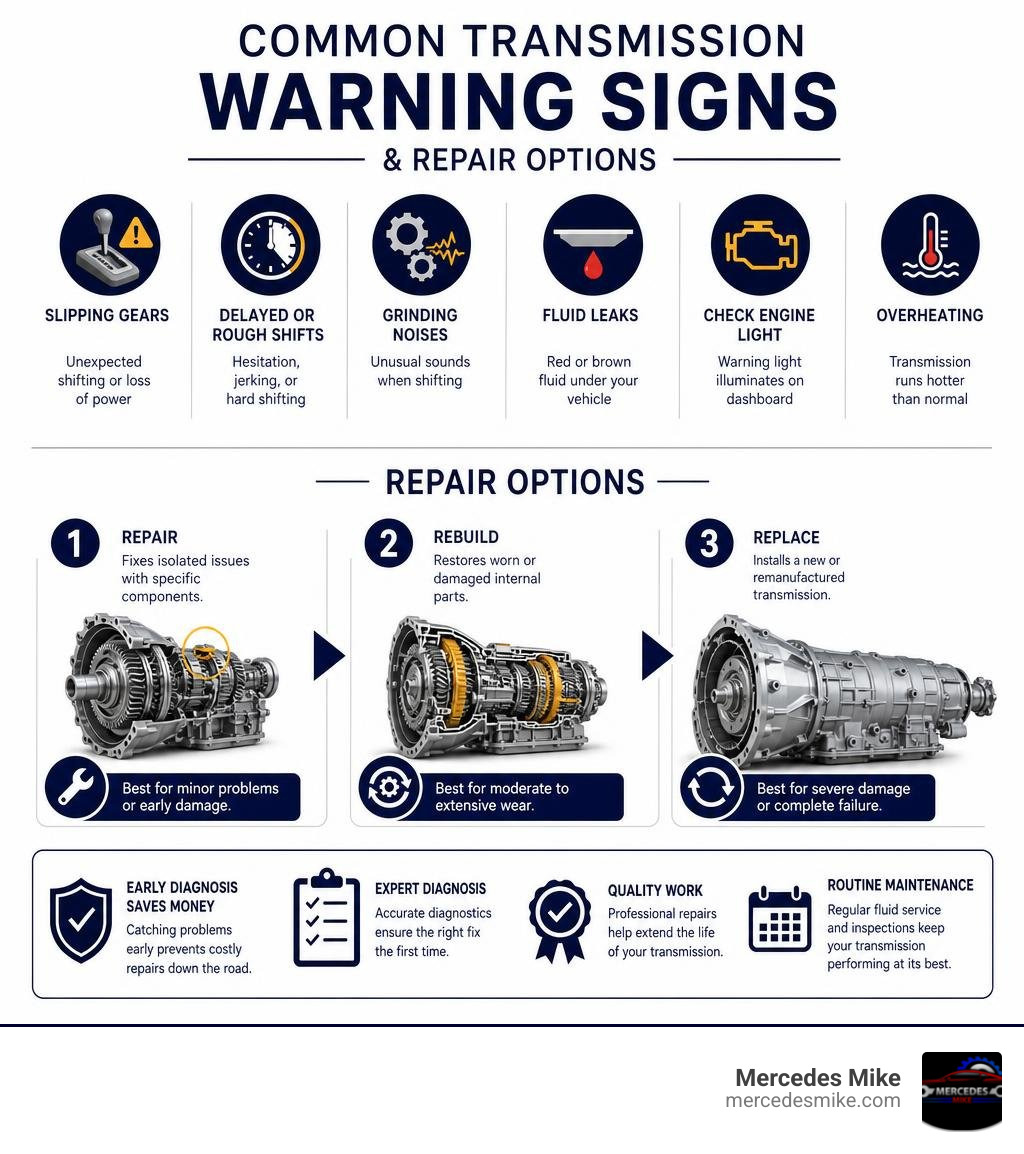
Signs you need repair: Slipping gears, delayed or rough shifts, grinding noises, fluid leaks, or a lit check engine light
Fluid change interval: Every 30,000–60,000 miles, depending on your vehicle and driving conditions
Repair vs. rebuild vs. replace: Repair fixes isolated issues; rebuild restores worn internal parts; replacement swaps the entire unit
How long it takes: Simple repairs can be same-day; major work typically takes 1–5 business days
Cost factors: Vehicle make and model, extent of damage, parts required, and service history all affect price
Warranties: Many reputable shops offer 24- to 36-month or 24,000- to 36,000-mile warranties
Financing: Payment plans and financing programs are commonly available
Your transmission is one of the most complex — and expensive — components in your vehicle. When something goes wrong, the difference between catching it early and ignoring it can mean the difference between a $300 fluid service and a $4,000+ rebuild.
This is especially true for German luxury vehicles like Mercedes-Benz and BMW. Their transmissions are precision-engineered and highly sensitive to fluid quality, service intervals, and diagnostic accuracy. Getting the wrong advice — or going to the wrong shop — can make the problem significantly worse.
This guide walks you through everything you need to know: how to spot trouble early, what your repair options actually mean, what it costs, and what to expect from a professional shop.
How Transmissions are Diagnosed and Maintained

To keep your vehicle shifting smoothly, you have to stay ahead of wear and tear. Modern automatic transmissions are highly sophisticated, combining mechanical gears, hydraulic pressure, and electronic computer modules. When a problem arises, diagnosing it requires a mix of advanced technology and hands-on experience.
Taking a proactive approach to preventative maintenance is the absolute best way to protect your investment. If you wait until your car refuses to move, you've likely turned a minor sensor swap into a major overhaul. For drivers in South Florida, our hot climate and stop-and-go coastal traffic put extra stress on gearboxes, making regular checkups even more vital. We recommend scheduling professional transmission diagnostics at the first sign of unusual behavior.
Warning Signs That You Need Transmission Repair
When your transmission starts to struggle, it will almost always drop hints before completely failing. Recognizing these warning signs early can save you thousands of dollars in major rebuilds.
Slipping Gears: If your engine revs up but your vehicle doesn't accelerate, or if your car suddenly pops out of gear while driving, your transmission is slipping. This is a clear safety hazard and a sign of worn clutch plates or low hydraulic pressure.
Delayed or Rough Shifting: If you put your vehicle into "Drive" or "Reverse" and there is a noticeable pause before the gear engages, or if the shifts feel incredibly harsh and jerky, your system is crying out for attention.
Grinding, Whining, or Humming Noises: Manual transmissions often emit a harsh grinding noise when internal components are failing. Automatics are more likely to produce a high-pitched whine or a low hum.
Fluid Leaks: Transmission fluid is the lifeblood of the system. It is typically red or pinkish-brown. If you notice a puddle of red fluid under your driveway, you have an active leak that must be sealed immediately.
Check Engine or Transmission Light: Modern vehicles have onboard sensors that monitor pressure, temperature, and gear ratios. If a sensor detects an anomaly, it will trigger a warning light on your dashboard.
If you are noticing any of these symptoms while driving around Pompano Beach or Deerfield Beach, don't wait. Finding a trusted provider of Auto Transmission Repair Near Me as soon as possible is key to preventing catastrophic internal damage. Early diagnosis is essential to prevent minor fluid leaks from burning out expensive gear sets.
Diagnostic Procedures and Fluid Maintenance
How do experts determine exactly what is wrong with your gearbox? We don't just guess. Professional diagnostics involve connecting state-of-the-art scan tools to read diagnostic trouble codes (DTCs) and monitor live data while the vehicle is running. We also perform a thorough physical inspection and conduct real-world road tests to feel how the vehicle shifts under load.
One of the most common debates in automotive care is how to handle fluid maintenance. Most manufacturers recommend a transmission fluid flush or exchange every 30,000 to 60,000 miles. However, this interval can vary depending on your driving habits and your specific vehicle make.
Fluid Flush vs. Drain-and-Fill: A standard drain-and-fill replaces about 30% to 40% of the fluid (mostly what is in the pan). A full fluid flush replaces 90% or more of the old fluid using specialized equipment.
The High-Mileage Exception: If your vehicle has very high mileage and has never had its transmission fluid serviced, a full flush can sometimes do more harm than good by dislodging built-up debris that keeps worn clutches gripping. In these cases, a gentle drain-and-fill is often safer.
Manufacturer-Specified Fluids: Modern transmissions are incredibly sensitive. Using a generic fluid instead of the exact manufacturer-specified fluid can lead to harsh shifts, accelerated wear, and complete system failure. This is especially true for continuously variable transmissions (CVTs) and European dual-clutch setups.
Transmission Repair, Rebuild, or Replacement: What is the Difference?
If your diagnostics reveal internal damage, you will generally be faced with three options: repair, rebuild, or replace. Understanding the differences in cost, time, and scope is crucial for making the right decision for your vehicle and your wallet.
Service Type Typical Scope Estimated Time Best For Transmission Repair Fixing specific external or accessible parts (solenoids, seals, sensors, pan gaskets). Same-day to 1 business day Isolated electronic or minor leak issues. Transmission Rebuild Disassembling the unit, cleaning all parts, replacing worn components (clutches, bands, seals), and updating hard parts. 2 to 5 business days Worn internal components where the main housing is still in excellent condition. Transmission Replacement Removing the old unit entirely and installing a brand-new or factory-remanufactured transmission. 1 to 3 business days Severe internal catastrophic failure or when rebuilding is not cost-effective.
The Process of Professional Transmission Repair
When a transmission has a minor issue, a full overhaul is rarely necessary. Many shifting problems are caused by external components or electronic controls that can be repaired without removing the transmission from the vehicle.
For example, a faulty shift solenoid (an electro-hydraulic valve that controls fluid flow) can cause your car to get stuck in a single gear or shift incredibly hard. Replacing a solenoid, fixing an axle seal leak, or swapping out a speed sensor are relatively minor repairs. These services are often completed the same day, getting you back on the road quickly. If you drive a European luxury vehicle, check out our guide on How Much to Repair Mercedes Transmission to understand how these minor component repairs are priced.
Rebuilding vs. Replacing Your Transmission
When internal wear is extensive, minor repairs won't cut it. You will have to choose between a rebuild and a replacement.
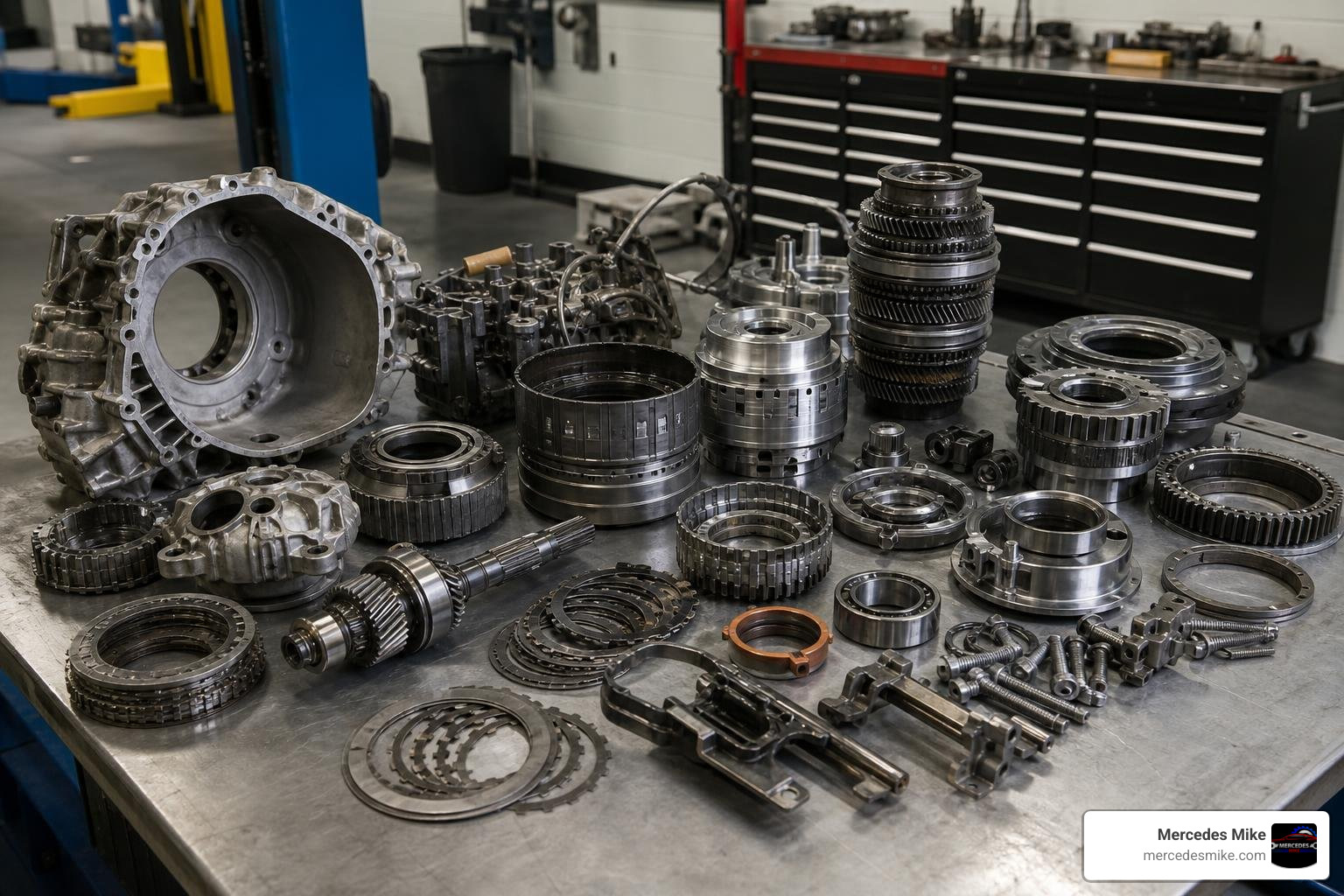
During a transmission rebuild, our master technicians completely remove and disassemble the unit. Every single part is cleaned and inspected. Worn components like clutch discs, bands, gaskets, and seals are discarded and replaced with brand-new, high-quality parts. We also install manufacturer updates—design improvements released after your vehicle was built—to correct known factory flaws.
A transmission replacement, on the other hand, involves swapping your damaged unit with a completely different one. This is usually a remanufactured unit built in a specialized factory to original specifications.
To help you decide which path is right for your car, we offer expert transmission rebuilds tailored to your vehicle's exact engineering. You can also read our comprehensive Transmission Replacement Guide 2026 to weigh your options.
Understanding the Cost Factors of Transmission Repair
There is no sugarcoating it: transmission work can be a significant investment. However, understanding what drives these costs can help you plan ahead and avoid surprises. The ultimate price of your service depends on several key factors:
Vehicle Make and Model: Luxury import vehicles (such as Mercedes-Benz, BMW, Audi, and Porsche) require highly specialized tools, advanced diagnostic software, and expensive proprietary fluids. Their parts are engineered to higher tolerances, which naturally increases the cost compared to domestic economy cars.
Extent of the Damage: Catching a leak early might only cost you the price of a new gasket and fresh fluid. Letting that leak run dry will destroy your gears, turning a minor fix into a complete replacement.
Type of Transmission: Standard automatic transmissions, dual-clutch gearboxes (DSGs), and continuously variable transmissions (CVTs) all have vastly different internal designs and parts costs. For example, CVT band replacements require highly specific procedures.
Towing and Transport: If your car won't shift, driving it to the shop can destroy what is left of the gears. To make this easier for our South Florida neighbors, we offer 1 free tow-in included with any repair over $500. Our tow-in service covers up to 50 miles from our shop (which easily covers Pompano Beach, Deerfield Beach, and surrounding areas). If you are coming from further away, additional miles are charged at a very reasonable rate of only $3 per mile.
To get a clearer picture of potential costs, check out our articles on the Average Cost to Replace Transmission and the Automatic Transmission Replacement Cost.
Frequently Asked Questions About Transmission Service
Navigating automotive repairs can feel overwhelming. Here are clear, honest answers to the questions we hear most often from our customers.
Do transmission shops offer warranties on repairs or rebuilds?
Yes, any reputable shop should stand behind their work. While some regional facilities might offer varying guarantees, we believe in providing absolute peace of mind. High-quality rebuilds and major repairs typically come with robust warranty coverage. This ensures that if any component we replaced fails due to a defect in parts or workmanship, we will make it right at no additional cost to you. Always ask your service advisor for the specific warranty terms before work begins.
Are financing options commonly available for transmission repairs?
Absolutely. We understand that an unexpected transmission issue can put a strain on your household budget. To help keep you safe on the road without financial stress, many modern repair shops offer flexible financing programs and payment plans. These options allow you to split the cost of major repairs into manageable monthly payments. Be sure to ask our team about our current financing partners when you bring your vehicle in for diagnostics.
What should customers expect regarding storage fees and vehicle pickup policies?
Space management is incredibly important for busy, high-end repair shops. To keep our operations running efficiently and ensure we can service every customer promptly, we have a clear and fair vehicle pickup policy.
We offer two full nights of free storage after your repairs are completed. This gives you plenty of time to arrange transportation to our shop. After this complimentary two-night window, storage will be charged at a rate of $75 per night. We highly encourage all of our customers to plan their pickups accordingly so we can keep our service bays clear for vehicles in need of urgent care.
Conclusion
Your transmission is too important—and too complex—to trust to just anyone. This is especially true for precision German engineering, where a single incorrect fluid type or misdiagnosed code can lead to thousands of dollars in unnecessary repairs.
At Mercedes Mike, we specialize in expert maintenance and repair services for German luxury cars (including Mercedes-Benz, BMW, Audi, and Porsche) right here in Pompano Beach, Florida. Our master technician, Ricky, has been in the transmission industry for over 30 years, bringing unmatched expertise to every single diagnostic and repair we perform.
Whether you need a simple fluid service, electronic diagnostics, or a complete transmission rebuild, our team is equipped with the latest specialized tools to get the job done right the first time.
Don't wait for a minor glitch to turn into a major breakdown. Stop by our shop at 882 NE 41st Court in Pompano Beach, or visit Mercedes Mike Services to schedule your professional transmission assessment today!