
C200 Kompressor Tuning Guide for Maximum Boost
Engine Specifications and Platform Differences
Understanding c200 kompressor tuning begins with identifying the exact engine sitting under your hood. Mercedes-Benz produced the C200 Kompressor across two primary generations—the W203 (2000–2007) and the W204 (2007–2010)—using two distinct engine families: the older 2.0-liter inline-four (found in early W203 models) and the widespread 1.8-liter M271 engine.
The early W203 C200 Kompressor featured a 2.0L engine delivering 163 hp (120 kW) and 230 Nm of torque. Later W203 models and early W204 models switched to the 1.8-liter M271 engine (M271 KE 18 ML), which put out 184 hp (135 kW) and 250 Nm of torque in stock trim. This 1.8L powerplant features an 82.0 mm bore x 85.0 mm stroke, an 8.5:1 compression ratio, and relies on an Eaton M65 roots-type supercharger driven directly by the crankshaft belt.
It is important to note that while the C200 shares its block configuration with other models, internal engineering varies. If you compare it to higher-tier factory models, as detailed in our C230 tuning comparison, the C230 Kompressor M271 utilizes forged pistons and a lower static compression ratio to safely handle higher factory boost. The standard C200, by contrast, uses cast pistons, meaning we must be precise with air-fuel ratios and thermal management when push beyond factory limits.
Stage 1 Gains in c200 kompressor tuning
For most owners, a Stage 1 software tune delivers the cleanest performance gain without requiring mechanical modifications. The engine management in the 1.8L W204 is handled by either a Bosch ME9.7 or a Siemens/Continental SIM271KE Engine Control Unit (ECU). Both units can be remapped directly through the vehicle's standard OBD2 diagnostic port without opening the casing.
A classic Stage 1 calibration adjusts ignition timing, target boost control parameters, and fuel mapping. On the 184 hp 1.8L variant, Stage 1 ECU remapping consistently achieves:
Horsepower increase: +20 hp (moving from 184 hp to 204 hp)
Torque increase: +20 Nm (moving from 250 Nm to 270 Nm)
Custom software maps from performance specialists such as DE Motorsport or JVK PRO optimize power delivery across the mid-range. While a 20 hp boost might seem modest on paper, eliminating the factory throttle delay and flattening the torque curve makes the car feel substantially more urgent when accelerating out of corners or passing on the highway.
1.8L vs 2.0L Variant Potentials
When evaluating the overall tuning ceiling, the 1.8L and 2.0L variants respond slightly differently due to supercharger sizing and ECU architecture.
Feature / Metric C200 Kompressor 2.0L (W203) C200 Kompressor 1.8L (W204) Stock Power Output 163 hp / 230 Nm 184 hp / 250 Nm Engine Code M111 / Early M271 M271 KE 18 ML Stage 1 Software Output ~182 - 183 hp / 255 - 258 Nm 204 hp / 270 Nm Maximum Output (Pulley + Tune) ~195 - 200 hp ~215 hp / 285 Nm ECU Architecture Bosch ME2.8 / Siemens Bosch ME9.7 / SIM271KE
The 2.0L W203 engine yields reliable, entry-level results. An ECU remap or chip tuning module on this setup increases output from 163 hp to roughly 182-183 hp, with torque rising from 230 Nm to around 255-258 Nm. Detailed technical performance sheets from tuning developers like upgraded Automotive Group show that this 12% power bump shaves nearly 0.4 seconds off the 0-100 km/h sprint while improving cruising fuel efficiency by up to 10.8%.
However, the 1.8L M271 platform holds superior overall potential due to more refined variable valve timing and modern ECU strategy control. If you want to dive deeper into how smaller displacement Mercedes supercharged engines respond to bolt-on modifications, check out our comprehensive C180 performance guide.
Essential Hardware Upgrades for c200 kompressor tuning
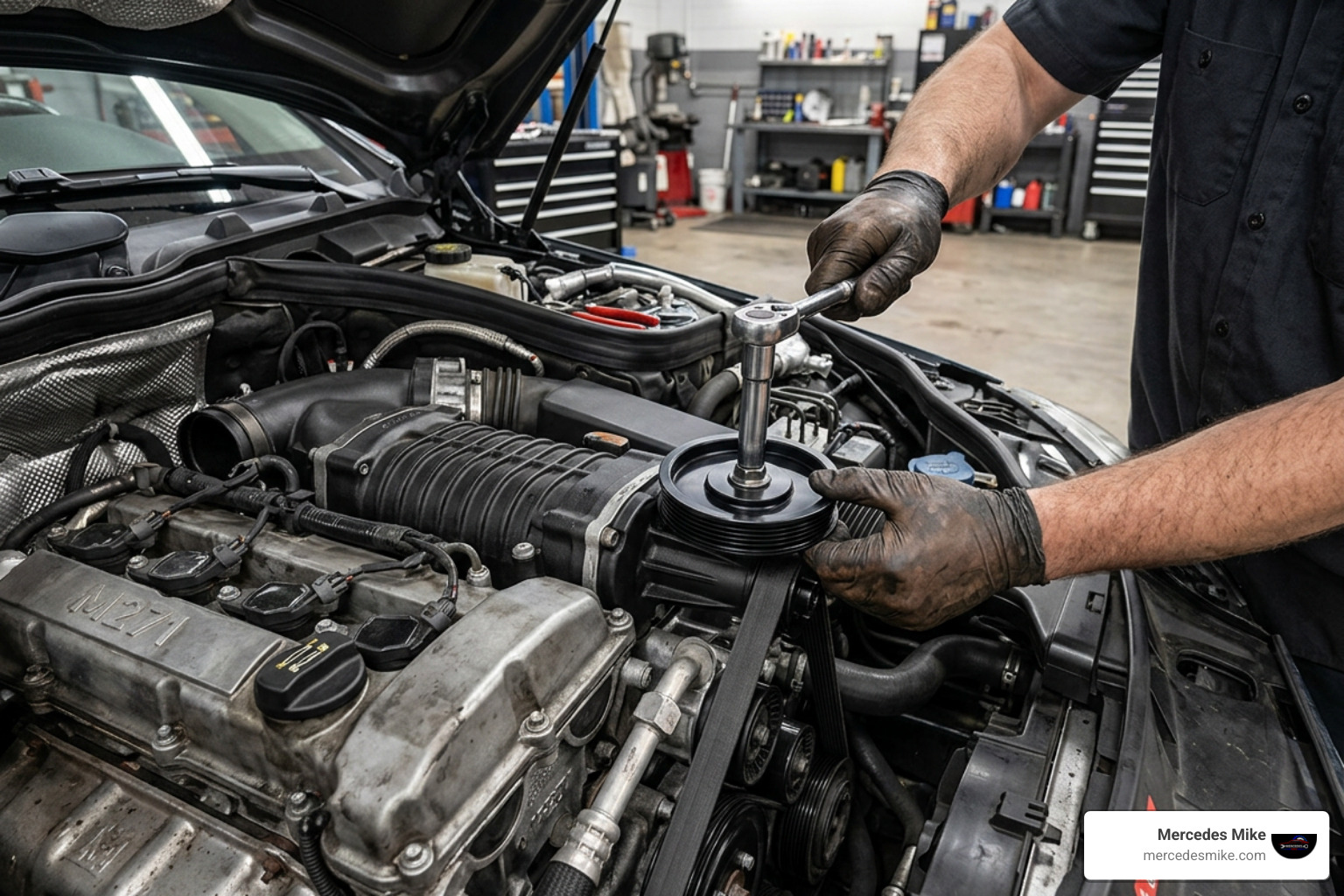
While software remapping delivers smooth power delivery, mechanical hardware upgrades are required to extract serious horsepower from a forced-induction Eaton M65 system. If you want to explore broader performance upgrades for European models, review our guide on German car performance upgrades.
Supercharger Pulley Modifications
Because the supercharger is mechanically driven by the engine belt, supercharger rotational speed—and thus boost pressure—is dictated by the pulley diameter ratio. Reducing the size of the supercharger pulley (or installing an enlarged crankshaft pulley ring) forces the Eaton M65 blower to spin faster at lower engine RPMs, filling the intake tract with denser charge air.
Installing a high-performance pulley kit paired with a sports air filter insert and customized ECU software lifts output significantly. Specialized kits like the VÄTH Kompressor-Tuning-Kit push the 1.8L engine up to 215 PS (157 kW) and 285 Nm of torque at 2,800 RPM, raising top speed to approximately 243 km/h.
When upgrading pulleys:
Avoid low-grade universal collar rings secured with simple grub screws; they tend to slip under high thermal expansion.
Ensure the drive belt is replaced with a slightly shorter, high-friction belt to prevent slippage at high engine speeds.
Air Intake and Exhaust Modifications
Higher supercharger boost generates higher intake charge temperatures. To keep the air dense and prevent thermal throttling:
Upgraded Charge Air Intercooler: Replacing the narrow factory intercooler with an upgraded aluminum unit drops intake air temperatures (IATs) dramatically, maintaining timing advance during back-to-back pulls.
High-Flow Sports Filters: Replacing dense paper air filters with free-flowing panel filters increases volume without compromising filtration.
Exhaust Headers and Free-Flow Exhaust: Replacing the restrictive stock exhaust manifold with a high-flow header reduces backpressure, allowing exhaust gases to evacuate efficiently under higher boost levels.
ECU Remapping vs. Plug-and-Play Tuning Modules
Owners looking for c200 kompressor tuning often wonder whether to invest in a custom ECU remap or opt for a plug-and-play piggyback module.
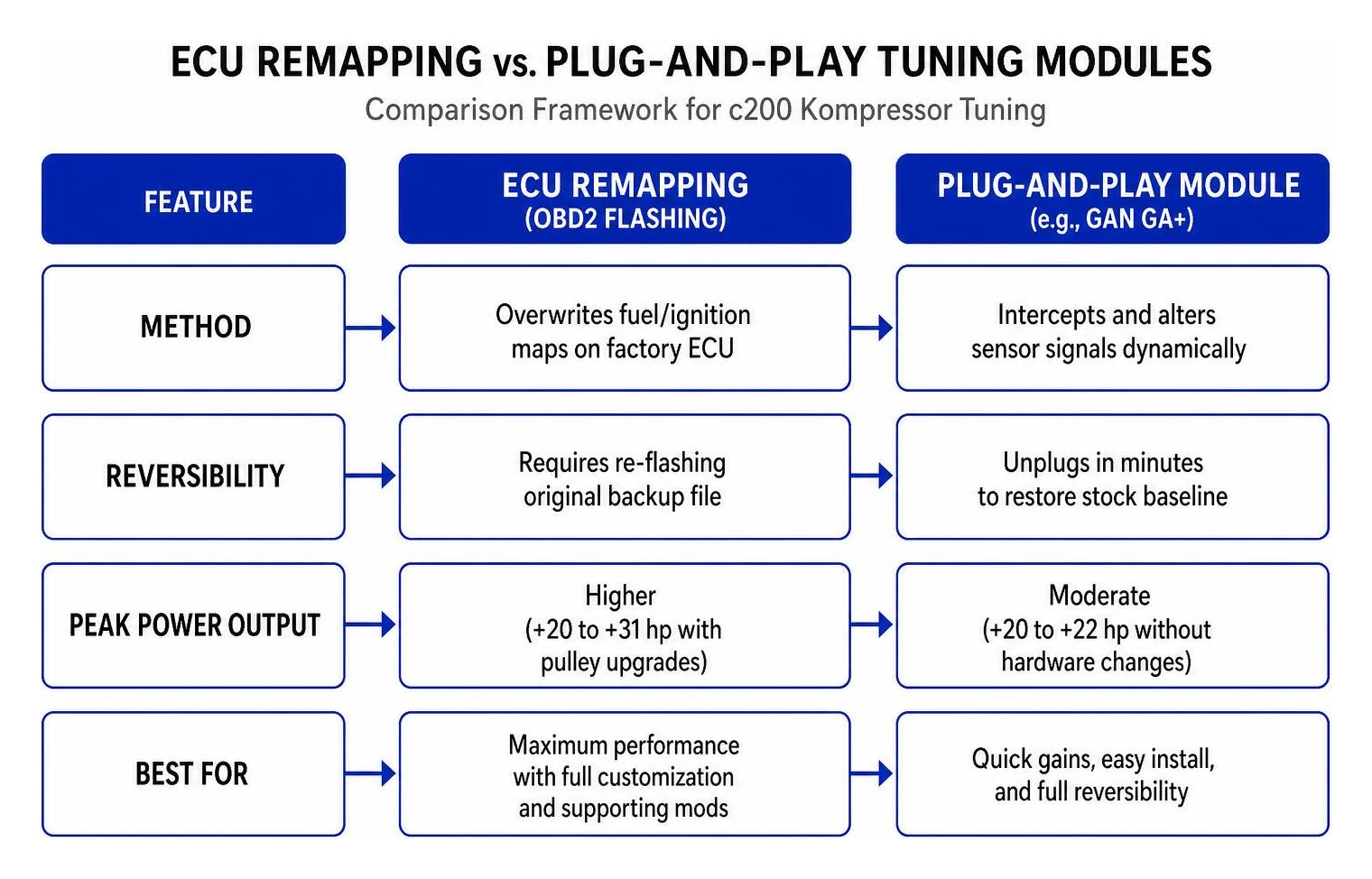
Feature ECU Remapping (OBD2 Flashing) Plug-and-Play Module (e.g., GAN GA+) Method Overwrites fuel/ignition maps on factory ECU Intercepts and alters sensor signals dynamically Reversibility Requires re-flashing original backup file Unplugs in minutes to restore stock baseline Peak Power Output Higher (+20 to +31 hp with pulley upgrades) Moderate (+20 to +22 hp without hardware changes) Custom Add-ons Supports Vmax removal, pop/bang, decat coding Limited to preset sensor adjustments Typical Cost $450 - $700 (€400 - €600) $200 - $300 (€189 - €269)
Plug-and-play devices such as those cataloged by GAN Tuning offer an appealing solution for drivers wanting a reversible power boost. However, for modified engines using reduced supercharger pulleys, a dedicated custom ECU flash is required to calibrate fuel injection mass and ignition timing safely under elevated boost pressure.
Advanced Features in Custom c200 kompressor tuning
Custom ECU remapping unlocks extra software options that piggyback modules cannot provide:
Vmax Limiter Removal: Removes the factory top-speed speed governor, allowing the vehicle to reach its natural aerodynamic top speed (~243 km/h).
Pop & Bang / Crackle Map: Modifies overrun ignition timing when releasing the throttle to create subtle exhaust crackles.
DECAT / Oxygen Sensor Coding: Disables downpipe rear O2 sensor fault codes when high-flow sports catalytic converters or off-road exhaust headers are installed.
Flaps Deletion / DTC Removal: Clears diagnostic trouble codes associated with secondary air injection or intake manifold flap mechanisms.
Throttle Response and Fuel Efficiency Impact
Factory Mercedes throttle pedal calibration often includes built-in dead travel to keep driving input relaxed. Remapping recalibrates pedal response curve angles, delivering immediate pedal sensitivity.
Furthermore, because optimized fuel maps increase low-RPM torque output, the engine handles acceleration tasks without requiring downshifts as frequently. Cruising fuel consumption can drop by 5% to 10% under sensible driving conditions. To compare these drivability updates with related chassis lines, view our CLK 200 tuning options.
Reliability and M271 Engine Weak Points
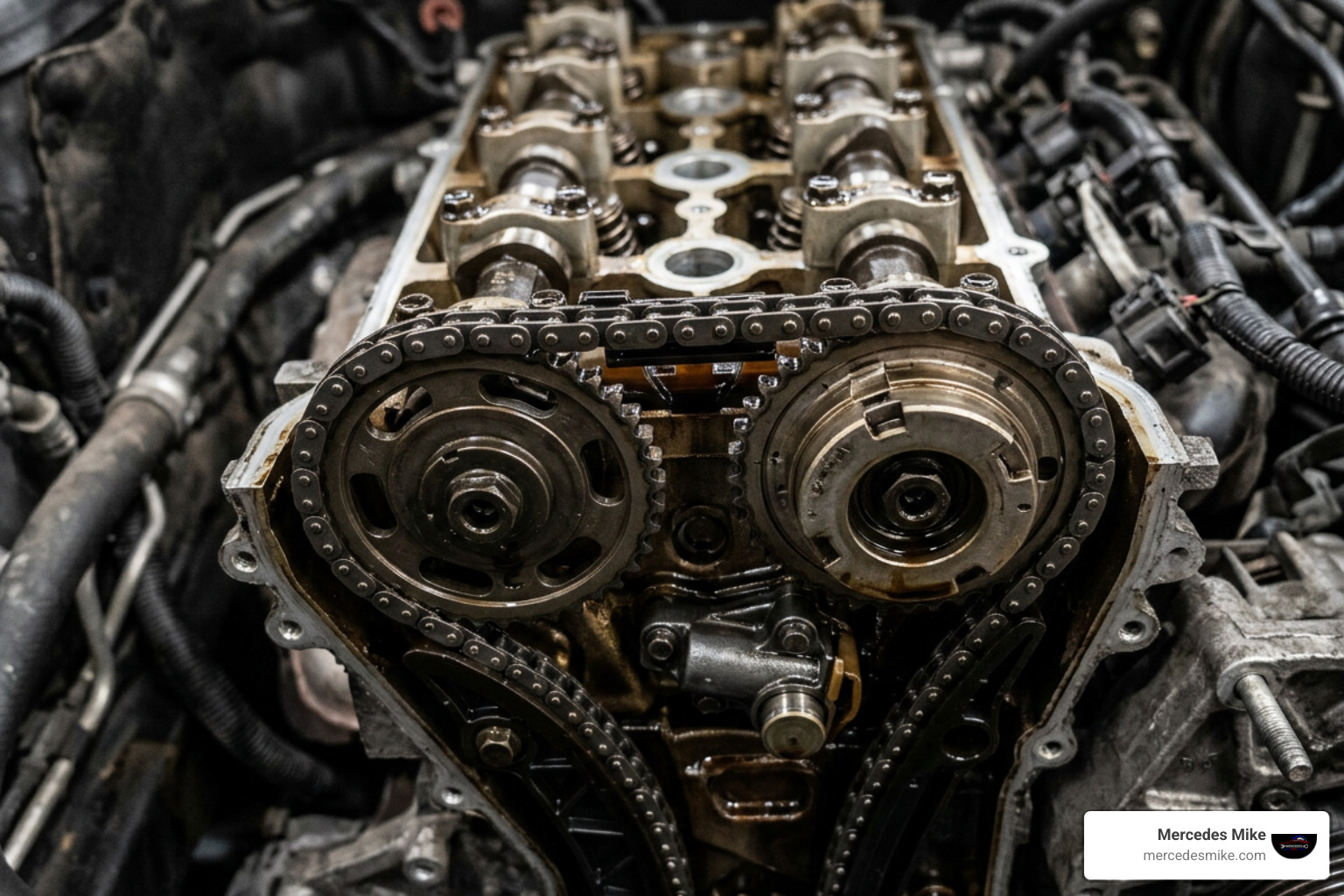
Before adding boost to any supercharged Mercedes, you must address the mechanical failure points inherent to the M271 platform. As documented in long-term enthusiast discussions on the Mercedes Forum, increasing power on a worn engine can quickly lead to costly repairs.
Timing Chain and Camshaft Sprockets: The single-simplex timing chain on the M271 engine is notorious for stretching over time. As the chain stretches, it wears down the variable camshaft adjuster sprockets. If the chain skips a tooth, internal valve-to-piston contact will destroy the engine head.
Supercharger Oil and Bearing Wear: The Eaton M65 supercharger relies on self-contained synthetic oil. Over 80,000 to 100,000 miles, this oil breaks down, leading to needle bearing failure and boost loss.
Crankcase Breather Hose Leaks: Rubber breather hoses located beneath the intake manifold degrade over time, cracking under engine heat and creating persistent vacuum or boost leaks.
Valve Cover Gasket Seepage: Oil leaking into spark plug wells can cause misfires under elevated combustion pressures.
Pre-Tuning Inspection and Maintenance Best Practices
To ensure long-term durability when applying c200 kompressor tuning, complete these maintenance items before flashing your ECU:
Inspect timing chain elongation and check camshaft adjuster sprockets for worn teeth.
Install new, correctly gapped spark plugs (one heat range cooler if running elevated boost).
Inspect intake charge hoses and crankcase breather lines for oil contamination or split rubber.
Service the Eaton supercharger by flushing and replacing its internal oil reserve.
Always fill up with premium 91+ Octane (98 RON / SuperPlus in European markets) fuel to prevent knock and pre-ignition.
Road Certification and Legal Compliance
In strictly regulated markets like Germany, modifying engine power output requires adherence to registration guidelines. Performance kits should hold official TÜV parts certificates (Teile-Gutachten). Without this documentation, vehicles require an individual technical inspection (Einzelabnahme) under vehicle registration regulations to maintain street authorization.
For local South Florida drivers in Pompano Beach and Deerfield Beach, registration requirements differ, but keeping emissions equipment fully functional ensures your vehicle remains reliable, clean-running, and easy to maintain.
Total Cost Breakdown and Budgeting
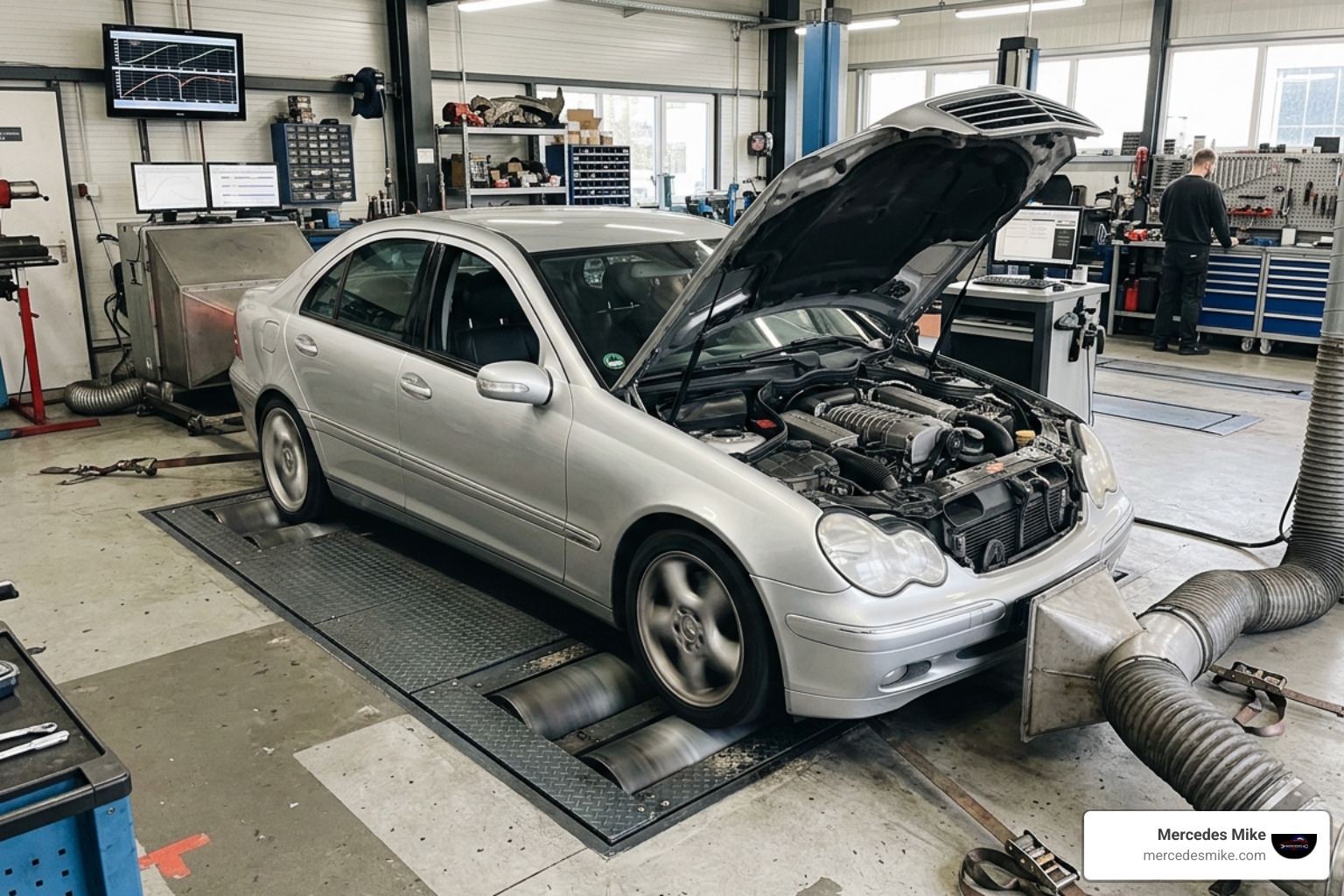
Building a balanced tuning strategy means budgeting for supporting maintenance alongside performance hardware. For a clear breakdown of professional software tuning packages, explore our Mercedes tuning services overview.
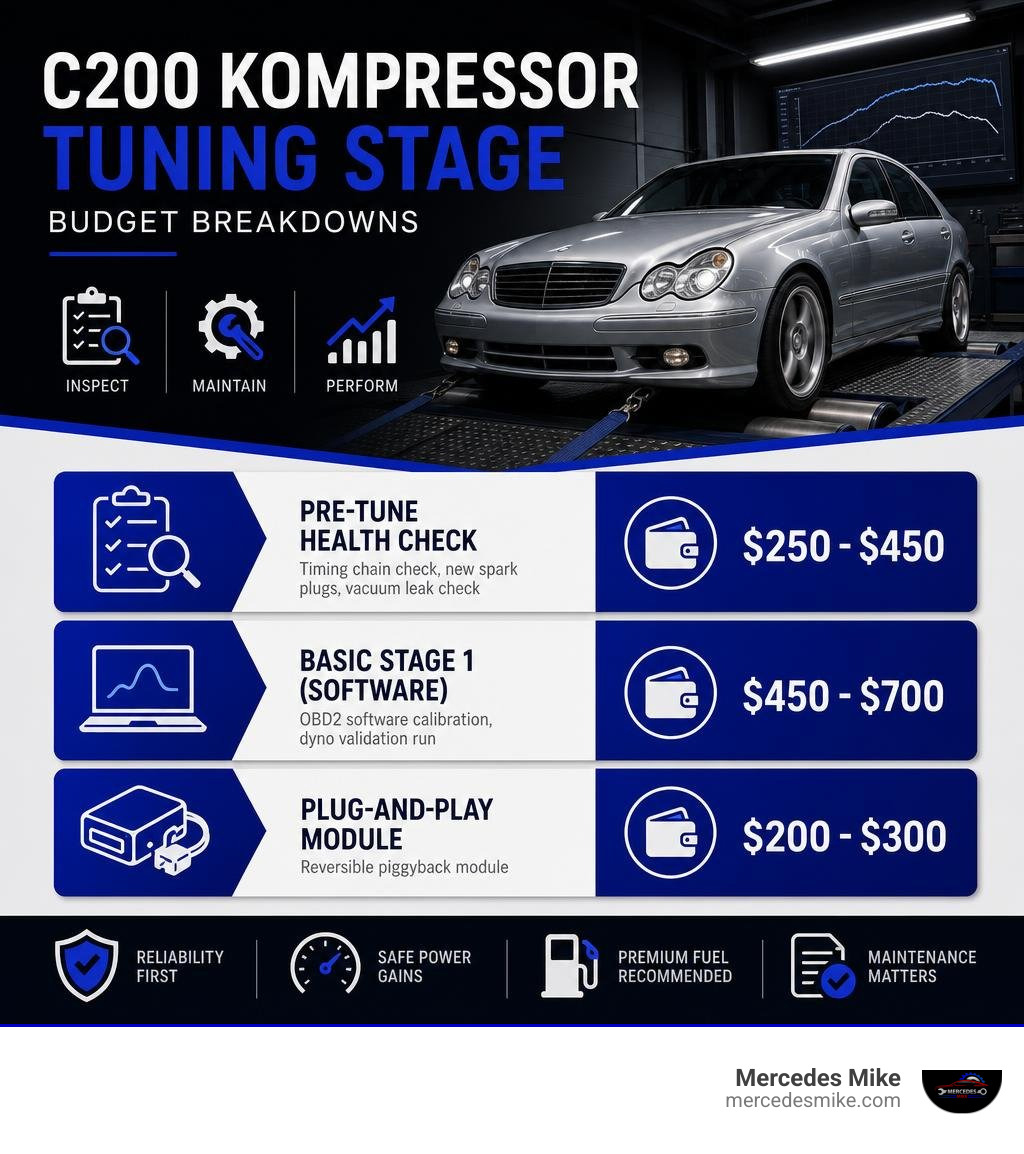
Upgrade Stage Included Components Estimated Cost Range Pre-Tune Health Check Timing chain check, new spark plugs, vacuum leak check $250 - $450 Basic Stage 1 (Software) OBD2 software calibration, dyno validation run $450 - $700 Plug-and-Play Module Reversible piggyback module (e.g., GAN GA+) $200 - $300 Stage 2 (Pulley + Software) Reduced supercharger pulley, belt, sports filter, ECU remap $900 - $1,500 Complete Performance Build Pulley kit, upgraded intercooler, exhaust header, custom tune $2,000 - $3,200
Frequently Asked Questions about C200 Kompressor Tuning
What power gains can be expected from Stage 1 tuning?
On a standard W204 1.8L C200 Kompressor (184 hp stock), a Stage 1 ECU remap yields an extra +20 hp and +20 Nm of torque, resulting in an output of roughly 204 hp and 270 Nm. On the older W203 2.0L model (163 hp stock), Stage 1 tuning increases output to about 182-183 hp and 255 Nm torque.
Will tuning a C200 Kompressor affect daily drivability or fuel economy?
When performed correctly, daily drivability improves because throttle lag is reduced and mid-range engine torque is increased. Fuel economy remains comparable to stock baseline under normal commuting, and can improve by up to 5-10% during highway cruising due to optimized thermal efficiency and reduced downshifting demands.
What are the main engine weak points to check before tuning?
The primary weak point on the M271 engine is timing chain stretch and camshaft sprocket tooth wear. You should also inspect the crankcase breather hoses under the intake manifold for split rubber, check for valve cover gasket leaks inside the spark plug wells, and refresh the Eaton supercharger oil.
Conclusion
Tuning the Mercedes-Benz C200 Kompressor delivers a far more responsive, energetic driving experience when done methodically. Whether you prefer a quick Stage 1 software remap or a full supercharger pulley kit upgrade, maintaining engine health is the foundation of any successful build.
At Mercedes Mike, our experienced technicians specialize in maintaining, diagnosing, and enhancing German vehicles across Pompano Beach and South Florida. From pre-tuning timing chain inspections to precision diagnostic care, we use advanced tools to ensure your car stays operating at peak health.
Ready to unlock your car's true potential safely? Schedule an inspection or performance consultation with our expert team by exploring our Professional Mercedes maintenance services today!