Finding the Best Remapping Shops in Your Neighborhood
Find a Trusted Remapping Service Near You
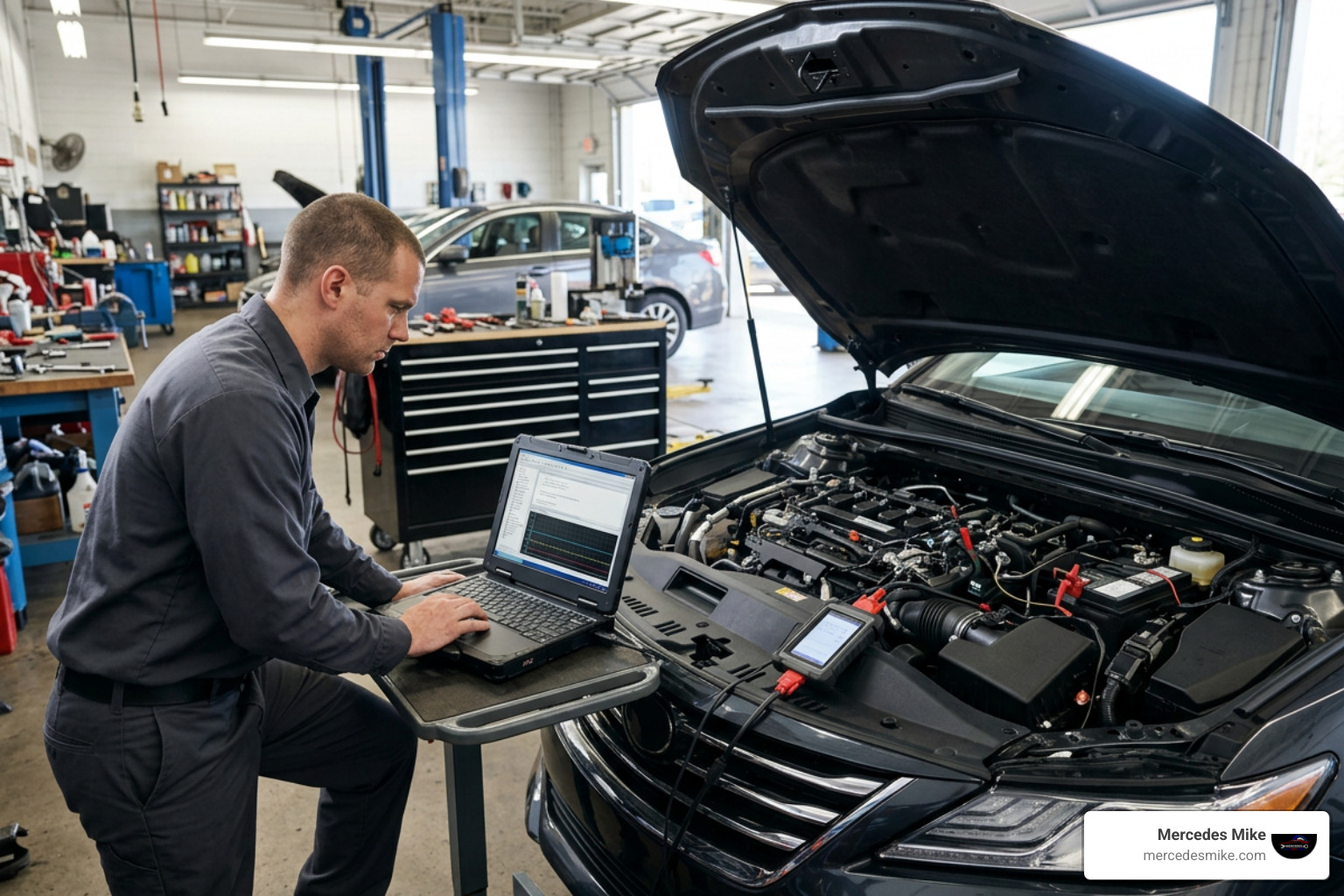
To find reliable remapping near me, choose a local specialist who can scan your vehicle for faults first, explain the map for your exact engine and gearbox, back up the original software, and confirm what happens to warranty and insurance. For a Mercedes, BMW, or other German car, experience with your model's ECU and transmission matters as much as the claimed power figure.
A professional ECU remap adjusts software settings such as fuel delivery, boost pressure, ignition timing, torque limits, and throttle response. The result can be stronger overtaking power, smoother acceleration, better towing performance, or improved fuel economy - depending on the vehicle and tune. Most straightforward Stage 1 appointments take around one to two hours, but a healthy vehicle check should always come first.
I am Mike Ibrahim, and this guide will help you compare nearby remapping options with the same care you would use when choosing someone to work on your car's engine or gearbox.

What Is ECU Remapping and How Does It Work?
Modern engines are governed by an internal computer known as the Engine Control Unit (ECU). The ECU continuously reads data from various sensors—such as airflow, intake temperature, engine speed, and throttle position—and executes commands based on pre-programmed software maps.
Factory vehicle manufacturers program these default software tables with broad, conservative parameters. Vehicles are calibrated to operate reliably across global markets with differing fuel grades, extreme climate variations, and neglected maintenance routines. This one-size-fits-all programming leaves significant performance, torque, and efficiency untapped.
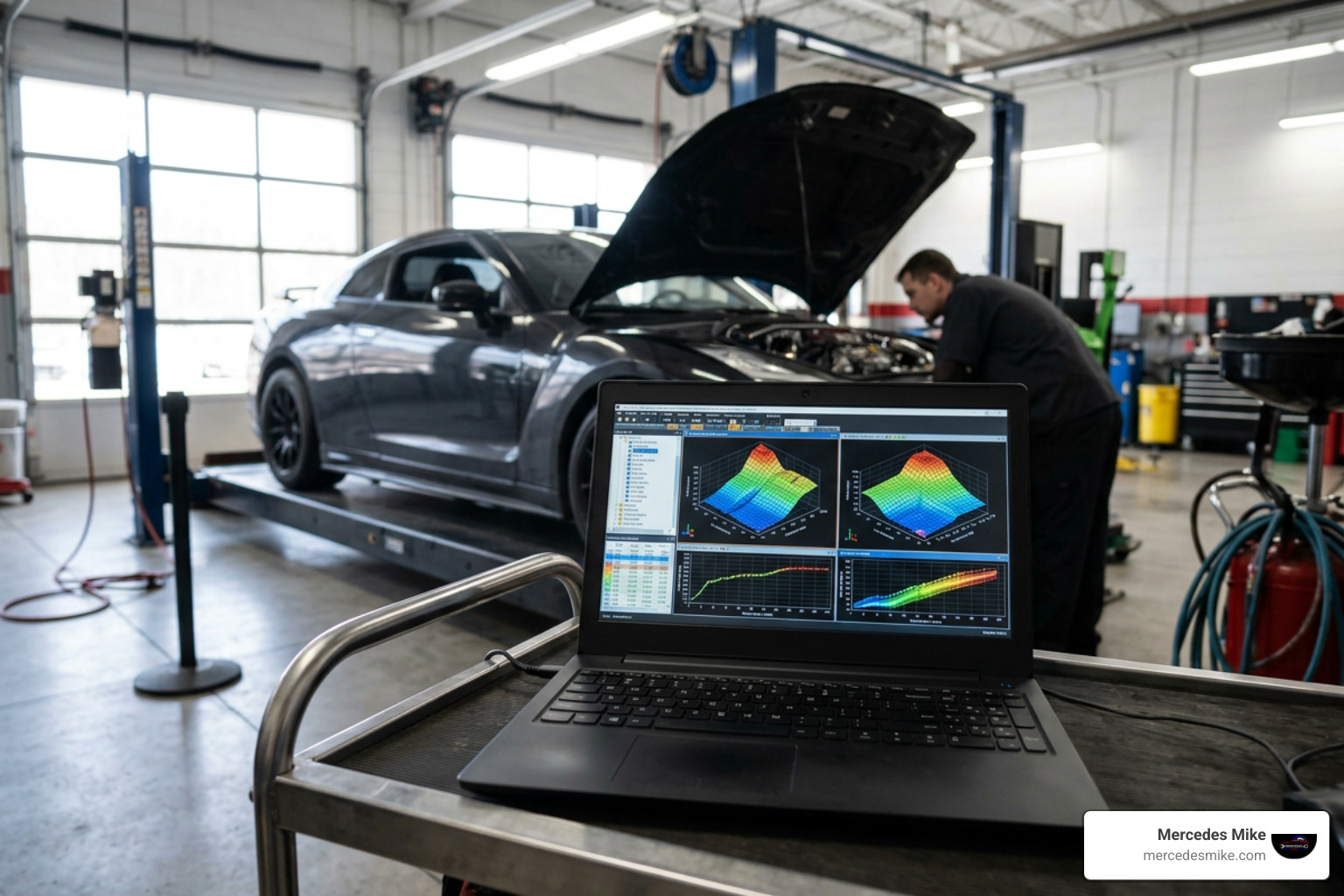
ECU remapping (often referred to as software calibration or flash tuning) involves overwriting these factory default lookup tables with finely calibrated parameters. By altering specific variables—such as the air-to-fuel ratio (AFR), turbocharger boost pressure targets, ignition spark timing, and electronic throttle response—a trained technician can maximize combustion efficiency and unlock the latent power within your engine block.
Software Calibration vs Hardware Chips
In the early days of automotive performance tuning, modifying an engine's brain required physical "chipping." A technician had to solder or physically replace an EPROM microchip on the circuit board of the vehicle's ECU.
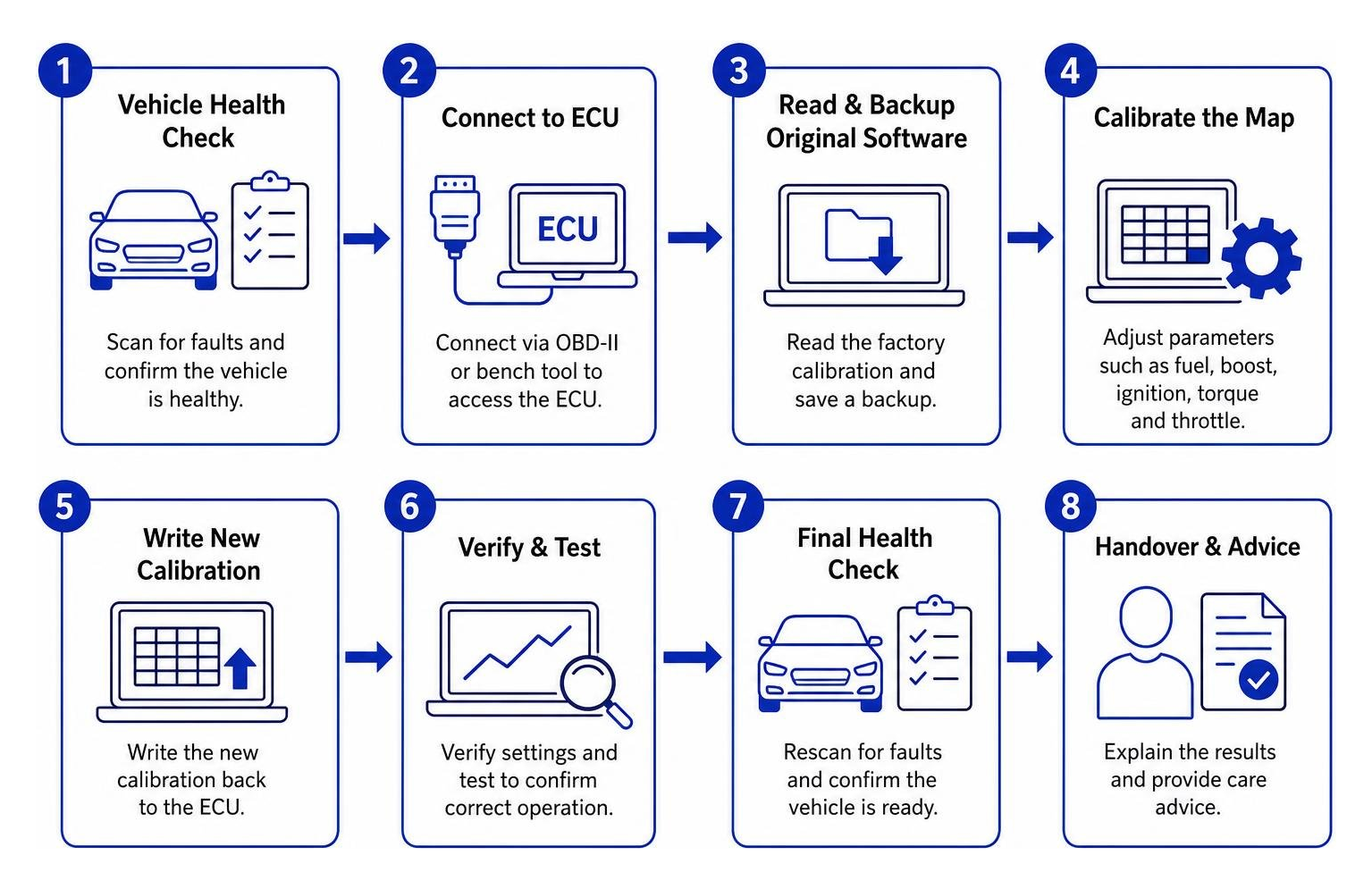
Today, modern vehicle calibration is performed directly through the standard On-Board Diagnostics (OBD-II) port or via dedicated bench-flashing tools. This process allows technicians to extract the factory map, adjust parameters digitally, and write the new calibration back onto the processor without damaging delicate hardware. When working on precision-engineered European vehicles, dedicated mercedes tuning ensures that original electronic safety thresholds—such as knock detection, exhaust gas temperature (EGT) protection, and oil temperature cut-offs—remain fully active.
Remapping vs Plug-in Tuning Boxes
Many vehicle owners compare direct ECU remapping to external piggyback "tuning boxes." While plug-in modules are popular for quick installations, their underlying functionality differs substantially from a dedicated remap.
A tuning box installs inline between the engine sensors and the factory ECU. It functions by intercepting real-time signals—such as fuel rail pressure or manifold absolute pressure (MAP)—and "tricking" the ECU with artificially low readings. In response, the factory computer compensates by raising boost or injecting extra fuel.
In contrast, a true ECU remap modifies the master software directly. The ECU retains authentic sensor readings, coordinates hundreds of interconnected tables simultaneously, and manages internal safety limits seamlessly. This direct approach ensures smoother power delivery, accurate onboard fuel trip computers, and complete diagnostic transparency during servicing.
Transmission Control Unit (TCU) and Gearbox Tuning
Modern high-performance engines operate in close harmony with electronic transmissions, including dual-clutch setups (such as VW/Audi DSG, Porsche PDK, and Mercedes-Benz DCT) and multi-speed torque-converter automatics.
While engine remapping increases peak horsepower and torque, the factory Transmission Control Unit (TCU) often houses internal torque limiters that can prematurely restrict power delivery. A complementary TCU remap recalibrates these transmission tables:
Optimized Shift Points: Adjusts RPM thresholds in both automatic and sport modes to keep the engine in its optimal power band.
Faster Gear Engagement: Reduces shift latency for crisper, more immediate gear changes.
Increased Clutch Clamping Pressure: Prevents clutch slip under elevated torque demands, safeguarding dual-clutch assemblies.
Elimination of Gear Hunting: Keeps the vehicle in higher gears smoothly on highway inclines without erratic downshifts.
Performance Stages: Stage 1, Stage 2, and Stage 3 Tuning
Tuning calibrations are structured into distinct "Stages," representing the level of hardware modifications required to support the software parameters safely.
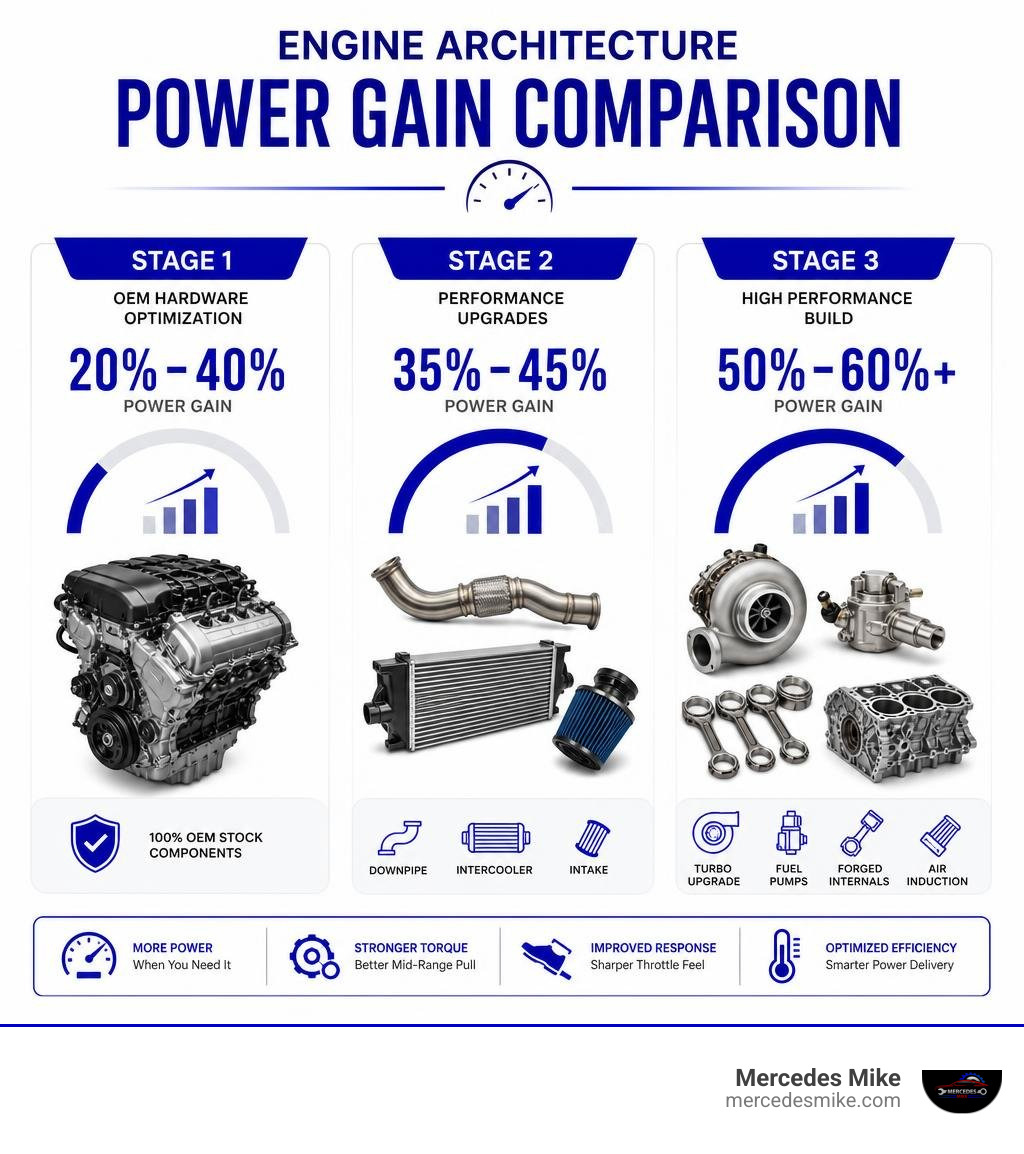
Stage 1 Remap: OEM Hardware Optimization
A Stage 1 remap represents an entry-level software calibration designed entirely for vehicles operating on original equipment manufacturer (OEM) hardware. It requires no mechanical modifications or aftermarket hardware components.
Technicians refine boost targets, ignition curves, and fuel delivery to safely capitalize on the manufacturer's built-in engineering headroom. For drivers exploring the top 5 performance upgrades for your german car, a Stage 1 calibration offers an exceptional return on investment, delivering anywhere from 20% to 40% more horsepower and torque while maintaining daily reliability.
Stage 2 and Stage 3 Remaps: Supporting Hardware Upgrades
Higher tuning stages push the mechanical ceiling of the powertrain and demand dedicated performance upgrades to manage heat, airflow, and exhaust backpressure.
Stage 2 Tuning: Requires free-flowing exhaust components (such as high-flow sports catalytic converters or downpipes) and upgraded cooling solutions (like enlarged front-mount intercoolers). These modifications reduce thermal load and backpressure, allowing the calibrator to extract 35% to 45% more power safely.
Stage 3 Tuning: Represents a comprehensive, bespoke engine build. This stage incorporates hybrid or larger aftermarket turbochargers, upgraded high-pressure fuel pumps, forged internal engine components, and custom air induction systems. Stage 3 calibrations can increase horsepower by 50% to 60% or more over factory output, requiring steady-state rolling road dyno tuning.
Tuning Stage | Supporting Hardware Required | Typical BHP Gain Range | Primary Focus & Application |
|---|---|---|---|
Stage 1 | None (100% OEM Stock Components) | 20% – 40% Increase | Daily drivability, throttle response, efficiency |
Stage 2 | Downpipe, Intercooler, Intake | 35% – 45% Increase | Enhanced mid-range punch, lower thermal stress |
Stage 3 | Turbo Upgrade, Fuel Pumps, Forged Internals | 50% – 60%+ Increase | Maximum track and performance output |
Key Benefits and Realistic Power Gains by Engine Type
The exact performance and efficiency gains achieved through ECU remapping vary depending on engine architecture, aspiration type, and factory displacement.
Turbo Petrol and Naturally Aspirated Engines
Forced induction engines benefit dramatically from software optimization because boost pressure can be electronically managed:
Turbocharged Petrol Engines: Modern turbo petrol engines typically gain 20% to 30% in brake horsepower (BHP) and substantial low-end torque. Mid-range passing power is significantly enhanced, and throttle lag is largely eliminated.
Naturally Aspirated Petrol Engines: Because non-turbo engines rely strictly on atmospheric pressure, power gains are more modest—generally yielding 10% to 15% BHP gains. However, remapping sharpens throttle response, smooths out flat spots in the RPM band, and refines ignition timing for premium octane fuel.
Turbo Diesel Engines and Fleet Drivability
Turbo-diesel platforms provide some of the most impressive transformations on the road. Vehicles such as the popular Mercedes V6 platform—frequently upgraded through a dedicated c350 cdi remap—exhibit wide powerbands with immense torque reserves.
Applying professional diesel ecm tuning typically unlocks 30% to 50% more BHP and an incredible 40% to 75% increase in torque. This low-RPM pulling power transforms heavy passenger sedans and utility vehicles into effortless highway cruisers. Furthermore, because the engine generates higher torque at lower engine speeds, drivers can upshift sooner and stay in taller gears longer, yielding documented fuel savings of 5% to 15% under normal cruising conditions.
Commercial Vans, Motorhomes, and Specialty Vehicles
ECU remapping is not limited to sports sedans and track coupes. Commercial vans, heavy utility trucks, and motorhomes benefit immensely from bespoke calibration:
Heavy Load Towing: Enhanced low-end torque makes pulling trailers, horseboxes, and equipment effortless.
Incline Performance: Prevents sudden speed loss on steep highway grades.
Fleet Operating Costs: Optimized fuel consumption curves reduce overhead expenses for delivery operators across long-distance routes.
How to Choose the Best ECU Remapping Near Me
Finding a reputable calibration technician requires evaluating diagnostic capabilities, equipment quality, and transparency.
Evaluating Mobile vs Workshop Remapping Near Me
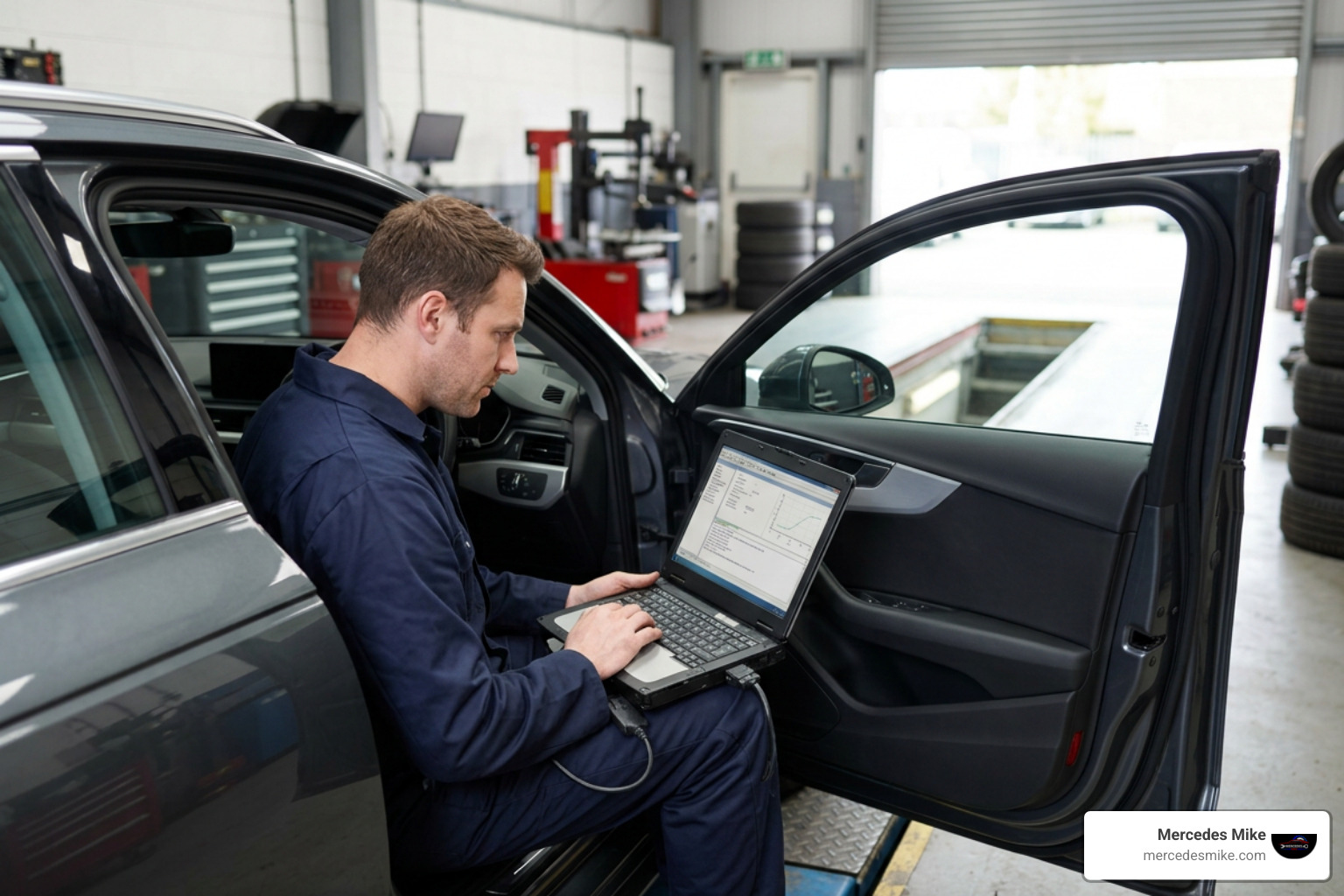
When searching for trusted ecm tuners near me, vehicle owners typically encounter two distinct operating models: mobile remapping units and established brick-and-mortar workshops.
Mobile Remapping Services: Mobile technicians travel directly to your home or office, completing the flashing process in your driveway within 1 to 2 hours. This provides unmatched convenience for busy professionals and fleet owners seeking Stage 1 economy or performance maps.
Workshop-Based Tuning Facilities: Established facilities house specialized equipment such as all-wheel-drive rolling road dynamometers (dynos). A dyno allows technicians to measure precise wheel horsepower and torque curves, run live steady-state diagnostics under load, and verify custom calibrations across the entire rev range.
Pricing and Financing for Professional Remapping Near Me
Professional ECU remapping prices generally vary based on vehicle complexity, ECU encryption level, and tuning stage. Reputable service providers prioritize total pricing transparency, avoiding hidden fees for diagnostic pre-checks or stock file archiving.
To make high-end performance calibrations accessible, many top-tier workshops offer convenient payment solutions, including 0% short-term financing plans through providers like Klarna and Payment Assist. Additionally, quality-assured tuning centers often back their work with a 14-day to 30-day money-back guarantee, allowing drivers to evaluate the performance gains risk-free.
Technician Qualifications and Customer Reviews
Before handing over your keys, verify the credentials of the tuning specialist:
Diagnostic Competence: Ensure the shop uses genuine, licensed master tuning tools (such as Alientech KESS/KTAG, CMD Flash, or bFlash) rather than cheap clone devices that risk corrupting internal vehicle memory.
Quality Assurance Standards: Look for facilities operating under recognized quality management systems, such as ISO 9001:2015 registration.
Independent Feedback: Check verified customer reviews across Google and automotive forums, focusing on long-term vehicle reliability and aftercare support.
Essential Pre-Remap Checks, Safety, and Warranty Considerations
A quality remap should enhance your vehicle's capability without compromising long-term mechanical reliability. To ensure safety, systematic diagnostic procedures must precede any software modifications.
Mechanical Health and Diagnostics
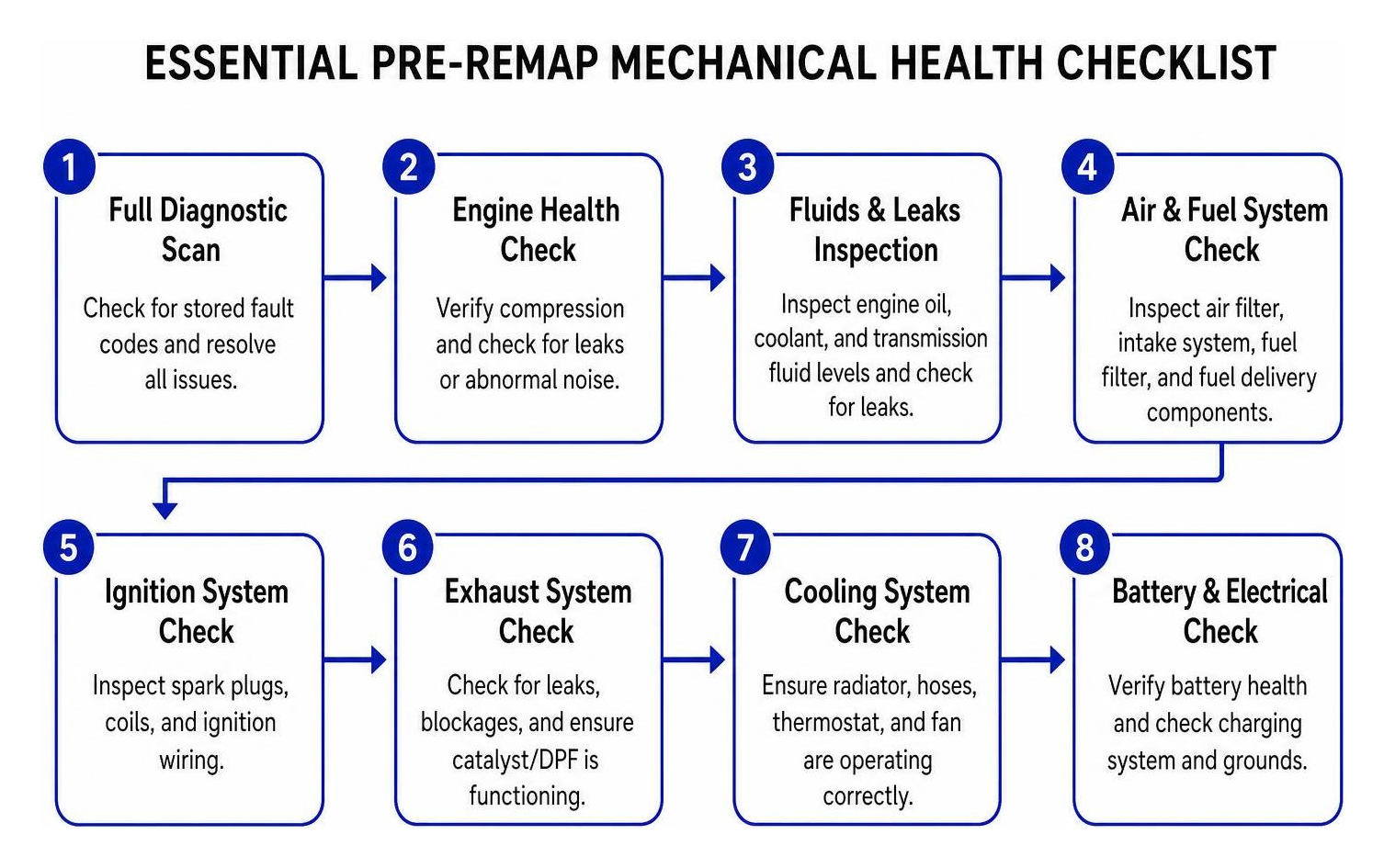
Remapping software amplifies an engine's output, which means it will also magnify pre-existing mechanical defects. A professional tuner will never install a software calibration on a compromised powertrain.
Before flashing an ECU, technicians must complete comprehensive pre-tuning health checks:
Full OBD Diagnostic Scan: Interrogating all vehicle control modules to verify there are no active Diagnostic Trouble Codes (DTCs), sensor faults, or limp-mode flags.
Ignition and Fuel System Inspection: Checking the health of spark plugs, ignition coils, and fuel pump pressures to prevent high-RPM misfires.
Airflow and Boost Leak Testing: Inspecting turbocharger wastegates, charge pipes, and vacuum hoses for micro-tears or boost leaks.
Exhaust and Emissions Systems: Verifying that the catalytic converters, Diesel Particulate Filters (DPF), and oxygen sensors are free of severe soot buildup or contamination.
Warranty, Insurance, and Software Reversibility
Understanding the legal and ownership implications of ECU remapping is essential for every vehicle owner:
Factory Warranties: Modern ECUs feature internal flash counters and checksum algorithms. Flashing an aftermarket calibration can be identified by dealership scan tools and may affect powertrain warranty claims.
Insurance Compliance: Vehicle modifications must always be declared to your automotive insurance provider. Many insurance underwriters accept Stage 1 software updates with minimal or no premium adjustments.
Reversibility and Stock Restorations: A professional tuner will always extract and store a secure digital backup of your original, untouched factory ECU file. If you decide to sell the vehicle, return a leased car, or need factory software reinstalled for dealership servicing, the ECU can be returned to 100% stock parameters.
Frequently Asked Questions About Vehicle Remapping
How long does an ECU remapping appointment typically take?
A standard Stage 1 remap appointment typically takes between 1 and 2 hours. This window includes the initial diagnostic health scan, reading and backing up the original ECU map, writing the modified calibration file, and performing a post-installation road test with live datalogging.
Can an ECU remap be safely reversed back to factory settings?
Yes. Professional tuning services save your original factory software profile securely on off-site servers. The original file can be re-flashed back onto your ECU at any time, restoring your vehicle to its factory calibration.
Is ECU remapping safe for high-mileage engines?
ECU remapping is safe for high-mileage vehicles provided the engine has been thoroughly maintained with documented service history. A rigorous pre-remap health scan will confirm whether mechanical tolerances, compression levels, and turbocharger bearings are healthy enough to support increased performance.
Conclusion
Professional ECU remapping remains one of the safest, most cost-effective ways to unlock real horsepower, broaden your engine's torque curve, and enhance fuel efficiency. Whether you drive an everyday commuter, a heavy-duty commercial van, or a luxury performance sedan, replacing conservative factory software with a custom calibration transforms the driving experience.
When selecting a remapping provider, prioritize technicians who use genuine diagnostic tools, respect factory safety parameters, and conduct thorough mechanical pre-checks.
For drivers in Pompano Beach, Deerfield Beach FL, and across South Florida, our team at Mercedes Mike brings decades of hands-on expertise to European vehicle diagnostics, software calibration, and mechanical servicing. Visit our facility at 882 NE 41st Court (off N Dixie Hwy) or explore our comprehensive Mercedes Mike Service Solutions to schedule your custom performance consultation today.