How to Remap Your ECU Without Breaking the Bank
Understanding Car ECU Remapping and How It Works
To remap your ECU without breaking the bank, the most cost-effective approach is choosing an entry-level Stage 1 OBD-II flash calibration on a mechanically healthy, stock vehicle. Stage 1 software recalibration delivers significant horsepower and torque improvements without requiring expensive hardware upgrades like aftermarket downpipes, upgraded intercoolers, or internal engine modifications.
Modern engines are managed by a central digital brain known as the engine control unit (ECU). When you press the accelerator pedal, the ECU cross-references sensor inputs across pre-programmed lookup tables to regulate fuel delivery, ignition timing, and turbo boost pressure.
Factory software calibrations are designed around global compromises for varying climates and low-grade fuels. As a result, substantial performance margins remain untapped in factory files. When exploring The Top 5 Performance Upgrades for Your German Car, recalibrating these software parameters stands out as the most direct path to unlocking dormant power.
What Is Car ECU Remapping?
Car ECU remapping—frequently referred to as software tuning or flash tuning—is the process of modifying the factory calibration maps stored on your vehicle's engine computer. Rather than swapping out mechanical engine parts like camshafts or pistons, a calibrator modifies the digital parameters governing engine operation.
These adjustments typically optimize:
Fuel injection timing and volume: Fine-tuning the duration and pressure of fuel delivery across various load conditions.
Ignition timing advance: Triggering the spark at the precise microsecond to maximize combustion efficiency without causing destructive engine knock.
Turbocharger boost pressure: Modifying wastegate duty cycles to safely increase intake pressure and airflow.
Electronic throttle mapping: Removing sluggish throttle delays to make pedal inputs feel immediate and sharp.
Torque limiters: Adjusting factory ceiling limits set within the software so the drivetrain can utilize its full mechanical capability safely.
How the Tuning Process Works Step-by-Step
A professional tuning workflow follows a structured engineering sequence. Rushing the process or skipping pre-checks is the fastest way to turn a budget-friendly upgrade into an expensive mechanical disaster.

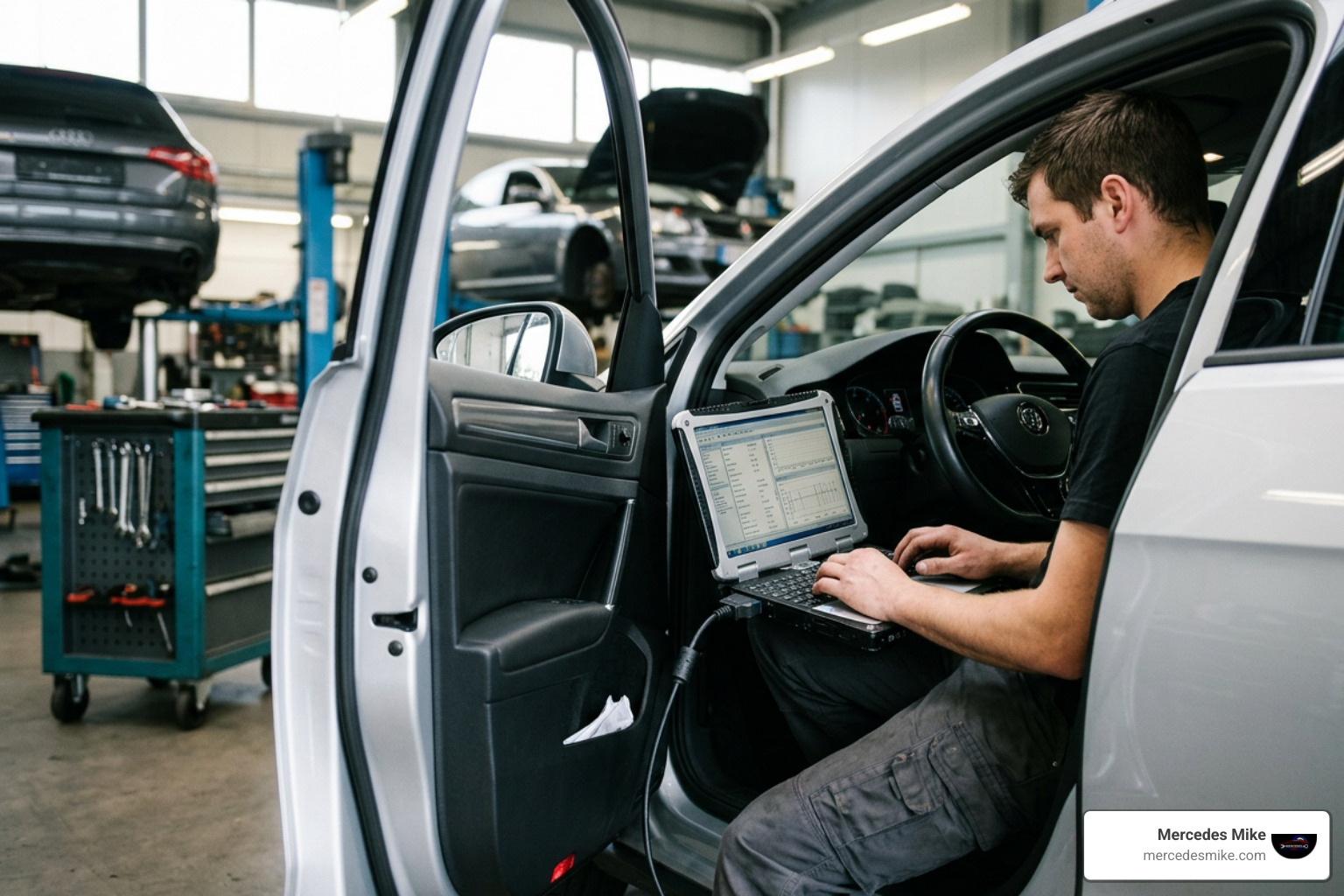
Pre-Flash Health Check: Technicians connect OEM-grade diagnostic tools to scan for stored fault codes, misfires, boost leaks, and worn sensors. A car must be completely healthy before any software adjustments take place.
Battery Stabilization: A high-amperage battery support unit is connected to the vehicle. A voltage drop during an ECU read or write cycle can corrupt the processor memory.
Reading the Factory Calibration: The stock binary file is extracted through the onboard diagnostic port (OBD-II) or via a direct bench harness for heavily encrypted units.
Software Modification & Optimization: Calibrators adjust target maps using specialized platforms such as WinOLS, altering fuel delivery, boost limits, and ignition curves while keeping all safety thresholds active.
Flashing the Modified Software: The updated file is flashed back into the ECU flash memory.
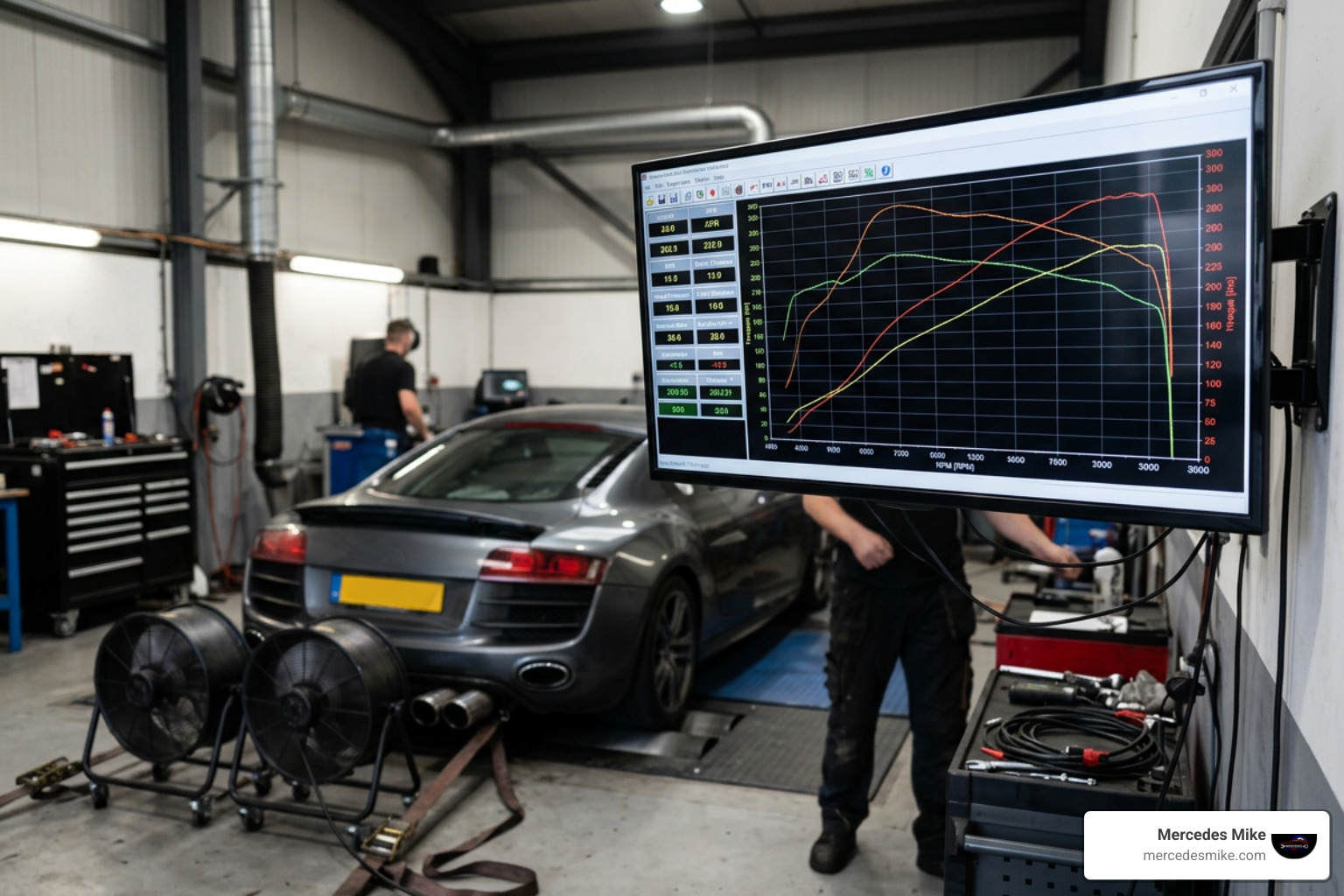
Data Logging and Verification: The car undergoes thorough road testing or dynamometer validation, logging parameters like boost pressure, air-fuel ratios, and exhaust gas temperatures to guarantee total reliability. The entire process typically takes between one to three hours.
The Benefits and Realistic Performance Gains of Engine Tuning
The primary motivation for engine remapping is transforming how a vehicle drives in everyday situations. Eliminating dead spots in the powerband and removing throttle lag turns a sluggish vehicle into an agile, responsive machine without requiring thousands of dollars in aftermarket hardware.
Turbo Petrol vs Turbo Diesel Gains
For forced-induction platforms, engine software calibrations yield massive returns on investment. However, petrol and diesel engines react to software adjustments differently:
Turbocharged Petrol Engines: These platforms respond with significant top-end pull and rapid acceleration. Most turbo petrol engines gain between 20% and 40% more horsepower alongside comparable torque increases. Raising boost pressure while optimizing spark timing allows these engines to breathe freely throughout the entire rev range.
Turbocharged Diesel Engines: Modern turbo diesels are torque monsters. A well-engineered remap typically yields a 20% to 35% bump in horsepower, but delivers an extraordinary 40% to 50% increase in low-end and mid-range torque. When setting up Diesel ECM Tuning, that sudden wave of low-RPM pulling power makes highway merging effortless. Dedicated platforms like a C350 CDI Remap turn a sensible luxury daily driver into a high-torque cruiser that pulls relentlessly without breaking a sweat.
Naturally aspirated engines, by contrast, lack turbochargers to manipulate. While a remap on a non-turbo vehicle sharpens throttle response and cleans up flat spots, horsepower gains rarely exceed 5% to 10% without supporting hardware modifications.
Fuel Economy and Drivability Enhancements
A common question is whether engine remapping can genuinely save fuel. When an engine's combustion timing is optimized, it burns fuel more efficiently. Furthermore, because a remapped engine produces significantly more mid-range torque, you don't need to push the throttle as deeply or drop down as many gears to maintain highway speeds or climb steep grades.
Many drivers see a 5% to 15% improvement in fuel economy during steady cruising. However, there is a catch: if you constantly dip into the newly unlocked horsepower with an aggressive right foot, fuel consumption will naturally increase. Paired with comprehensive Performance Upgrades, software recalibration gives you total control over both power and economy.
Potential Risks, Legal Rules, and Warranty Considerations
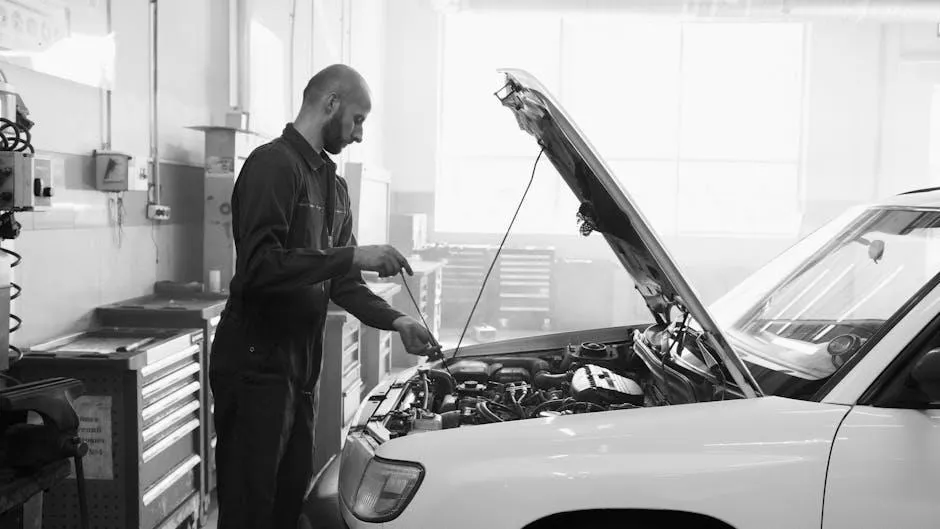
While ECU remapping offers an exceptional price-to-performance ratio, cutting corners with substandard generic files or untrained installers introduces serious risks. Software dictates mechanical stress; pushing parameters beyond safe mechanical limits will compromise reliability.
Mechanical Safety and Component Protection
Automakers integrate critical safety subroutines into factory software. High-quality calibrations preserve these fail-safes, while cheap, generic "copy-paste" tunes often disable them to show inflated numbers.
Key protection routines that must remain intact include:
Exhaust Gas Temperature (EGT) Limiting: Prevents turbochargers and catalytic converters from melting under extended full-throttle load.
Knock Detection and Timing Retard: Detects pre-ignition and instantly retards timing to protect pistons and cylinder walls.
Oil Pressure and Thermal Management: Adjusts cooling and lubrication logic to handle increased thermal loads.
Clutch and Transmission Torque Limits: Protects dual-clutch packs and automatic torque converters from premature slip.
Tuning Stage | Hardware Requirements | Typical Power Gains | Ideal Use Case | Relative Cost |
|---|---|---|---|---|
Stage 1 | 100% Stock Components (Healthy Engine) | +20% to +35% BHP / Torque | Daily driving, highway commuting, budget performance | $300 – $700 |
Stage 2 | High-flow downpipe, upgraded intercooler, cold air intake | +30% to +45% BHP / Torque | Track enthusiasts, aggressive street performance | $1,200 – $3,000+ (with parts) |
Stage 3 | Upgraded turbocharger, forged engine internals, high-flow fuel pumps | +50% to +100%+ BHP | Motorsport, dedicated high-power builds | $5,000 – $15,000+ |
Emissions, Road Legality, and Insurance Requirements
Staying on the right side of the law and protecting your financial investment requires understanding local regulations and ownership responsibilities:
Emissions and Environmental Rules: Legitimate performance remapping does not require disabling emissions hardware. Tampering with emissions control devices like catalytic converters or Diesel Particulate Filters (DPF) is illegal for street-driven vehicles. High-quality calibrators keep emissions monitors in a "ready" state while optimizing performance.
Insurance Declarations: In many jurisdictions, any modification that alters factory horsepower output must be disclosed to your insurance underwriter. Failing to report an ECU remap could jeopardize coverage in the event of an accident claim.
Warranty and Dealership Servicing: Modifying ECU software alters the calibration verification number (CVN) and flash counters. While a remap does not automatically void your entire vehicle warranty, a dealership can deny warranty repairs on powertrain components if they demonstrate that aftermarket software caused the failure. Furthermore, routine dealership software updates can overwrite a tuned file with stock software, requiring your tuner to reflash the vehicle from a stored backup.
Smart Ways to Tune on a Budget: Costs, Stages, and Hardware
Achieving outstanding performance gains does not require spending thousands on unnecessary aftermarket hardware. Sticking to a disciplined tuning plan delivers maximum power per dollar spent.
Cost Factors for Car ECU Remapping
For stock vehicles, a Stage 1 calibration is the most budget-friendly upgrade available. Because it requires zero mechanical modifications, your entire budget goes toward software engineering and verification.
A standard Stage 1 remap typically costs between $300 and $700, depending on vehicle complexity and the method of tuning. Stage 2 tuning jumps significantly in price—often reaching $1,200 to $3,000 or more—because you must purchase supporting hardware like upgraded intercoolers and exhaust components to manage thermal loads. If you are exploring targeted upgrades like Mercedes Tuning, starting with an entry-level software calibration delivers the vast majority of real-world street performance gains.
Choosing Between Mobile, Shop, and DIY Flashing
Vehicle owners can choose between three primary avenues for flashing their control units:
Specialist In-Shop Tuning: Visiting a dedicated performance workshop with rolling-road dyno equipment offers the highest level of precision. Technicians can measure baseline horsepower, verify live sensor data, and tailor the map to your specific vehicle's condition.
Mobile Tuning Services: Qualified technicians travel directly to your home or office, performing pre-scans, flashing the software via the OBD-II port, and conducting road-log verification on-site.
Handheld DIY Flashing Devices: Handheld programmers allow you to read and write pre-loaded maps from your driveway in about 15 minutes. While convenient, you assume responsibility for battery stabilization and verifying engine health before flashing.
If you are evaluating service providers, researching certified ECM Tuners Near Me and qualified shops offering Remapping Near Me ensures you work with technicians who carry dedicated diagnostic tools rather than low-budget clones.
Frequently Asked Questions About Engine Flashing
Can all cars be remapped, and is the process reversible?
Most modern fuel-injected vehicles equipped with an electronic control unit can be remapped, but there are exceptions. Some newer vehicles feature heavily encrypted ECUs (such as newer Bosch MD1/MG1 processors) that require bench unlocking before they can accept modified software over OBD-II.
The remapping process is completely reversible. A reputable tuning specialist always makes a digital backup of your original factory software before making any modifications. If you plan to sell the vehicle or return it to stock configuration, the original factory file can be reflashed back to the ECU at any time.
How do I know if a used car has already been remapped?
Identifying an existing remap requires diagnostic equipment:
OBD-II Diagnostic Inspection: A technician can read the Calibration Verification Number (CVN) and flash counter stored in the ECU. An altered checksum or high flash count often indicates past tuning.
Live Sensor Data Logging: Monitoring live boost pressure and fueling parameters during a road test reveals whether the car is demanding higher boost levels than factory specifications allow.
Physical Inspection: Check for piggyback tuning modules spliced into fuel rail and boost sensor wiring harnesses under the hood.
What should I look for in a professional ECU remapping provider?
Never trust your vehicle to someone offering cheap, generic files out of a laptop bag. A professional tuning shop should provide:
Thorough pre-tuning diagnostic health scans to confirm engine viability.
Verified custom calibrations engineered for your specific vehicle and fuel grade.
Continuous maintenance of factory engine protection subroutines (knock control, EGT limits).
Dedicated high-amperage battery support during read and write procedures.
A secure lifetime archive of your vehicle's original factory software file.
Conclusion
Car ECU remapping remains the single most cost-effective performance upgrade in the automotive world. By replacing conservative factory compromises with optimized software parameters, you can unlock up to 40% more horsepower, massive low-end torque, sharper throttle response, and improved highway efficiency—all without turning a single wrench on the engine block.
The secret to tuning without breaking the bank is keeping things simple: start with a healthy engine, choose a balanced Stage 1 calibration that protects mechanical safety limits, and partner with experienced professionals who use proper diagnostic tools. At Mercedes Mike, our experienced technicians in Pompano Beach bring decades of combined German automotive expertise to every job. Explore our expert German auto repair and performance services to give your car the performance, reliability, and precision it was built to deliver.