
Is Fixing Your Suspension Expensive? Here is What to Expect
Is Fixing Your Suspension Expensive? Here's What to Expect
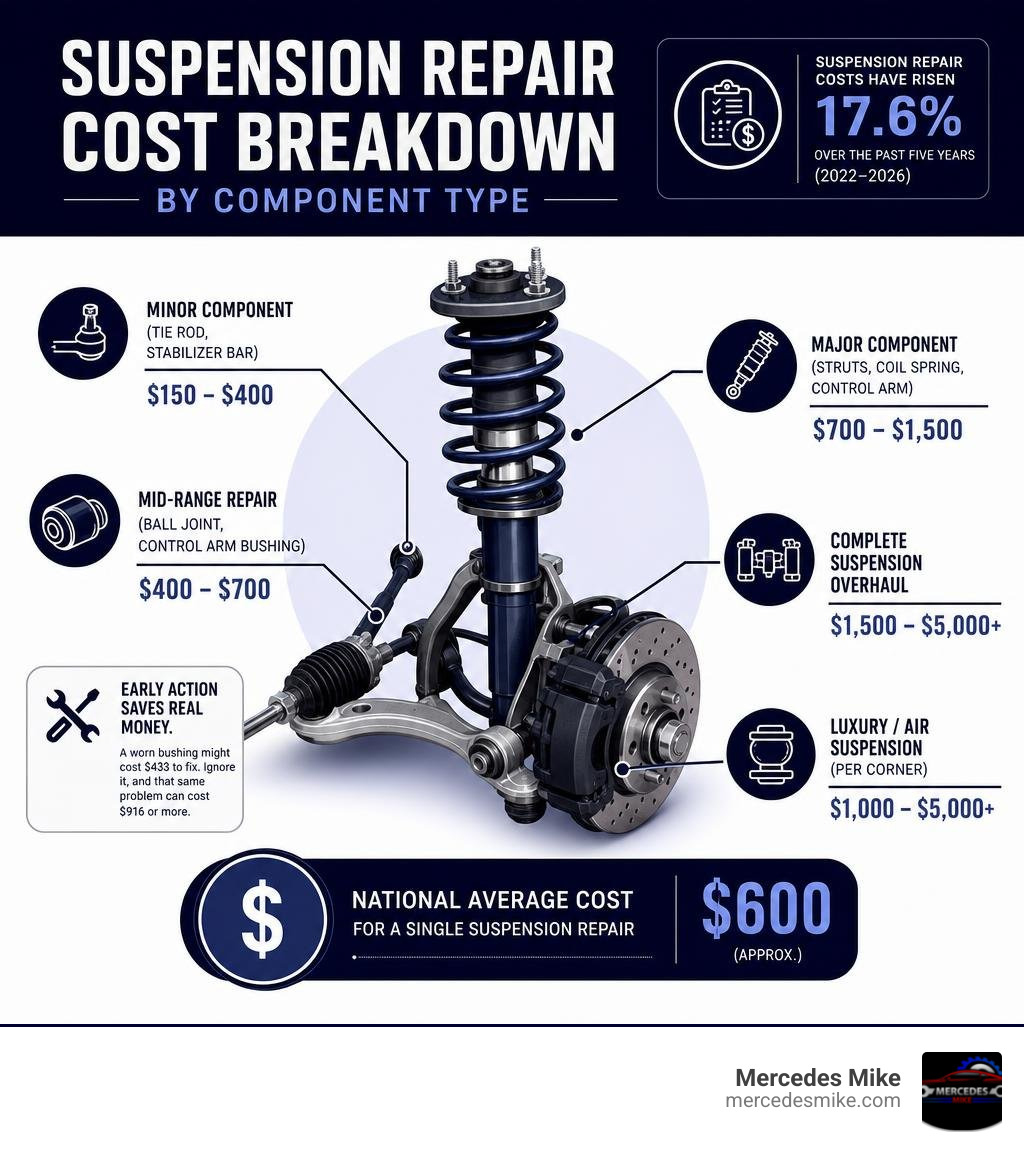
How much is suspension repair for your car? Here's a quick answer before we dive deeper:
Repair Type Typical Cost Range Minor component (tie rod, stabilizer bar) $150 – $400 Mid-range repair (ball joint, control arm bushing) $400 – $700 Major component (struts, coil spring, control arm) $700 – $1,500 Complete suspension overhaul $1,500 – $5,000+ Luxury / air suspension (per corner) $1,000 – $5,000+
The national average for a single suspension repair is around $600, but that number can jump significantly depending on what broke, what you drive, and where you take it.
For most drivers, a common repair like replacing a single shock or strut runs closer to $1,260 once parts and labor are factored in. And if you drive a German luxury vehicle like a Mercedes-Benz or BMW with an air or adaptive suspension system, costs can exceed $5,000 — sometimes for just one corner of the car.
Suspension repair costs have also risen 17.6% over the past five years (2022–2026), so what felt expensive a few years ago costs even more today.
One thing worth knowing upfront: not all suspension repairs are created equal. A worn bushing might cost $433 to fix. Ignoring it until it damages the whole control arm? That same problem now costs $916 or more. Early action saves real money.
How Much Is Suspension Repair on Average?
When your car starts bouncing down Federal Highway like a trampoline or making alarming metal-on-metal clanking sounds over every speed bump in Pompano Beach, your first thought is probably your wallet.
On average, the cost to repair a car's suspension system can range between $1,000 and $5,000 for a comprehensive fix, while smaller, isolated repairs can run anywhere from $150 to $1,500.
According to the Car Suspension Repair Cost (2026 Guide) | ConsumerAffairs® , the national average sits right around $600 per repair, with most people paying between $200 and $1,500. However, this average is heavily weighted by basic commuter vehicles.
In South Florida, regional pricing trends slightly higher. For example, local data shows that standard suspension repairs average around $708 in Fort Lauderdale and $720 in Miami. If you are looking for an accurate local benchmark, you can check out our detailed breakdown on Car Suspension Fix Cost.
The steady rise of auto repair inflation has also changed the landscape. Between 2022 and 2026, average suspension repair costs shot up by 17.6% due to supply chain changes, more complex vehicle technologies, and rising professional labor rates.
How Much Is Suspension Repair by Component?
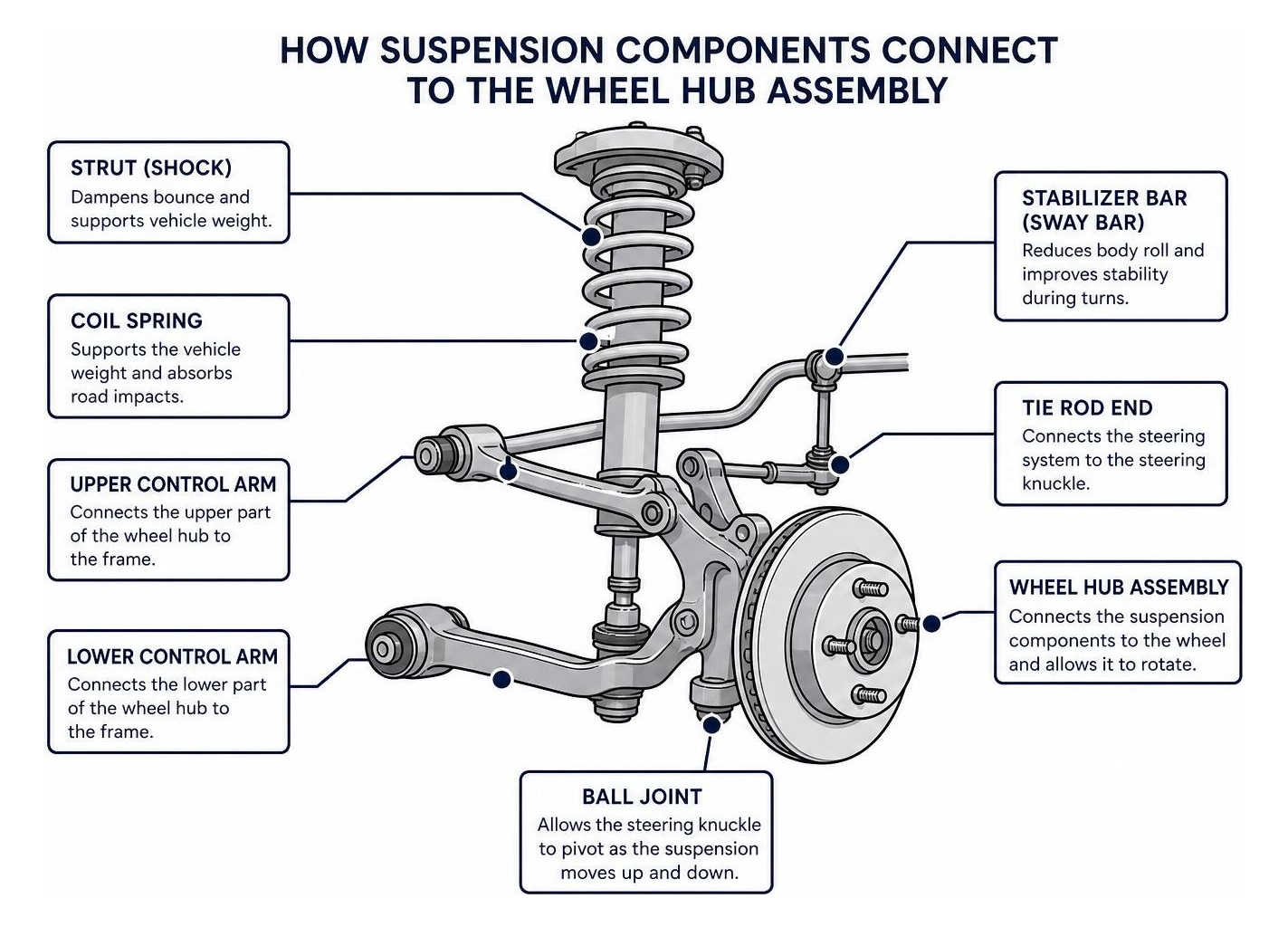
The suspension is not a single, giant metal part; it is an intricate web of links, joints, and cushions working together. When you ask how much is suspension repair, the answer depends entirely on which of these individual parts has given up the ghost.
Below is a breakdown of average replacement costs (including parts and labor) for the most common suspension components:
Suspension Component Average Cost (Parts & Labor) Role in Your Vehicle Stabilizer Bar (Sway Bar) $186 Keeps the car flat and stable during sharp turns. Tie Rods $266 Connects your steering gear to the wheels. Control Arm Bushings $433 Cushions the control arm, absorbing road vibrations. Ball Joint $470 Acts as the pivot point connecting control arms to steering knuckles. Coil Spring $894 Supports the vehicle's weight and absorbs large road impacts. Control Arm $916 The structural hinge connecting the wheel hub to the frame. Shock or Strut (Single) $1,260 Dampens bounce and keeps tires firmly planted on the road.
To understand how these individual parts fit together and affect your ride, you can explore our comprehensive Suspension Repair Guide 2026.
Let's look at why some of these parts cost more to service:
Shocks vs. Struts: Shocks are fluid-filled tubes that simply absorb bounce, whereas struts are structural elements that actually support the weight of your vehicle. Replacing a single shock or strut averages $1,260 because of the precision labor involved.
Control Arms and Bushings: A smart mechanic will always check if they can simply replace a worn control arm bushing ($433) rather than the entire control arm assembly ($916).
Ball Joints: These function like a human hip socket, allowing your wheels to turn side-to-side and move up and down. Replacing a single ball joint averages $470.
How Much Is Suspension Repair for Luxury vs. Standard Cars?
If you drive a standard commuter car like a Toyota Camry, replacing a strut might set you back between $700 and $1,400. But if you drive a high-end German machine—such as a Mercedes-Benz, BMW, Audi, or Porsche—the engineering is entirely different.
Luxury German vehicles often feature advanced, multi-link independent suspensions or complex air suspension systems. Instead of a simple metal coil spring, these vehicles use pressurized air bags and computer-controlled active dampers to deliver that signature "floating on a cloud" ride.
When these advanced systems fail, the bills can escalate quickly:
Air Suspension Components: A single replacement air strut can easily cost $1,000 to $2,000 for the part alone.
Complex Diagnostics: Pinpointing a leak in an air line or a failure in an electronic ride-height sensor requires specialized diagnostic equipment.
Active Dampers: Electronic shock absorbers that adjust their stiffness in milliseconds are significantly more expensive than standard passive shocks.
For a deeper dive into managing these specialized systems, check out our guides on Air Ride Suspension Repair and Air Bag Suspension Replacement.
Key Factors That Influence Your Total Repair Bill
No two suspension repair bills are identical. When you receive an estimate from a shop, several hidden variables dictate the final number on the invoice.
Geographic Location & Labor Rates: Labor rates vary wildly by region. While a rural shop might charge $80 to $120 per hour, shops in major metropolitan areas or premium South Florida markets typically charge between $150 and $250+ per hour. For comparison, you can look at regional guides like How Much Does Suspension Repair Cost? (2026 Guide) | CostWhale or check out state-specific pages such as How Much Does Suspension Repair Cost in Texas? (2026) | CostWhale , How Much Does Suspension Repair Cost in District of Columbia? (2026) | CostWhale , and How Much Does Suspension Repair Cost in Oregon? (2026) | CostWhale .
OEM vs. Aftermarket Parts: Original Equipment Manufacturer (OEM) parts are built to your vehicle's exact factory specifications and offer the highest quality, but they carry a premium price. High-quality aftermarket parts can offer a more budget-friendly alternative for non-luxury vehicles, though we always recommend OEM or certified European-brand components for high-performance German cars.
Dealership vs. Independent Mechanic: Dealerships typically charge 20% to 50% more than independent specialty shops for the exact same repair. Choosing an independent specialist using the latest diagnostic tools is often the most cost-effective way to get dealer-level quality without the premium markup. If you are looking for local help, check out Suspension Fix Near Me.
Front vs. Rear Suspension Repair Costs
As a general rule, front suspension repairs are more expensive than rear suspension repairs.
Your front suspension has a much harder job to do. It supports the weight of the engine, handles the brunt of the braking force, and must integrate directly with your steering system. Because of this complexity, replacing front struts or control arms requires more labor and specialized alignment procedures.
To learn more about the steering systems integrated with your front suspension, you can read our guide on Steering Repair.
In contrast, the rear suspension on many vehicles sits on a simpler, fixed axle or a less complex multi-link setup. Replacing rear shocks is often a straightforward process, resulting in lower labor hours and a more affordable bill.
The Necessity of Wheel Alignment After Repair
Here is a golden rule of automotive maintenance: any time you replace a major suspension component, you must get a wheel alignment.
When parts like struts, control arms, tie rods, or ball joints are removed and replaced, the precise angles of your steering and suspension are disrupted. Even a tiny fraction of a degree of misalignment can cause:
Rapid, uneven tire wear (costing you a new set of tires prematurely).
A steering wheel that sits off-center.
The vehicle pulling hard to one side.
Unstable, unpredictable handling.
A professional wheel alignment typically costs between $80 and $250, depending on whether your vehicle requires a two-wheel or a specialized four-wheel alignment. Skipping this step to save a few dollars is a costly mistake that can quickly ruin brand-new tires. If your steering feels loose or off-center, you may also want to read about how to Fix Play In Steering Wheel.
Warning Signs Your Vehicle Needs Suspension Work
Your car will almost always tell you when its suspension is failing. Recognizing these warning signs early can help you address issues before they cause secondary damage to your tires, steering system, or brakes.
A Bouncy, Uncomfortable Ride: If your car continues to bounce, sway, or dip after hitting a bump, your shocks or struts are likely worn out and no longer dampening road forces.
Clunking, Knocking, or Squeaking Noises: Hearing a metallic "clunk" when driving over speed bumps or a squeaking sound when turning the steering wheel usually points to worn-out ball joints, control arm bushings, or stabilizer bar links.
Nose-Diving and Body Roll: If the front of your car "dives" toward the pavement when you apply the brakes, or if the vehicle leans heavily to the side when cornering, your suspension is no longer managing weight transfer properly.
Vehicle Sagging or Sitting Unevenly: If one corner of your car sits visibly lower than the others, you may have a broken coil spring or a leaking air suspension bag.
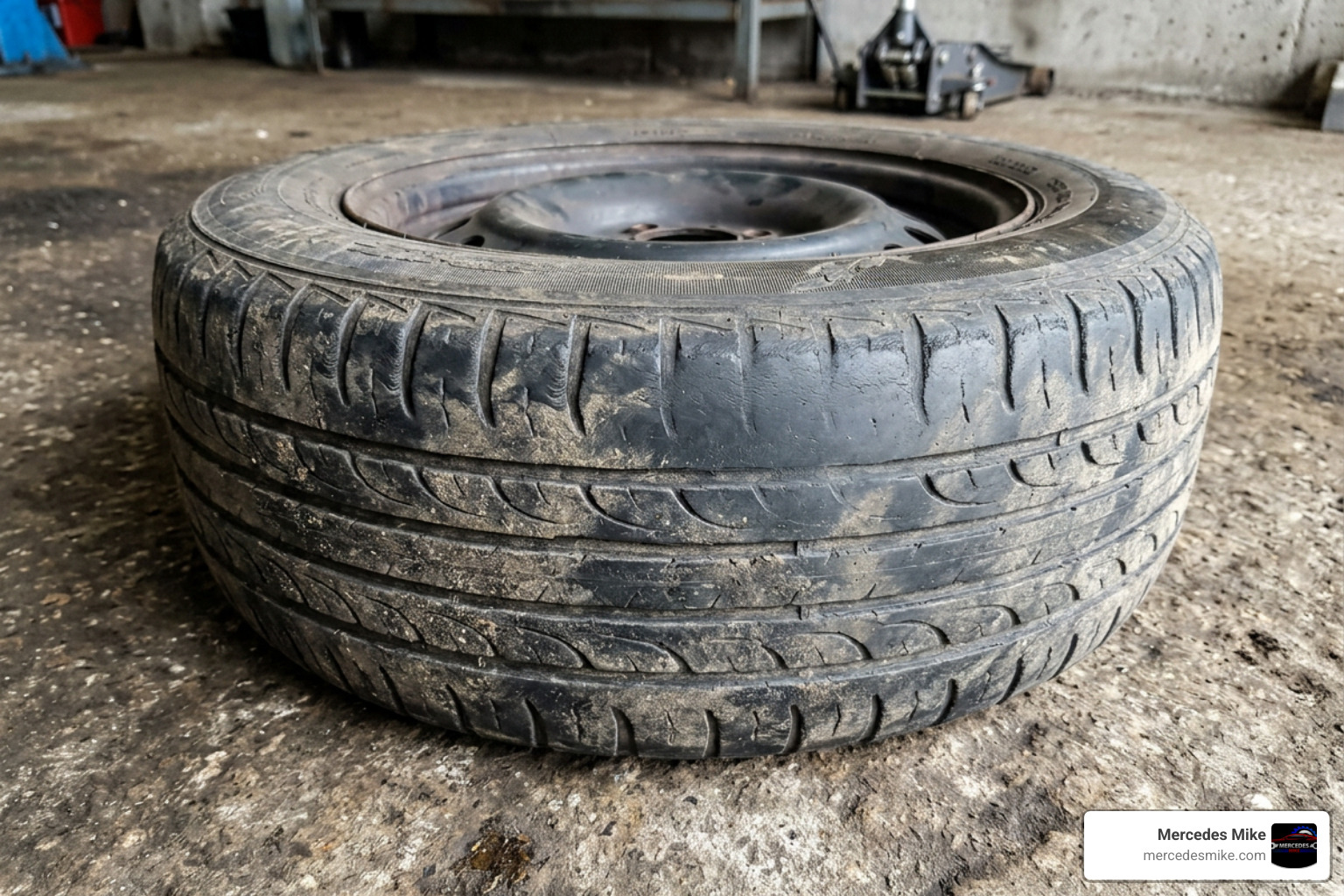
Uneven Tire Wear (Cupping): Inspect your tires monthly. If you notice smooth "cups" or scalloped dips worn into the tread, your wheels are bouncing excessively because the shocks or struts are failing to keep them firmly planted on the road.
Pulling to One Side: While this can sometimes be resolved with a simple alignment, it can also indicate a bent control arm or a damaged steering component. If you suspect steering issues, you might want to look into the Cost To Fix Electric Power Steering.
How to Save Money on Suspension Repairs
While suspension repairs can be a significant investment, you don't have to pay premium prices blindly. Here are practical strategies to help keep your repair costs manageable:
Practice Preventative Maintenance: Keep your tires inflated to the manufacturer’s recommended specifications to reduce stress on suspension components. Wash your vehicle regularly—especially if you live near the salty ocean air of South Florida—to wash away dirt, grime, and salt that can corrode metal parts and dry out rubber bushings.
Address Problems Early: A worn-out $100 sway bar link or a $400 ball joint puts extra stress on neighboring components. If you ignore a minor noise or vibration, it can create a domino effect, turning a simple fix into a multi-thousand-dollar overhaul.
Replace Parts in Pairs: Shocks, struts, control arms, and coil springs should always be replaced in pairs (both fronts or both rears). This ensures balanced, safe handling and saves you money on repeated labor and alignment fees down the road.
Choose an Independent Specialist: Skip the dealership markup. Independent specialty shops often have access to the same high-quality OEM parts and advanced diagnostic tools but operate with more competitive labor rates.
Check Your Warranty Coverage: Standard factory warranties and high-quality extended warranties often cover major suspension components like control arms, tie rods, and ball joints (though wear-and-tear items like shocks, struts, and bushings are typically excluded).
Frequently Asked Questions About Suspension Repairs
Is it safe to drive with a damaged suspension?
No, it is not safe. Driving with a damaged suspension compromises your steering control, increases your stopping distance, and reduces your vehicle's stability during emergency maneuvers. A broken suspension component can also fail completely while driving, leading to a dangerous loss of control or severe secondary damage to your wheels, tires, and steering system.
How long do suspension components typically last?
Most standard shocks and struts are wear-and-tear items designed to last between 50,000 and 100,000 miles. Other components, like ball joints, tie rods, and control arms, can last much longer depending on your driving habits, road conditions, and how well you avoid potholes and speed bumps.
When should you repair versus replace suspension parts?
If a single rubber bushing or ball joint has failed but the rest of the control arm assembly is in good condition, a skilled mechanic can often replace just that individual part to save you money. However, if the vehicle has high mileage and multiple components are showing signs of wear, it is usually more cost-effective to replace the entire assembly at once to avoid paying for labor multiple times.
Conclusion
Understanding how much is suspension repair helps you make informed decisions when your vehicle’s ride quality begins to decline. Whether you need a simple tie rod replacement or a comprehensive suspension overhaul, addressing issues early is the key to maintaining safety, preserving your tires, and keeping repair bills manageable.
If you are looking for expert care in South Florida, we can help. At Mercedes Mike, we specialize in professional maintenance and repair services for German vehicles (Mercedes-Benz, BMW, Audi, and Porsche).
Our shop is located at 882 NE 41st Court (near N Dixie Hwy) in Pompano Beach, FL, serving drivers across Pompano Beach, Deerfield Beach, and the broader South Florida area. Our team of decades-experienced technicians utilizes the latest diagnostic tools and premium parts to restore your vehicle’s factory-engineered ride comfort and handling precision.
To get an accurate estimate for your vehicle or to schedule a professional inspection, explore our details on Car Suspension Fix Cost and let our team keep your luxury vehicle performing at its absolute best.