
The Ultimate Guide to AC Unit Maintenance (And How to Avoid Getting Burned)
What You Need to Know About AC Unit Maintenance (Quick Answer)
AC unit maintenance is one of those tasks that's easy to put off — until your system quits on the hottest day of the year.
Here's what most homeowners need to know, fast:
Replace air filters every 1–3 months (monthly in dusty or high-use environments)
Clear the outdoor condenser unit — keep at least 2 feet of clearance around it
Flush the condensate drain line with white vinegar to prevent clogs and mold
Schedule a professional tune-up once a year, ideally in early spring
Clean or rinse condenser coils gently with a garden hose (never a pressure washer)
Check thermostat operation and verify a 15–20°F temperature drop at supply vents
A well-maintained AC system can run 10+ years, use up to 25% less energy, and avoid the kind of breakdowns that turn a $150 tune-up into a $1,000 emergency repair.
Think of your air conditioner like your car's engine. Skip the oil changes and eventually something expensive breaks. The same logic applies here.
According to the U.S. Department of Energy, air conditioning accounts for roughly 12% of home energy expenditures — and a neglected system can consume 15–25% more electricity than a properly maintained one. That's money leaving your wallet every single month.
The good news? Most of the work is simple, fast, and cheap. And the parts that aren't? That's what professionals are for.
This guide covers everything — from monthly filter swaps to climate-specific challenges in places like Las Vegas or Southern California — so you can keep your system running strong all season long.
Why Regular ac unit maintenance Matters
We all love the feeling of walking into a crisp, cool home when the South Florida humidity is thick enough to chew. But that refreshing blast of air is the result of a complex mechanical process. When we neglect ac unit maintenance, we aren't just risking a temporary sweaty afternoon; we are actively throwing money away.
Slashing Your Utility Bills
Let’s start with the most immediate benefit: your wallet. When your air conditioner's coils are coated in dust and the air filter is choked with pet hair, the system has to work twice as hard to draw in air and transfer heat.
A dirty air filter can restrict airflow and increase your system's energy consumption by up to 15%. Even worse, dirty condenser coils can reduce overall cooling efficiency by 20% to 30%. That means your system runs longer cycles, consumes more electricity, and drives up your monthly utility bills. Keeping these components clean keeps your energy consumption optimized.
Extending Your System's Lifespan
Replacing a central air conditioning system is a major financial investment. A well-maintained system can easily last 10 years or more, whereas a neglected one might give out in half that time.
Regular maintenance helps prevent the premature wear and tear that leads to catastrophic component failures. For instance, a dirty filter forces the blower motor to run hotter and work harder, eventually burning it out. By taking care of small tasks today, you can extend the operating life of your equipment by 3 to 5 years.
Protecting Indoor Air Quality
Your AC system does more than just cool your home; it also filters and dehumidifies the air you breathe. Over time, dust, pollen, pet dander, and mold spores accumulate inside the ductwork, on the evaporator coil, and within the air handler.
If you skip regular cleaning, your system will constantly recirculate these contaminants throughout your living spaces. This can trigger allergies, asthma, and respiratory issues. Proper ac unit maintenance ensures that your system continues to act as an effective barrier against airborne pollutants rather than a distribution network for them. For a comprehensive look at how preventive care keeps your air fresh and your system running like new, check out this AC Maintenance Guide 2025: Keep Your System Like New | The Cooling Company.
The Ultimate DIY AC Maintenance Checklist
You don’t need to be a licensed HVAC technician to handle the foundational elements of air conditioner care. Taking a proactive approach to DIY maintenance keeps minor issues from escalating into major headaches.
Here is your straightforward checklist of tasks you can safely perform yourself:
1. Demystifying Air Filters and MERV Ratings
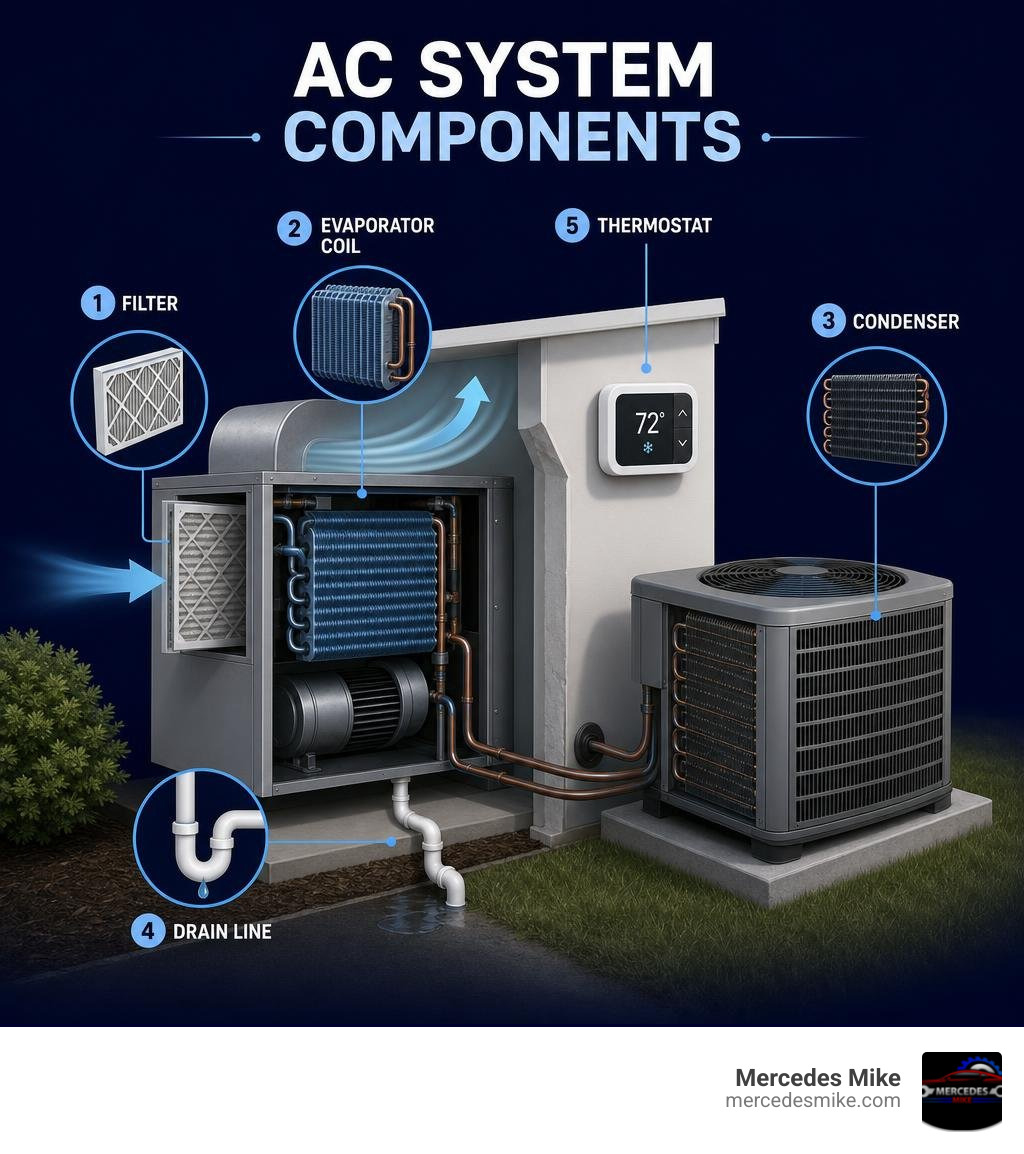
Your air filter is your system’s first line of defense. It traps airborne particles before they can coat the delicate internal components of your air handler.
How often to replace: In standard conditions, replace your filter every 2 to 3 months. However, if you have pets, suffer from severe allergies, or live in a high-dust area, you should inspect and replace it every 30 to 45 days.
Understanding MERV Ratings: Minimum Efficiency Reporting Value (MERV) ratings range from 1 to 16 for residential systems.
MERV 1–4: Basic fiberglass filters. They stop large lint particles but let fine dust and pollen pass right through.
MERV 8–11: The sweet spot for most residential homes. They balance excellent particle capture (including pet dander and mold spores) without restricting airflow.
MERV 13: High-efficiency filters. They capture microscopic particles and smoke, but they can restrict airflow in older HVAC systems, putting extra strain on the blower motor. Always check your system's manual before upgrading to a high-MERV filter.
2. Clearing the Outdoor Condenser
Your outdoor unit needs room to breathe. It works by releasing the heat extracted from inside your home into the outdoor air. If it is choked by weeds, shrubs, or debris, that heat gets trapped.
Trim back all bushes, weeds, and tree branches to maintain at least 2 feet of clear space around the entire unit.
Clear away fallen leaves, grass clippings, and twigs from the top and sides of the metal cabinet.
Gently rinse the exterior metal fins with a garden hose to wash away accumulated dirt and pollen. Never use a pressure washer, as the high pressure will instantly bend and ruin the delicate aluminum fins.
3. Flushing the Condensate Drain Line
Your AC removes an incredible amount of moisture from the air. This moisture collects in a drain pan and flows out through a PVC pipe. Over time, algae, mold, and slime can grow inside this warm, wet pipe, causing a clog. A clogged drain line will back up, triggering safety switches that shut down your system, or worse, overflowing and causing severe water damage to your ceilings and walls.
Locate the drain line access T-junction (usually near your indoor air handler).
Pour 1/4 to 1/2 cup of distilled white vinegar down the line once every spring and summer. The natural acidity of the vinegar kills off algae and prevents clogs from forming.
If you suspect a minor clog, you can attach a wet/dry shop vac to the outdoor exit point of the drain pipe to suck out the accumulated sludge.
Essential Tools for DIY AC Maintenance
Before you begin, gather these basic tools to make the job quick and safe:
Screwdriver or nut driver (to open access panels on the outdoor unit if needed)
Soft-bristle brush or vacuum attachment (for clearing dust from vents)
Garden hose with a spray nozzle (for rinsing the condenser coils)
Distilled white vinegar (for flushing the drain line)
Fin comb (for straightening bent aluminum fins)
Flashlight (for inspecting dark filter slots and drain pans)
DIY vs. Professional Maintenance: What Can You Actually Do?
To help you visualize where your DIY efforts should stop and where the professionals should take over, we’ve broken down the key tasks below:
Maintenance Task DIY Safe? Requires Professional? Frequency Replace Air Filter Yes No Every 30–90 Days Clear Debris & Trim Landscaping Yes No Monthly Flush Condensate Drain Line Yes No Every 1–3 Months Straighten Coil Fins (with Fin Comb) Yes No Annually Gently Rinse Condenser Coils Yes No Every 6 Months Deep Clean Evaporator Coil No Yes Annually Check & Adjust Refrigerant Levels No Yes Annually Test Capacitors & Electrical Wiring No Yes Annually Inspect & Seal Ductwork No Yes Every 3–5 Years
Monthly and Seasonal ac unit maintenance Tasks
To keep your system running optimally, it helps to establish a consistent routine. Spacing out your tasks ensures you catch minor issues before they develop into system-wide failures.
Monthly Visual Inspections and Filter Checks
Every 30 days, make it a habit to perform a quick 10-minute walkthrough. Check your thermostat to ensure it is calibrated and displaying the correct temperature. Pull out your air filter and hold it up to a light source. If you cannot see light passing through the fibers, it is dirty and needs to be replaced immediately. Finally, take a walk outside and ensure no new vegetation has crept into the two-foot clearance zone around your outdoor condenser.
Straightening Coil Fins
The delicate aluminum fins on your outdoor condenser can easily become bent by stray rocks, hail, or accidental bumps. Bent fins block vital airflow across the coils, reducing heat transfer efficiency. You can purchase an inexpensive tool called a fin comb from any local hardware store. Carefully slide the comb through the bent sections to straighten them out and restore proper airflow.
Winterizing Your System
If you live in an area where your cooling system sits idle for several months during the winter, taking a few protective steps can prevent damage.
Clean up any debris around the outdoor unit.
Cover the top of the outdoor condenser with a breathable, waterproof cover to prevent leaves, ice, and debris from accumulating inside. Never use a solid plastic tarp, as it traps moisture inside, leading to rust and mold growth.
Crucial Note: If your outdoor unit is a heat pump (which provides both heating and cooling), never cover it during the winter, as it must remain completely unobstructed to function properly.
For more strategic advice on setting up a customized timeline that matches your household’s specific usage patterns, take a look at these helpful Tips to Create an Effective AC Maintenance Schedule - Strada Services.
Climate-Specific ac unit maintenance Challenges
The environment outside your home dictates how hard your air conditioner has to work, and different geographic regions present unique maintenance challenges.
High-Dust and Dry Climates
In dry, arid regions—such as inland valleys or desert environments—air conditioning systems face an uphill battle against airborne dust and sand.
The Challenge: Windstorms, dry soil, and localized smoke can coat outdoor condenser coils in a thick layer of insulating dust in a matter of weeks. This dust load can reduce overall cooling capacity by 20% to 30%.
The Solution: Homeowners in these environments must inspect their air filters monthly, especially after major wind events. Condenser coils also require more frequent, gentle rinses to wash away fine silt before it bakes onto the metal. For a detailed breakdown of preparing a system for these dry, dusty conditions, check out the How to Prepare Your AC for Summer in Simi Valley, CA — 7-Step Checklist.
Humid and Coastal Climates (Like South Florida)
Here in Pompano Beach, Deerfield Beach, and across South Florida, we deal with a completely different set of environmental stressors. Our year-round warmth, intense humidity, and salty coastal air create a highly demanding environment for HVAC systems.
The Challenge: High humidity means your AC acts as a massive dehumidifier, pulling gallons of water out of the air every day. This constant moisture makes your indoor evaporator coil wet, creating the perfect breeding ground for mold, mildew, and biological growth. Furthermore, salt air from the Atlantic accelerates the corrosion of outdoor metal components, particularly coil fins and electrical connections.
The Solution: Regular condensate drain line flushing is absolutely critical in South Florida to prevent algae clogs. Additionally, applying specialized anti-corrosive coatings to your outdoor unit can protect it from salt air degradation. To learn more about managing these unique humidity-driven challenges, explore the Spring AC Maintenance Checklist for Humid Climates 2026.
Professional HVAC Tune-Ups vs. DIY Care
While DIY checklists are fantastic for keeping dust at bay and maintaining airflow, there are critical elements of your air conditioner that require professional-grade diagnostic tools and technical expertise.
Why Professional Expertise is Non-Negotiable
Modern air conditioners are complex thermodynamic systems that operate under high electrical voltage and contain pressurized chemical refrigerants. Attempting to service these components yourself is not only dangerous, but it can also instantly void your manufacturer's warranty.
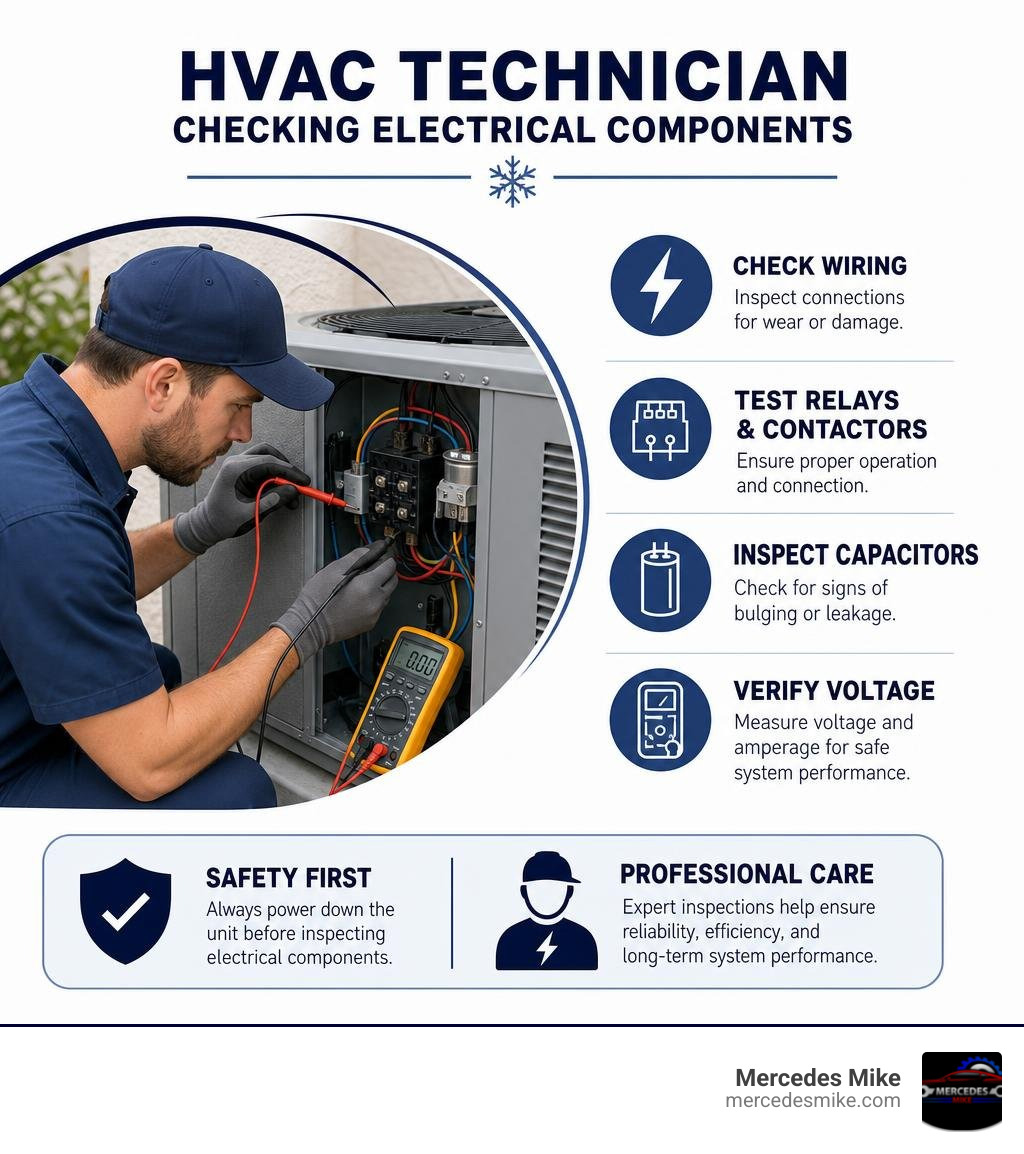
During a professional tune-up, an HVAC technician will perform several high-level diagnostic checks:
Refrigerant Charge Verification: Using specialized gauges, a technician measures the system’s refrigerant pressures. If the level is low, it indicates a leak that must be located and repaired. Running a system with incorrect refrigerant levels destroys the compressor—the most expensive part of your AC.
Electrical Component Testing: Technicians measure the voltage and amperage of your system's motors and check the condition of the electrical contactors.
Capacitor Diagnostics: Capacitors act like temporary batteries, providing the high-voltage jolt needed to start your compressor and fan motors. In hot climates, capacitors are under immense stress and are the leading cause of "no-cool" emergency service calls. A technician can test a capacitor's microfarad output and replace it before it fails and leaves you stranded in the heat.
Blower Wheel Inspection: A dirty blower wheel with built-in grime cannot move air efficiently, causing up to a 10% drop in system efficiency. Professionals can pull and deep-clean the blower assembly safely.
To see a complete, step-by-step breakdown of what a comprehensive professional checklist looks like, you can review this HVAC Tune-Up Checklist: 18 Steps for Peak Performance | The Cooling Company.
For an easy-to-use, downloadable format that you can print out and keep on hand to track your system's service history, refer to this What HVAC Pros Check Every Season: Free AC Maintenance Checklist.
Don't Forget Your Vehicle: Automotive AC Maintenance
While keeping your home cool is essential, South Florida drivers know that your car's air conditioner is just as critical to your daily comfort and sanity. There is nothing worse than stepping out of a hot office and climbing into a luxury German vehicle only to have the vents blast warm, humid air in your face.

At Mercedes Mike, we specialize in keeping high-performance German vehicles running beautifully in Pompano Beach and Deerfield Beach, FL. Just like your home's central air system, your car's AC requires regular inspection and preventative care to survive the grueling South Florida heat.
Essential Automotive AC Components
Your vehicle's climate control system relies on several key parts that work in harmony:
The Cabin Air Filter: This filter cleans the air entering your vehicle’s cabin, trapping dust, pollen, and road grime. A clogged cabin filter severely restricts airflow and can create a stale, musty odor inside your car. We recommend replacing it every 15,000 to 30,000 miles.
The Compressor and Clutch: The compressor is the heart of your vehicle's AC, pressurizing the refrigerant to circulate it through the system. If the compressor clutch fails to engage, your system won't cool at all.
The Condenser: Located right behind your car's front grille, the condenser sheds the heat absorbed from the cabin. It is highly susceptible to road debris, dirt, and leaves, which block airflow and reduce cooling power.
Our Professional Automotive AC Services
If your European luxury car is struggling to keep you cool, our decades-experienced technicians use the latest factory-grade tools to diagnose and repair the issue:
Refrigerant Recharge: If your system has slowly lost its cooling power, you may need a precise Air Conditioning Recharge or a specialized German Auto AC Recharge. We carefully measure and add the exact weight of refrigerant specified for your vehicle.
Leak Detection and Repair: Refrigerant leaks are common due to the intense thermal cycling and road vibrations your car experiences. We perform comprehensive Refrigerant Leak Repair to find and fix microscopic leaks before recharging your system.
Condenser and Component Fixes: From road debris damage to normal wear and tear, we provide expert AC Condenser Repair and overall automotive AC Repair to restore your vehicle's ice-cold performance.
Vehicle-Specific Diagnostics: Whether you need specialized Mercedes Air Conditioning Service, a detailed BMW Air Conditioning Recharge Guide 2026, or targeted Audi Q5 AC Repair, our team has the specialized training required to handle sensitive European electronics and climate control systems.
Frequently Asked Questions about AC Maintenance
How often should air conditioner filters be cleaned or replaced?
For residential systems, you should check your air filter every 30 days. In standard homes, replacing it every 2 to 3 months is sufficient. However, if you have pets, reside in an area with high pollen, or live in a dusty environment, you should replace the filter every 30 to 45 days. Keeping your filter clean is the easiest way to protect your blower motor and maintain peak airflow efficiency.
How much does professional AC maintenance typically cost?
A standard professional AC tune-up typically costs between $75 and $250, depending on your location, the size of your system, and what services are included. Many HVAC companies offer seasonal service plans that provide discounts and priority scheduling. This minor annual investment easily pays for itself by preventing expensive emergency repairs, validating your manufacturer's warranty, and lowering your monthly power bills.
What are the signs that my AC unit needs immediate repair?
You should call a technician immediately if you notice any of the following warning signs:
Warm Air: Your system is running, but the air coming from the vents is warm or lukewarm.
Weak Airflow: Little to no air is blowing through your registers, which can point to a failing blower motor or a completely blocked coil.
Unusual Noises: Loud squealing, grinding, clanking, or banging sounds indicate loose or failing internal components.
Short Cycling: The system turns on and off rapidly every few minutes, putting massive stress on the compressor.
Frozen Coils: Ice forming on the copper refrigerant lines or the indoor evaporator coil is a clear sign of restricted airflow or a refrigerant leak.
Conclusion
Taking a proactive approach to ac unit maintenance is the single best way to ensure your comfort, protect your wallet, and maximize the operating lifespan of your cooling systems. By combining simple monthly DIY tasks—like replacing your air filters and keeping your outdoor condenser clear—with a professional annual tune-up, you can enjoy reliable, energy-efficient cooling all year long.
And when you hit the road, make sure your vehicle’s climate control system is up to the task. If your luxury German car is blowing warm air or struggling against the South Florida humidity, let our expert, highly experienced team handle it. Discover how we can keep your drive cool and comfortable by exploring our full range of specialized Mercedes Mike Services today.