
How Much to Replace an AC Condenser Without Getting Burned
What Does AC Condenser Repair Cost? Here's What to Expect
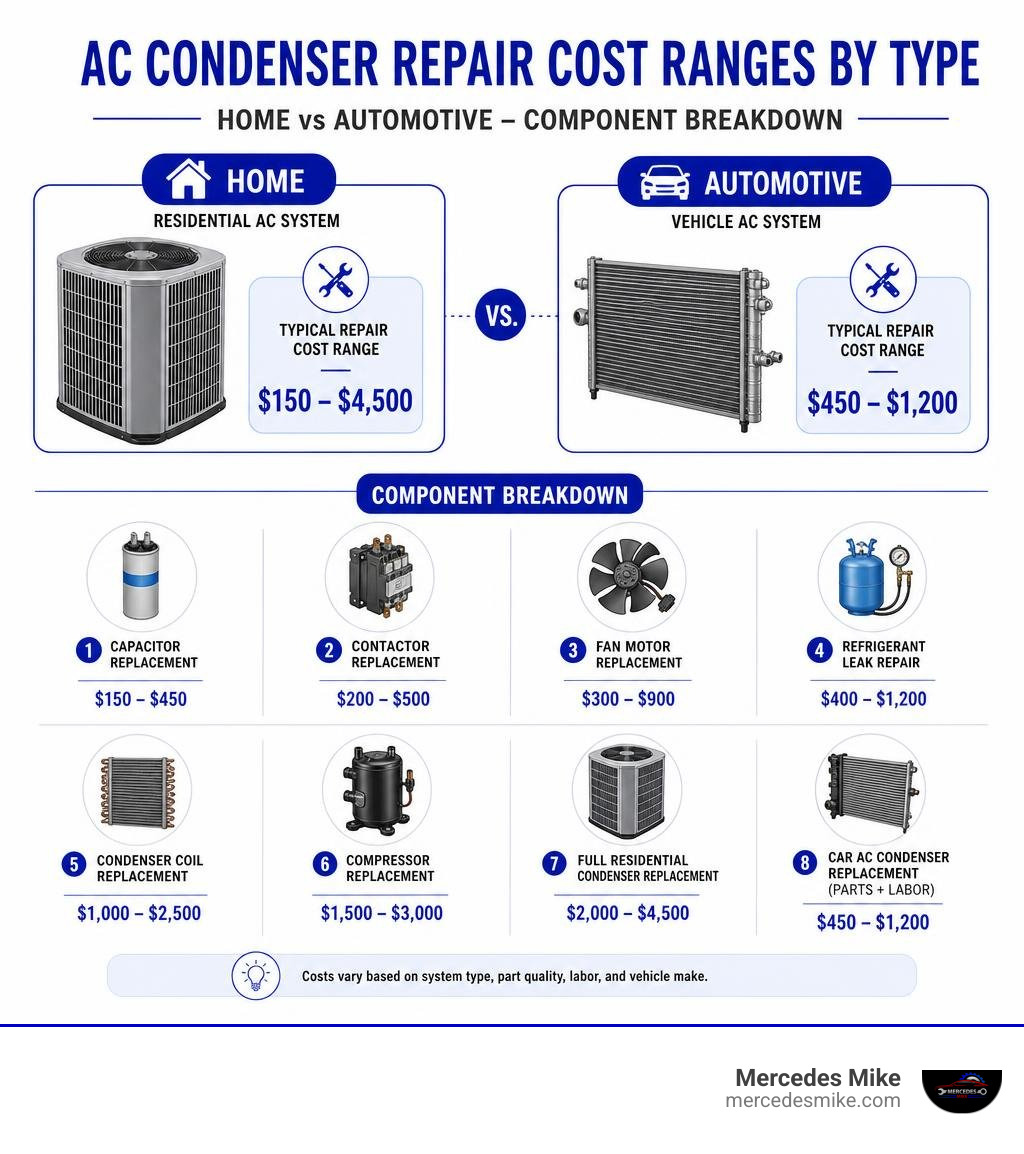
Understanding ac condenser repair cost upfront can save you from a nasty surprise when the bill arrives. Here's a quick breakdown so you can benchmark any quote you receive:
Repair Type Typical Cost Range Capacitor replacement $150 – $450 Contactor replacement $200 – $500 Fan motor replacement $300 – $900 Refrigerant leak repair $400 – $1,200 Condenser coil replacement $1,000 – $2,500 Compressor replacement $1,500 – $3,000 Full residential condenser replacement $2,000 – $4,500 Car AC condenser replacement (parts + labor) $450 – $1,200
The gap between a $150 capacitor swap and a $4,500 full replacement is enormous. The difference comes down to what failed, what system you have, and who is doing the work.
For luxury German vehicles like a Mercedes-Benz or BMW, those numbers can climb even higher. The parts cost more, the labor is more complex, and the refrigerant — especially the newer R-1234yf — is significantly more expensive than what older systems used.
I'm Mike Ibrahim, and having worked on German cars for years in South Florida, I've seen how the wrong repair decision can cost owners thousands more than necessary.
Understanding the AC Condenser: Home vs. Automotive Systems
To understand why the ac condenser repair cost varies so much, we first need to look at what this component actually does. Whether it is keeping your living room cool in Pompano Beach or ensuring you do not melt during your daily commute down Dixie Highway, the fundamental job of an AC condenser is heat transfer.
The condenser acts as a heat exchanger. It takes high-pressure, hot refrigerant gas from the compressor and cools it down until it condenses into a high-pressure liquid. This liquid then flows toward your evaporator coil, where it absorbs heat from the air to create that beautiful, icy breeze we all rely on.
However, the design and physical environment of home and automotive condensers are completely different:
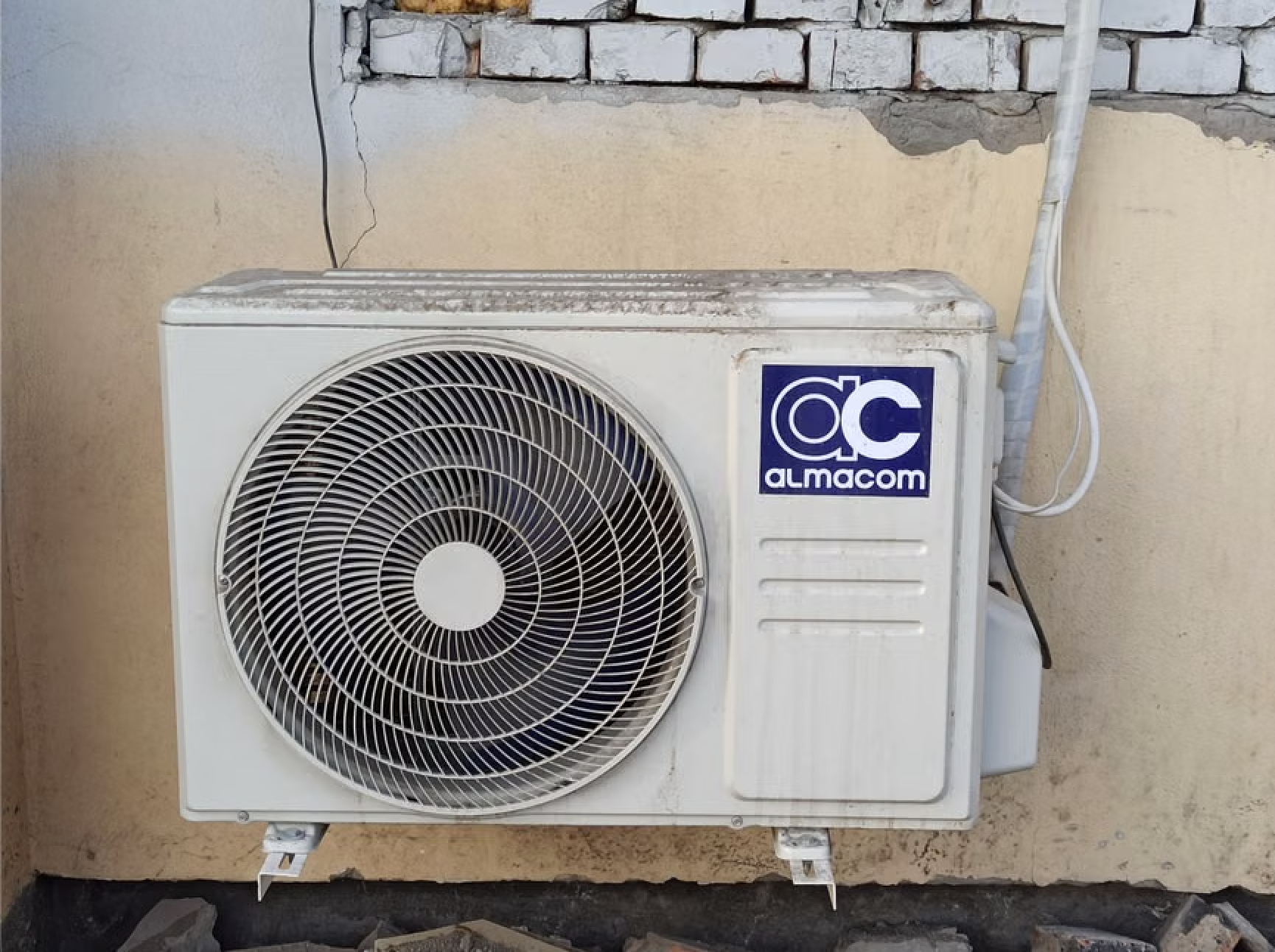
Residential AC Condensers: These are the large, metal boxes sitting outside your home. Because they live outdoors, they are highly vulnerable to dirt, grass clippings, leaves, and even dog urine (which is highly acidic and can eat through the copper coils). They house several large electrical components, including the compressor, dual-run capacitors, contactors, and a large fan motor. To keep these systems running efficiently, regular ac unit maintenance is essential.
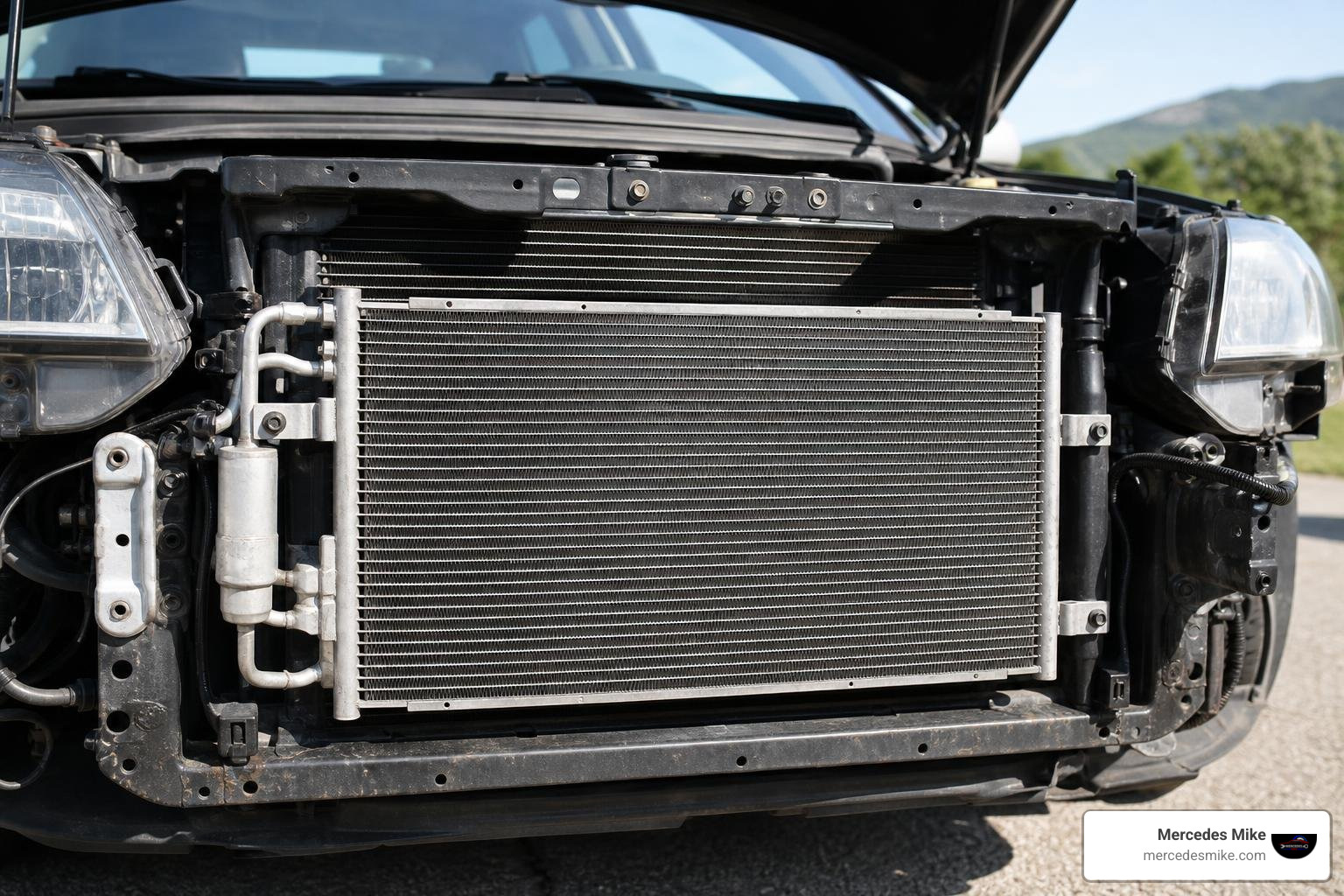
Automotive AC Condensers: In your car, the condenser is a thin, grid-like radiator located right at the very front of the vehicle, directly in front of the engine radiator. This position is perfect for catching airflow as you drive, but it also makes the condenser highly vulnerable to road debris, flying gravel, and minor front-end collisions. One tiny pebble kicked up by a truck on the highway can puncture a tube, leading to an immediate refrigerant leak.
Key Factors That Influence Your AC Condenser Repair Cost
When you receive a quote for an AC repair, the final number is not pulled out of thin air. Several key variables dictate the final price of the job:
Labor Rates and Regional Cost of Living: HVAC and automotive labor rates vary significantly by region. In South Florida, where fully functioning air conditioning is a year-round health necessity rather than a seasonal luxury, demand for qualified technicians is consistently high. HVAC professionals typically charge between $100 and $250 per hour, while specialized automotive technicians use highly precise diagnostic tools to resolve complex climate control issues.
System Size and Capacity: For home systems, the physical size of the unit is measured in tons (ranging from 1.5 to 5 tons). A larger unit requires a larger condenser coil and a more powerful compressor, which naturally increases the price of parts. For cars, luxury models with multi-zone climate control systems require larger, more complex condensers than compact commuter cars.
Refrigerant Type and Volume: Environmental regulations have forced transitions to cleaner, safer refrigerants, but these newer chemicals come with a premium. In residential systems, the phase-out of R-22 has made older recharges incredibly expensive, while modern R-410A remains stable. In the automotive world, the transition from R-134a to R-1234yf has dramatically increased the cost of a standard recharge.
Accessibility: If a technician has to spend two hours removing body panels, structural braces, or front bumpers just to reach the condenser, your labor costs will reflect that extra time.
To see how these factors break down on a national scale for residential systems, you can explore the AC Condenser Repair Cost Guide – Current Cost.
Residential AC Condenser Repair Cost by Component
If you are dealing with a home HVAC system, you rarely have to replace the entire outdoor unit for a minor issue. Often, a single electrical or mechanical component has failed.
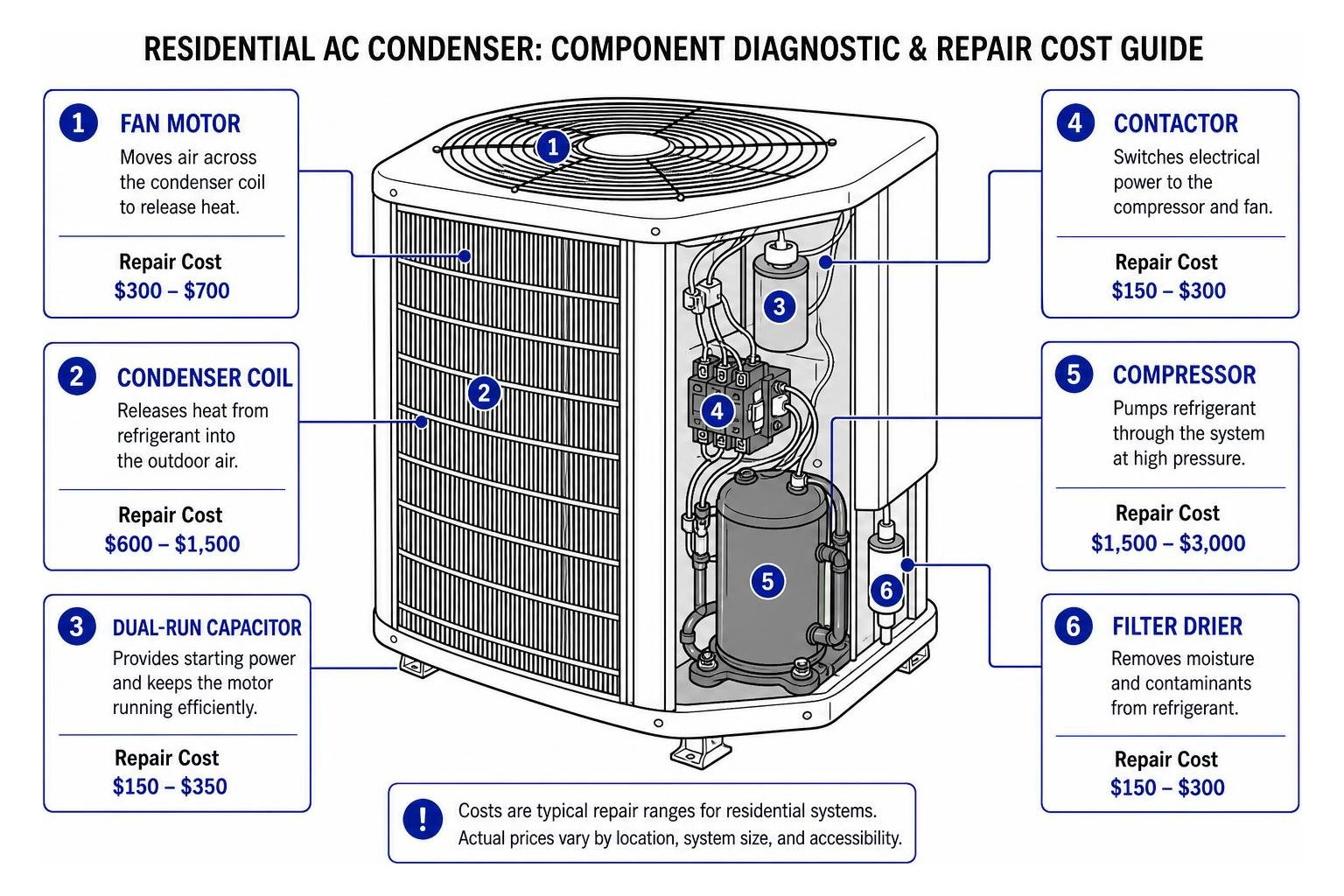
Here is a look at what individual component repairs typically cost, according to the AC Repair Cost Guide on HVAC Pricing Guide:
Compressor Replacement
The compressor is the heart of the entire air conditioning system. If it fails, the system cannot pump refrigerant. Replacing a residential compressor is the most expensive individual repair you can face, typically costing between $1,500 and $3,000. Because this job requires reclaiming refrigerant, cutting and brazing copper lines, installing a new filter drier, and pulling a deep vacuum, the labor is highly intensive.
Capacitor Replacement
If your outdoor unit is huming but the fan is not spinning and the compressor won't start, you likely have a dead dual-run capacitor. This is the most common residential AC repair. Capacitors store electrical energy to give the fan and compressor the kick-start they need to run. Replacing a capacitor is a quick, straightforward fix that typically costs between $150 and $450.
Fan Motor Replacement
The condenser fan draws air through the outdoor coils to disperse heat. If the motor burns out, the system will rapidly overheat and shut down. Replacing a residential condenser fan motor and its blade assembly usually runs between $300 and $900, depending on whether it is a standard single-stage motor or a high-efficiency variable-speed motor.
Contactor Replacement
The contactor is a small electrical switch that receives a signal from your indoor thermostat to send 240-volt power to the compressor and fan motor. Over time, the electrical contacts can pit, burn, or get stuck. Replacing a contactor is another relatively simple electrical fix, costing between $200 and $500.
Automotive AC Condenser Repair Cost Factors
When it comes to your vehicle, the cost of an ac condenser repair is driven by a completely different set of engineering challenges. Unlike a stationary home unit, a car's AC components are packed tightly into an engine bay, subjected to constant vibrations, road grime, and extreme under-hood temperatures.
If your car's AC has stopped blowing cold, a professional refrigerant leak repair is often required. Here is what influences the bill when replacing a vehicle's condenser:
OEM vs. Aftermarket Parts
For standard commuter vehicles, aftermarket condensers can be found relatively cheaply. However, for precision German engineering (Mercedes-Benz, BMW, Audi, and Porsche), using cheap aftermarket parts can lead to immediate fitment issues, poor heat dissipation, and premature leaks. We always recommend Original Equipment Manufacturer (OEM) or high-grade OEM-equivalent parts. While they cost more upfront, they ensure your dual-zone climate control system operates exactly as the factory designed it.
Front Bumper and Structural Removal
On many modern German vehicles, the condenser is buried behind the active grille shutters, structural reinforcement bars, and the front bumper assembly. To replace it, a technician must carefully disassemble the front fascia, disconnect parking sensors, cameras, and headlight washers, and then put it all back together with factory-perfect panel gaps. This process easily adds 3 to 5 hours of specialized labor to the job.
Refrigerant Evolution: R-134a vs. R-1234yf
If your vehicle was built before 2015, it likely uses R-134a refrigerant. A full evacuation and recharge for these older systems is relatively inexpensive. However, newer vehicles use R-1234yf, an environmentally friendly refrigerant designed to break down rapidly in the atmosphere if a leak occurs. The chemical itself is exceptionally expensive, and servicing it requires specialized, highly regulated recovery machines.
If you are driving a high-performance German vehicle and experiencing AC issues, we specialize in targeted diagnostics for these complex systems. You can read more about our specialized services in our guides for audi q5 ac repair and our dedicated mercedes air conditioning service.
Home AC Condenser: Repair vs. Replacement Decisions
When your home's outdoor unit suffers a major component failure, you face a classic homeowner's dilemma: do you patch up the old unit, or bite the bullet and replace the entire condenser?
To make an informed choice, we recommend using a few industry-standard benchmarks:
The 50% Rule: If the cost of the repair exceeds 50% of the cost of a brand-new condensing unit, you should almost always choose replacement.
The Age Factor (The $5,000 Rule): Multiply the age of your system by the cost of the repair. If the result is greater than $5,000, replacement is the smarter financial move. For example, a $1,200 repair on an 8-year-old system equals $9,600 — indicating it is time for a new unit.
Refrigerant Phase-Outs: If your older home system still runs on R-22, repairing a major leak is highly impractical. Because the EPA has phased out R-22, the cost of the refrigerant alone can run $250 to $600 per recharge, and parts are becoming incredibly scarce.
Energy Efficiency Gains: Upgrading an old 10 SEER unit to a modern SEER2 high-efficiency unit can reduce your monthly cooling energy consumption by 20% to 40%. In hot South Florida climates like Pompano Beach and Deerfield Beach, those utility bill savings add up fast.
To research current replacement costs and compare your options, take a look at these comprehensive resources:
Frequently Asked Questions About AC Condensers
How do I know if my AC condenser is failing?
The most common sign is warm or lukewarm air blowing from your vents when the system is set to "cool." In home systems, you might also notice the outdoor fan motor spinning slowly or not at all, loud grinding or hissing noises, or water pooling around the outdoor pad.
In vehicles, a failing condenser often manifests as poor cooling when the car is idling at a red light, which improves slightly once you start driving and forcing airflow through the grille. You might also spot oily residue on the condenser fins, which indicates a refrigerant and compressor oil leak. If your system is low on charge, a professional air conditioning recharge can help, but finding and fixing the leak is the only permanent solution. For a complete look at car vent issues, check out our ac vent repair complete guide 2026.
Can I replace an AC condenser myself?
Absolutely not. Whether it is for your home or your car, replacing an AC condenser is not a DIY project. Refrigerant is a hazardous chemical regulated by the EPA under Section 608. It is illegal to vent refrigerant into the atmosphere, and doing so can cause severe chemical freeze burns to your skin and eyes.
Replacing a condenser requires specialized recovery machines to safely extract the old gas, vacuum pumps to boil off moisture inside the sealed lines, and precise scales to recharge the system to factory specifications. Attempting to use off-the-shelf DIY recharge kits often introduces moisture and cheap sealing additives that can permanently destroy professional shop equipment and your compressor.
Why is modern car refrigerant recharge so expensive?
Modern vehicles use R-1234yf refrigerant to comply with global environmental standards. While older R-134a was cheap, R-1234yf is highly refined, heavily patented, and costs up to ten times more per pound.
Furthermore, because R-1234yf is mildly flammable, repair shops must use highly sophisticated, spark-free automated recovery machines to service these systems safely. If you drive a newer German vehicle, you can learn more about this process in our german auto ac recharge overview, our bmw air conditioning recharge guide 2026, and our breakdown on the cost to fix ac compressor.
Conclusion
Whether you are trying to keep your home comfortable or keep your luxury vehicle blowing ice-cold air on the highway, understanding the factors behind ac condenser repair cost helps you make smart, cost-effective decisions.
For your home HVAC system, regular filter changes and keeping the outdoor unit clear of weeds and debris will prevent premature compressor and fan failures. For your vehicle, paying attention to changes in cooling performance and addressing slow leaks early can save you from a much larger, more expensive repair down the road.
If you are in Pompano Beach, Deerfield Beach, or anywhere in South Florida, and your luxury German car is blowing warm air, do not risk a cheap, generic fix. At Mercedes Mike, our decades-experienced technicians use the latest factory-certified tools to diagnose and repair complex automotive climate control systems correctly the first time.
Schedule professional AC service today and let us get your car back to running cool.